The Jakarta Post
Please Update your browser
Your browser is out of date, and may not be compatible with our website. A list of the most popular web browsers can be found below.
Just click on the icons to get to the download page.


Popular Reads
Top Results
No results found. Please check your search term and try again
Can't find what you're looking for?
View all search results
Popular Reads
Top Results
No results found. Please check your search term and try again
Can't find what you're looking for?
View all search resultsExploring nonspeculative sides of crypto currencies
Despite all the challenges posed by the emergence of cryptos, one thing is clear: They are disrupting the status quo.
Change text size
Gift Premium Articles
to Anyone
Share the best of The Jakarta Post with friends, family, or colleagues. As a subscriber, you can gift 3 to 5 articles each month that anyone can read—no subscription needed!
 Set as preferred source
B
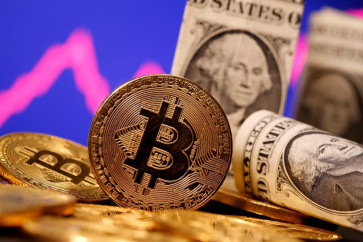
itcoin and other crypto-assets (cryptos) are in the headlines of financial news yet again. For the last few weeks, their prices have been moving like a roller coaster in response to decisions made by authorities. The latest swings are due to policy stances taken by major central banks.
The seemingly synchronized messages of the United States Federal Reserve, the European Central Bank and the People’s Bank of China have further ascertained the notion that these assets, which their fans claim to be a currency, do have significant speculative elements that authorities can influence or even suppress. But to assume the price movements are all about speculation is to lose the bigger picture.
Casual observers are still puzzled by the fact that these newcomers, created in the aftermath of the 2007/08 global financial crisis, manage to share the same alternative investment status with gold, God’s old money. In fact, going through some near-death experiences before the COVID-19 pandemic did little to prevent the rise of cryptos to the current prominence. On top of that, exploring the nonspeculative elements might also help authorities regulate this type of “unclear thing”, which at times can act like a currency, a service, a contract or as an independent entity in and of itself.
To begin with, this “unclear thing” is neither a financial asset nor a currency. Though many transactions use them as a medium of exchange, cryptos are still not considered a financial asset by the generally accepted classifications.
In the International Monetary Fund guidelines, for example, each claim on a financial asset must have a corresponding financial liability from other counterparties. To illustrate, as owning a certificate of deposit automatically incurs a corresponding liability to the issuing bank, the certificate is a financial asset. Similarly, a currency is a financial asset because the issuing authority guarantees the money in circulation and thus, has a liability to the holder. On the other hand, owners of Bitcoin or other cryptos cannot force anyone to honor the assigned financial value, say US$100; hence, obliging them to pay the crypto owners that prevailing amount of $100.
The classification makes it hard for financial authorities to exert jurisdiction over cryptos. It would be akin to extending regulatory power over jade stones and flower markets. Even if their prices fluctuate sharply and many people invest in them, financial authorities will certainly struggle to derive power from statutes to regulate these valuables. For that reason, cryptos usually fall within the jurisdiction of commodity market authorities.
The story might be different if there is a monetary authority using cryptos as reserves. Generally, gold owned by the public is not considered a financial asset. But gold can be treated as one if used as central banks’ reserve assets — the technical term is “monetary gold.” By the same token, “monetary Bitcoin” is possible. However, for now, cryptos are still neither a currency nor a financial asset.