The Jakarta Post
Please Update your browser
Your browser is out of date, and may not be compatible with our website. A list of the most popular web browsers can be found below.
Just click on the icons to get to the download page.


Popular Reads
Top Results
No results found. Please check your search term and try again
Can't find what you're looking for?
View all search results
Popular Reads
Top Results
No results found. Please check your search term and try again
Can't find what you're looking for?
View all search resultsBridging the digital divide for traditional markets in Indonesia
While technology can be a game-changing tool for traditional businesses, the drive to optimize technology still lies in the hands of the vendors.
Change text size
Gift Premium Articles
to Anyone
Share the best of The Jakarta Post with friends, family, or colleagues. As a subscriber, you can gift 3 to 5 articles each month that anyone can read—no subscription needed!
 Set as preferred source
P
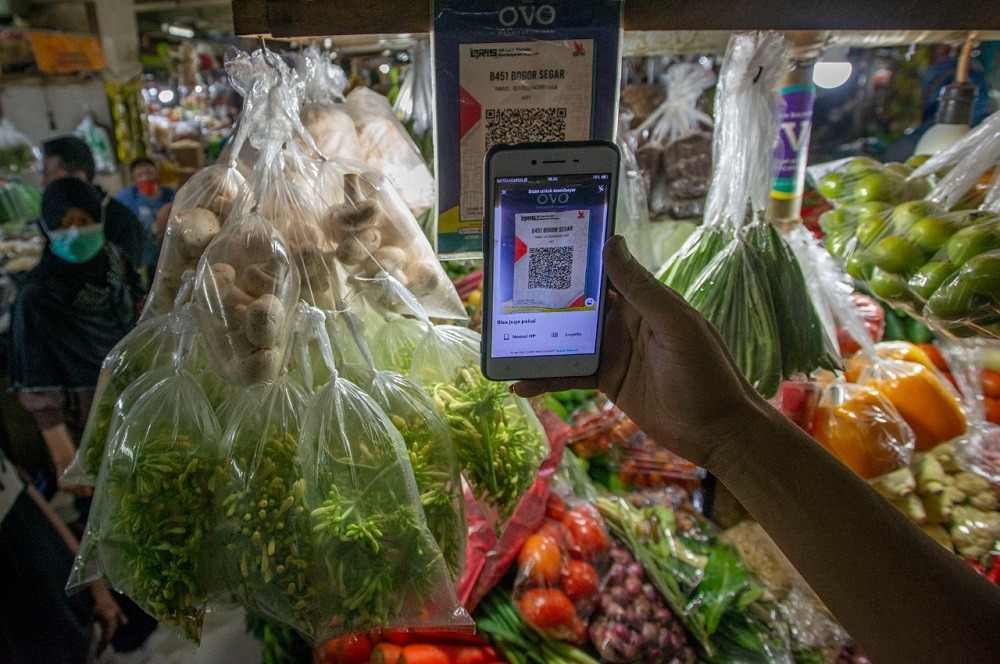
asar (traditional markets) are bread and butter for millions of Indonesians and the main source of staples for the population. However, pasar vendors faced devastating revenue losses of between 55 and 70 percent as a result of the pandemic, according to the Indonesia Traditional Market Vendors Association (Ikappi).
Digitalization appears to be a sound solution to counter the shock. But a recent study by the United Nations Development Plan (UNDP) and the University of Indonesia’s Institute for Economic and Social Research (LPEM-FEB UI) showed that only 5 to 6 percent of micro and small businesses had gone online during the pandemic. This compares with 44 percent of medium and large enterprises in Indonesia, which have increased their use of digital platforms.
President Joko “Jokowi” Widodo’s announcement to digitalize 30 million micro, small and medium enterprises (MSMEs) by 2024 highlights the urgency of this challenge. Addressing the risk of widening the digital divide in this nationwide digitalization drive would be key to ensuring all segments of the micro, small and medium enterprises (MSMEs) are covered.
WhatsApp and UKMIndonesia.id stepped up their support for micro businesses by launching “Pasar JuWAra” (Traditional Market Champions). This pilot was launched in 15 provinces to train and onboard traditional market vendors to the free WhatsApp Business app, so they had access to a digital sales channel as they approached the month of Ramadan. We especially understood that Ramadan was the peak consumption period for Southeast Asia’s largest economy.
Within a month, more than 1,100 vendors from 66 pasar were trained. From this small start the tangible impact is already encouraging. Nearly 21 percent of vendors surpassed pre-pandemic sales levels and almost 75 percent were getting new customers through WhatsApp. The project has now been extended beyond Ramadan, with new elements added based on lessons learned from the pilot and has also been recognized by the Cooperatives and SMEs Ministry as a model for other programs with similar goals.
As more organizations get involved, we will share lessons learned so more of us can be part of the solution and optimize our efforts for scale and sustainable results.
While technology can be a game-changing tool for traditional businesses, the drive to optimize the technology still lies in the hands of the vendors. That’s where facilitators play a central role in bridging the gaps as they are a trusted and ongoing accessible resource for all the vendors, as opposed to a one-time trainer.