The Jakarta Post
Please Update your browser
Your browser is out of date, and may not be compatible with our website. A list of the most popular web browsers can be found below.
Just click on the icons to get to the download page.


Popular Reads
Top Results
No results found. Please check your search term and try again
Can't find what you're looking for?
View all search results
Popular Reads
Top Results
No results found. Please check your search term and try again
Can't find what you're looking for?
View all search resultsIdul Adha, Bill Clinton and saving the planet
Vegetarianism and veganism, once limited to hippies and spiritual sects, has become mainstream. In 2010, Bill Clinton became vegan for his heart disease (he actually calls himself a “cheagan” – cheating vegan, not the only cheating he’s engaged in!).
Change text size
Gift Premium Articles
to Anyone
Share the best of The Jakarta Post with friends, family, or colleagues. As a subscriber, you can gift 3 to 5 articles each month that anyone can read—no subscription needed!
 Set as preferred source
R
eza a young man, now in his thirties, has heard countless times the story of the fortitude of the prophet Abraham whose faith in God was so unshakeable that when the Almighty ordered him to sacrifice his only son, he did not falter for one second. All Muslims – and Christians – know what happened in the end. That God was just testing Abraham and the son was replaced by a ram. Phew!
Reza understands the symbolism of the story, and had a sad experience as a child in relation to this. His cousin was distraught because a pet goat he had fed and taken care of for years, had to end up being slaughtered on Idul Adha (Day of Sacrifice). Reza also had a traumatizing experience when a goat was in the process of being slaughtered, but managed to escape with half of its neck cut off, it’s head dangling, being chased by his butcher.
Ugh! Sounds pretty gruesome and horrific! Imagine if it were a human being running around with his neck partially severed?
This story is one of over a hundred in an anthology by Lies Marcoes, a prominent Muslim feminist, called Merebut Tafsir (Reclaiming Interpretation). An interpretation of what? Of the dominant narrative which tends to be dictated by those in power: patriarchs. Actually what she is doing is ijtihad - independent reasoning encouraged strongly in Islam especially Islamic jurisprudence. Muslim feminists are known for it as you can imagine so-called “holy texts” have been formulated for the benefit of a patriarchal power system.
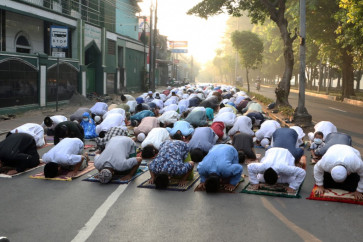
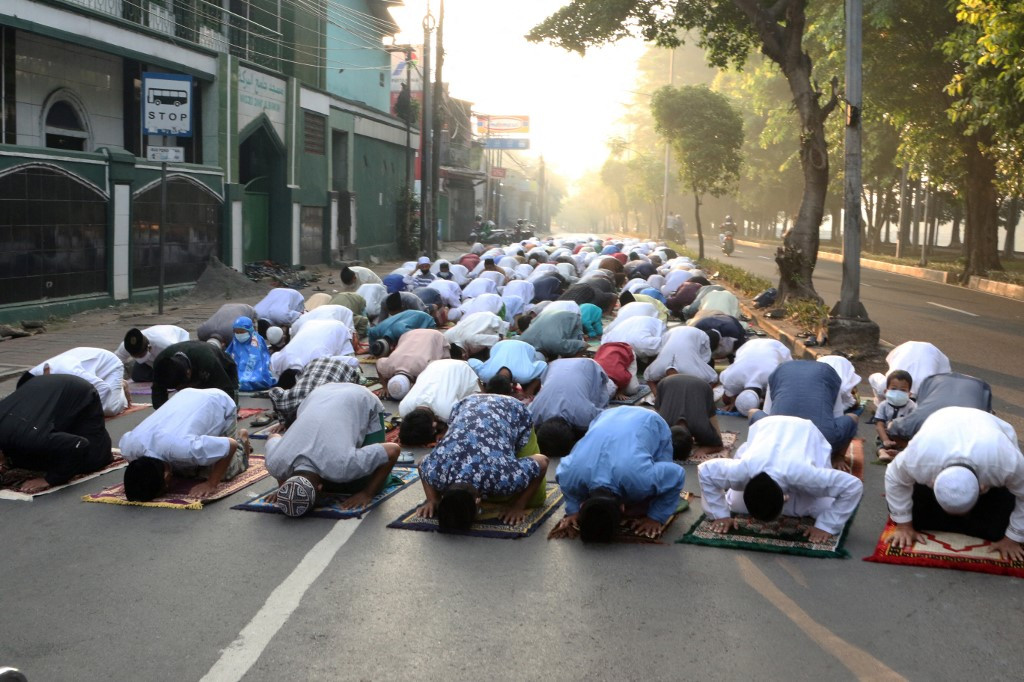
Truth be told, Idul Adha is my least favorite Muslim holiday. I totally agree with the spirit of sacrifice embodied in the day (see “The Spirit of Sacrifice”, editorial, The Jakarta Post, July 19), especially in the context of the COVID-19 pandemic.
But what I dislike about it is the slaughter involved. Before the pandemic, when I went on my morning walk around Idul Adha, I would see goats tethered to a tree or fence. I got close to one of them, it tried to approach me, obviously seeking my help to release it. I was so tempted to do that, not just one, but all of them. I cried internally as I walked away from the goat. A few days later when I passed that spot again, I knew that the goat with the sad eyes was most likely lying in its grave: human stomachs.
For a long time I thought, why can’t the sacrifice be seen as something symbolic? God was also being symbolic when He told Abraham to sacrifice his son. Why can’t we also see the sacrificial goat, sheep, cow or camel as being symbolic and replace it with cash or sembako (nine essential goods, e.g. rice, sugar, cooking oil, etc.) which is badly needed in these pandemic times.