The Jakarta Post
Please Update your browser
Your browser is out of date, and may not be compatible with our website. A list of the most popular web browsers can be found below.
Just click on the icons to get to the download page.


Popular Reads
Top Results
No results found. Please check your search term and try again
Can't find what you're looking for?
View all search results
Popular Reads
Top Results
No results found. Please check your search term and try again
Can't find what you're looking for?
View all search resultsCircular economy practices must be scaled to answer our plastic pollution problem
Our intensive reliance on plastic has created an Age of Disposables — turning this essential material into a scourge of modern society.
Change text size
Gift Premium Articles
to Anyone
Share the best of The Jakarta Post with friends, family, or colleagues. As a subscriber, you can gift 3 to 5 articles each month that anyone can read—no subscription needed!
 Set as preferred source
P
lastics have been a major driver of human progress over the last century. This diverse group of materials has evolved to underpin our modern world with numerous applications that make our daily lives more comfortable.
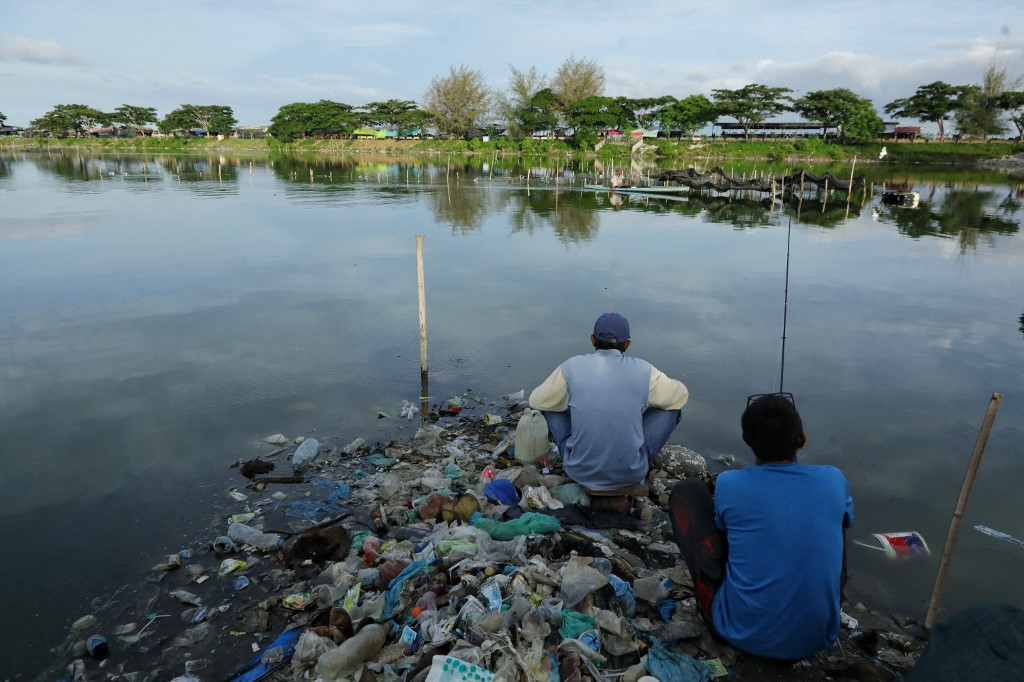
Our intensive reliance on plastic has created an Age of Disposables — turning this essential material into a scourge of modern society. Over 9 billion tons of plastic have been produced since 1950, with more than half ending up in landfills or polluting ecosystems around the world. Less than 7 percent of plastics produced over the last seven decades have been recycled. Of that number, more than two-thirds ultimately ends up incinerated or as waste.
The problem of plastic pollution is particularly acute in Southeast Asia, with our extensive coastlines and rich yet vulnerable biodiversity. Nations of Southeast Asia (Indonesia, Philippines, Vietnam, Thailand, Malaysia) account for five of the top 10 global producers of ocean plastic debris.
Some estimates indicate that the ratio of fish to plastic in our oceans by weight is now 1:5. This figure is projected to become significantly worse in coming decades. In the next 15-20 years it will be difficult to consume fish anywhere on Earth that is not contaminated with plastic. This highlights the fundamental need for a more sustainable, circular plastic economy.
Global action on the plastic economy
Microparticles of plastic have been identified in the air we breathe, the water we drink and the food that we consume. Global campaign group the Environmental Investigation Agency (EIA) recently released a damning report on the state of global plastic pollution, adding to calls for a global agreement due to be discussed at the United Nations Environment Assembly in February.
Companies and governments around the world are already aggressively seeking to reduce or recycle their plastic footprint. Many private companies have introduced sustainable plastic targets, including multinationals and domestic players here in Southeast Asia.