The Jakarta Post
Please Update your browser
Your browser is out of date, and may not be compatible with our website. A list of the most popular web browsers can be found below.
Just click on the icons to get to the download page.


Popular Reads
Top Results
No results found. Please check your search term and try again
Can't find what you're looking for?
View all search results
Popular Reads
Top Results
No results found. Please check your search term and try again
Can't find what you're looking for?
View all search resultsPoker, not chess, is the name of the game in the Indo-Pacific
Beijing and Washington are certainly playing a game of strategy, but they should know they are not the only players.
Change text size
Gift Premium Articles
to Anyone
Share the best of The Jakarta Post with friends, family, or colleagues. As a subscriber, you can gift 3 to 5 articles each month that anyone can read—no subscription needed!
 Set as preferred source
T
he heightening tension between the United States and China is pulling Indo-Pacific nations into one or the other camp, but it’s too soon to give in to the idea that it has become a bipolar region. Some countries, Indonesia for one, still believe that the region has not been completely divided into two camps and that active multilateralism could stop the ongoing polarization and prevent the cold war from turning into a hot war.
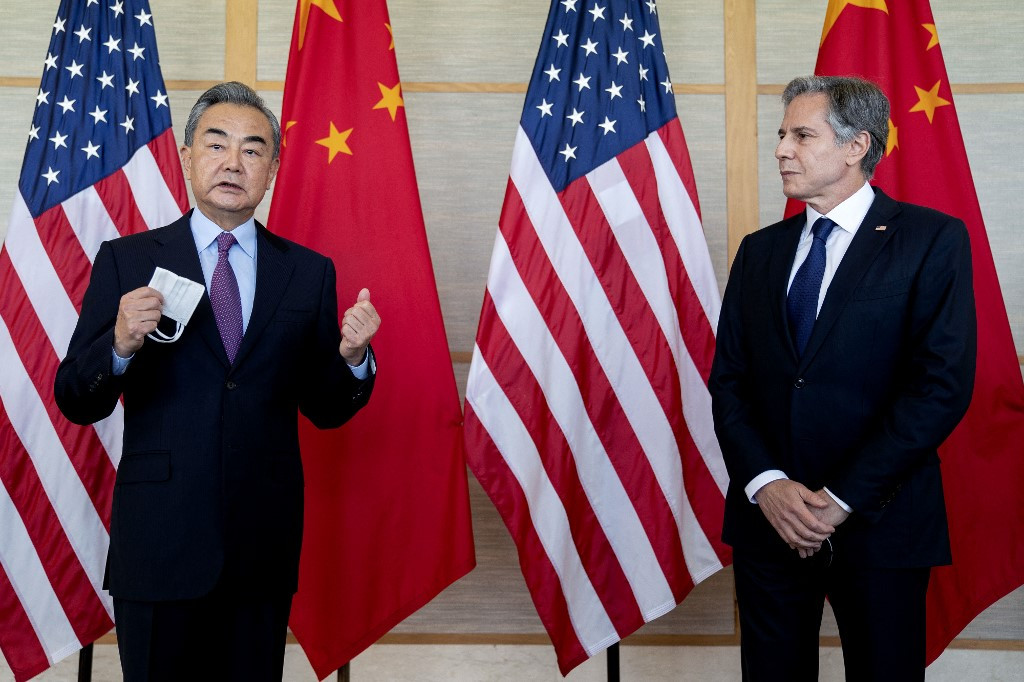
Beijing appears to be already thinking of the region as a theater for the hegemonic contest with Washington. At least that’s what Chinese Foreign Minister Wang Yi implied in his speech in Jakarta at the ASEAN secretariat last week, when he said, “We should insulate this region from geopolitical calculations […] from being used as chess pieces from major power rivalry and from coercion.”
The analogy to chess implies that nations should stay out of the rivalry, rather than joining the game as chess pieces, whether as pawns, bishops, knights or rooks. And chess being a strategic board game, the speech is revealing of how Beijing sees its rivalry with the US.
One could assume that Washington is only happy to play a game in which there really are only two players. Playing chess means simplifying and reducing the expansive, diverse and complex Indo-Pacific region into either black or white pieces. You are either with one or the other side, or you just stay out and watch.
We beg to differ with this characterization of the current state of the Indo-Pacific region. We are indeed seeing some polarization as some nations, many out of national security interests, are being drawn into one of the two camps, but the region is not as polarized to the point that there are only two players who decide the course of development.
Both Beijing and Washington are certainly playing a game of strategy, but they should know that they are not the only players.
The US is building new alliances in the Indo-Pacific region on top of the existing ones it has had with Japan, South Korea, Australia, the Philippines and Thailand. All of these security arrangements are with the clear intent of containing the rise of China.