The Jakarta Post
Please Update your browser
Your browser is out of date, and may not be compatible with our website. A list of the most popular web browsers can be found below.
Just click on the icons to get to the download page.


Popular Reads
Top Results
No results found. Please check your search term and try again
Can't find what you're looking for?
View all search results
Popular Reads
Top Results
No results found. Please check your search term and try again
Can't find what you're looking for?
View all search resultsTough call on rice
At times, rice import is necessary to avert calamities such as a food crisis, speculator's intervention, a severe price hike or inflation and thinning Government Rice Reserves (CBP).
Change text size
Gift Premium Articles
to Anyone
Share the best of The Jakarta Post with friends, family, or colleagues. As a subscriber, you can gift 3 to 5 articles each month that anyone can read—no subscription needed!
 Set as preferred source
E
ach time the government rolls out a plan to import rice, the public reacts with resistance. Understandably, for many Indonesians, rice is considered more than just a staple food, but also a sort of political commodity.
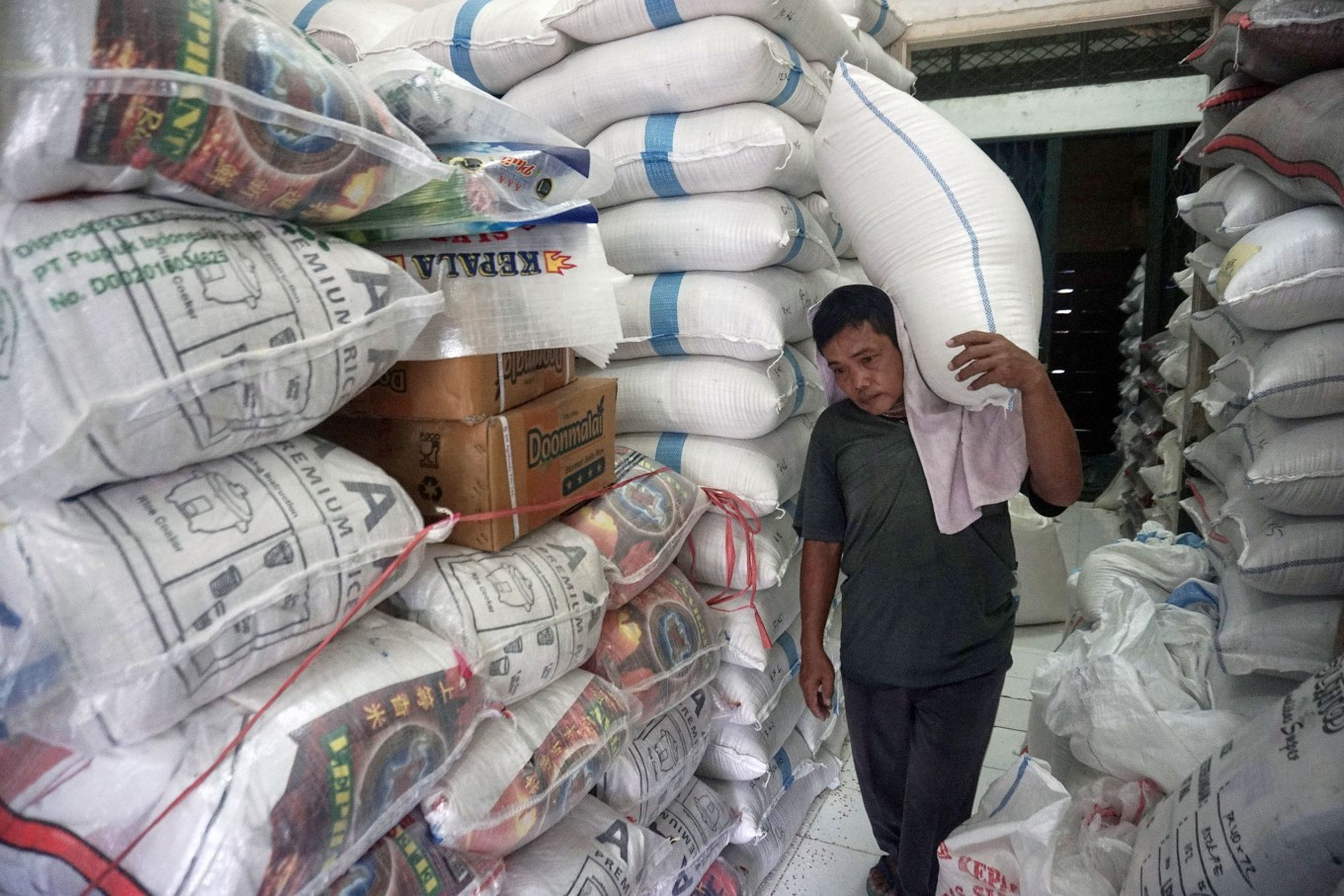
Importing rice is deemed as taboo by some, although such a decision does not necessarily reflect the country's failure to achieve self-sufficiency. At times, rice import is necessary to avert calamities such as a food crisis, speculator’s intervention, a severe price hike or inflation and thinning Government Rice Reserves (CBP).
Regarding the issue, President Joko “Jokowi” Widodo highlighted during a recent cabinet meeting the urgent need to secure national rice stock for 2023 amid the risk of an imminent food crisis.
“We have to be aware of the food crisis risk since it may trigger social and political unrest. Therefore, anything regarding domestic rice reserves must be calculated carefully and precisely. Do not make a mistake,” Jokowi stated.
The bad news is that to date the State Logistics Agency (Bulog) only has 503,000 tonnes of rice in store, well below the level of 1.1 million to 1.5 million tonnes required to maintain sufficiency. It is estimated that Bulog has to distribute 200,000 tonnes this month, further depleting Bulog’s reserves.
The agency has set a target of securing 1.2 million tonnes by the year-end. The problem is to fill the gap with domestic production, which is in good condition, amidst challenges of surging grain prices.
The price of unhusked rice at local mills has now ranges from Rp 6,000 (39 US cents) to Rp 6,300 per kilogram and this impacts downstream rice prices, which are currently in the range of Rp 11,000 to Rp 12,000 per kg, far above the highest retail price (HET) for medium rice of Rp 9,450 to Rp10,250 per kg.