The Jakarta Post
Please Update your browser
Your browser is out of date, and may not be compatible with our website. A list of the most popular web browsers can be found below.
Just click on the icons to get to the download page.


Popular Reads
Top Results
No results found. Please check your search term and try again
Can't find what you're looking for?
View all search results
Popular Reads
Top Results
No results found. Please check your search term and try again
Can't find what you're looking for?
View all search resultsSoutheast Asia seeks global recognition for ‘kebaya’ craft
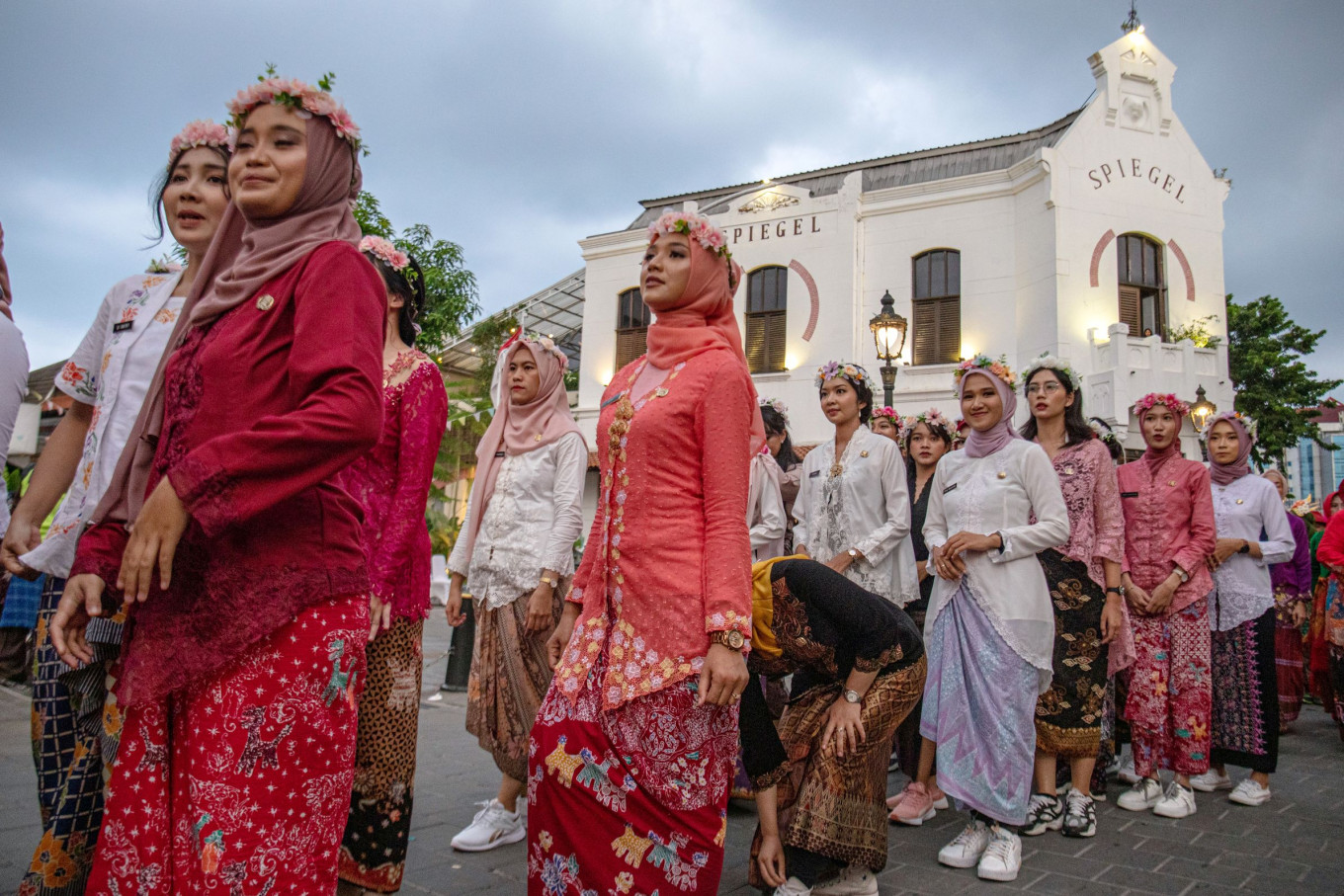
In a moment of unity, Malaysia, Indonesia, Singapore, Brunei and Thailand have jointly nominated the kebaya for the United Nation's prestigious intangible cultural heritage list, with a decision expected in 2024.
Change text size
Gift Premium Articles
to Anyone
Share the best of The Jakarta Post with friends, family, or colleagues. As a subscriber, you can gift 3 to 5 articles each month that anyone can read—no subscription needed!
 Set as preferred source
I
n a Malaysian boutique, a small group of seamstresses sit at clattering sewing machines, stitching bright flowers and leaves into kebaya, traditional blouses worn by women around Southeast Asia.
What makes kebaya special is that they are worn by women of all ethnic backgrounds in a diverse region, according to Lim Yu Lin, who co-runs the family business her grandmother founded in 1955.
"It's not only meant for one culture," she told AFP.
In a moment of unity, Malaysia, Indonesia, Singapore, Brunei and Thailand have jointly nominated the kebaya for the United Nation's prestigious intangible cultural heritage list, with a decision expected in 2024.
Suited to hot tropical weather, the intricately embroidered blouse is usually long-sleeved, and ranges from loose-fitting to semi-transparent, figure-hugging cuts.
A kebaya can cost as little as US$7 for a simple, machine-made design, to around $1,200 for a more intricate handmade piece.
National symbol