The Jakarta Post
Please Update your browser
Your browser is out of date, and may not be compatible with our website. A list of the most popular web browsers can be found below.
Just click on the icons to get to the download page.


Popular Reads
Top Results
No results found. Please check your search term and try again
Can't find what you're looking for?
View all search results
Popular Reads
Top Results
No results found. Please check your search term and try again
Can't find what you're looking for?
View all search resultscriminalization

Archipelago 1 week ago
PREMIUM
Backlash after man jailed for reselling Starlink service on remote island
The suspension of the Starlink-based service following Yogi’s arrest had directly affected schools, teachers, students and digitally based micro, small and medium-sized businesses on North Pagai Island.

Politics 1 month ago
PREMIUM
Meme creator’s release fails to ease free speech fears
The release of a social media content creator accused over a satirical post has done little to ease concerns over the growing criminalization of government critics, with rights groups warning that his continued status as a suspect reflects an increasingly hostile environment for online free expression in Indonesia.
Society 2 months ago
PREMIUM
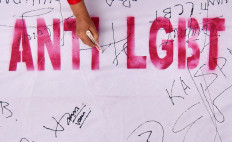
Anti-LGBTQ regulation fuels fears of criminalization
A presidential regulation classifying "LGBTQ culture” as a nonmilitary threat has drawn sharp criticism from civil society groups, who warn it could provide legal and political justification for further criminalizing the vulnerable minority, while lawmakers and religious groups defend the policy as necessary to “safeguard” national resilience.
Editorial 2 months ago
PREMIUM
An unpatriotic proposition
Coming so soon after Indonesia drew a disapproving global eye toward its financial market and economic policymaking, perhaps the legal protections afforded to buyers of Patriot and Merah Putih bonds in the amended law demands a rethink, if not an overhaul.
Society 2 months ago
PREMIUM
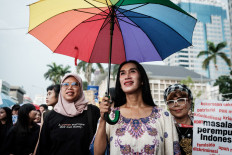
Rights groups oppose calls to criminalize LGBTQ people
Civil society groups have condemned growing calls from religious leaders and lawmakers to criminalize LGBTQ people and advocacy, warning that such proposals would violate fundamental rights and further marginalize an already vulnerable minority.
Academia 3 months ago
PREMIUM
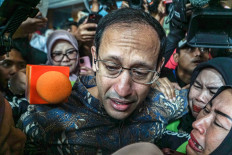
Prosecuting young citizens for loving their nation
From the mass arrest of student protesters to the high-profile prosecution of a former minister, Indonesia’s judicial system is being systematically weaponized to crush dissent and pave the way for an institutionalized autocracy.
Academia 4 months ago
PREMIUM
When law meets creativity: The crisis of valuing creative work
When auditors valued creative concept development and editing at "zero rupiah," they didn't just miscalculate a budget—they criminalized the very nature of artistic work. Amsal Sitepu’s acquittal must now spark a systemic overhaul of how the state values the intangible assets of the creative economy.
Editor's Picks
Popular
- Malaysia must not breathe Indonesia’s governance failure
- Mass poisonings cast doubt on free meals reforms
- New data rules could unlock cross-border data flows
- Volcanic eruptions take toll on economy
- Search intensifies for journalists, crew as Anak Krakatau ashfall eases
- Mitigation budget under scrutiny as Indonesia grapples with disasters
- Indonesian wildfire emissions surge to world's highest
- Student suffers memory loss, seizures after free meal food poisoning
- Anak Krakatau doesn't need an earthquake to kill
- Search resumes for missing journalists on Anak Krakatau mission


