The Jakarta Post
Please Update your browser
Your browser is out of date, and may not be compatible with our website. A list of the most popular web browsers can be found below.
Just click on the icons to get to the download page.


Popular Reads
Top Results
No results found. Please check your search term and try again
Can't find what you're looking for?
View all search results
Popular Reads
Top Results
No results found. Please check your search term and try again
Can't find what you're looking for?
View all search resultscriminalization

Academia 5 months ago
PREMIUM
Criminalizing creativity: A test for Indonesia’s creative economy vision
Indonesia’s ambitious vision for a trillion-rupiah creative economy is being strangled by a procurement system that still treats imagination like unskilled labor. The criminalization of videographer Amsal Sitepu exposes a dangerous value blind spot that must be fixed before the state’s bureaucracy bankrupts its own future.


Academia 6 months ago
PREMIUM
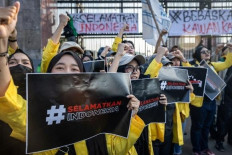
State terrorism: The criminalization of dissent and the failure of governance
As the Indonesian state weaponizes the stigma of "terrorism" to mask its failures of governance, a systematic campaign of criminalization is silencing public voices demanding accountability: a chilling descent into neo-authoritarianism revealing a regime that would rather trade democratic values for elite consolidation than address the people's economic grievances.

Opinion 9 months ago
PREMIUM
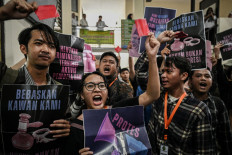
Analysis: When executives criminalized for doing their jobs
Following public outcry, President Prabowo Subianto granted rehabilitation to three former executives of state-owned enterprise (SOE) PT ASDP Indonesia Ferry convicted in the corruption case surrounding the company's acquisition of ferry operator PT Jembatan Nusantara (JN). For many observers, the prosecution of former president director Ira Puspadewi and two other executives epitomize the criminalization of business judgment.



Archipelago 10 months ago
PREMIUM
Rights groups demand fair legal process for activist accused of murder
The case against Misrantoni began in the early hours of Nov. 15, 2024, when an unknown masked assailant attacked a roadside post set up by villagers to block coal trucks from a local mining company.
Academia 11 months ago
PREMIUM
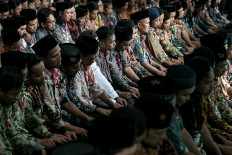
When minors become targets of violent extremist groups
Radicalization in the digital age doesn't fit neatly into a prescribed box of right-wing extremism, and protecting minors vulnerable to online influences begins with offline efforts at home to reach out, connect and listen to the multitude of mixed issues at the root of adolescent angst.
Editor's Picks
Popular
- Malaysia must not breathe Indonesia’s governance failure
- Mass poisonings cast doubt on free meals reforms
- New data rules could unlock cross-border data flows
- Volcanic eruptions take toll on economy
- Search intensifies for journalists, crew as Anak Krakatau ashfall eases
- Mitigation budget under scrutiny as Indonesia grapples with disasters
- Indonesian wildfire emissions surge to world's highest
- Student suffers memory loss, seizures after free meal food poisoning
- Anak Krakatau doesn't need an earthquake to kill
- Search resumes for missing journalists on Anak Krakatau mission


