The Jakarta Post
Please Update your browser
Your browser is out of date, and may not be compatible with our website. A list of the most popular web browsers can be found below.
Just click on the icons to get to the download page.


Popular Reads
Top Results
No results found. Please check your search term and try again
Can't find what you're looking for?
View all search results
Popular Reads
Top Results
No results found. Please check your search term and try again
Can't find what you're looking for?
View all search resultsfact-check

Academia 2 weeks ago
PREMIUM
The collapse of trust in facts: Making sense of verification on the internet
As AI and crowdsourced systems take on the job of fact checking, they promise speed but struggle to deliver trust and explainability. Until they can do all three, human verification still has a vital role to play.

Politics 4 weeks ago
PREMIUM
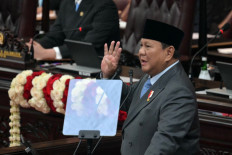
Prabowo’s data claims draw public scrutiny
Some remarks made by President Prabowo Subianto in his State of the Nation address, including statistics on job creation and school renovation, have been met with criticism for alleged inconsistency with realities on the ground.


Society 1 year ago
PREMIUM
Indonesia’s fact-checkers slam Meta’s decision to end US fact-checking program
A coalition of Indonesian fact-checking institutions has denounced Meta’s decision to scrap its fact-checking program in the United States, raising concerns that the tech company may do the same in other countries, exacerbating the spread of false information over digital platforms.


Europe 1 year ago
Zuckerberg's censorship claim 'false': International Fact-Checking Network
"This is false, and we want to set the record straight, both for today's context and for the historical record," said the global network of fact-checking organizations, including AFP, after Zuckerberg announced an end to Meta's US program.
Americas 1 year ago
Meta shelves fact-checking in policy reversal ahead of Trump administration
The move is Meta's biggest overhaul of its approach to managing political content on its services in recent memory and comes as CEO Mark Zuckerberg has been signaling a desire to mend fences with the incoming administration.

Academia 2 years ago
PREMIUM
Digital literacy, not censorship, is key to mitigating social media harm
The manipulation of public opinion through social media is particularly concerning in contexts where internet freedom is limited, as this reduces the availability of diverse information and increases the impacts of propaganda.
Editor's Picks
Popular
- Much ado about asset forfeiture
- Mass poisonings cast doubt on free meals reforms
- Purbaya ousted after clash with Prabowo's ex-army colleague, sources say
- Children are no longer the priority, were they ever?
- Indonesia, China eye cooperation to boost 3 million homes program
- Not the Ministry of Magic
- El Niño chokes Indonesia’s coal exports as rivers run shallow
- Suahasil seen to prioritize fiscal discipline, continuity
- Whoosh takeover in limbo after Purbaya ousted as finance minister
- Sumatran elephants run out of room as fires spread


