The Jakarta Post
Please Update your browser
Your browser is out of date, and may not be compatible with our website. A list of the most popular web browsers can be found below.
Just click on the icons to get to the download page.


Popular Reads
Top Results
No results found. Please check your search term and try again
Can't find what you're looking for?
View all search results
Popular Reads
Top Results
No results found. Please check your search term and try again
Can't find what you're looking for?
View all search resultsgapki
Markets 3 years ago
PREMIUM
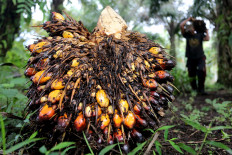
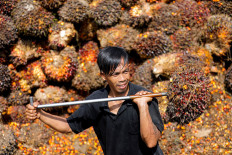
RI palm oil production declines in January as climate factors bite
Crude palm oil (CPO) production in Indonesia, the world’s biggest palm oil producer, increased by just 0.75 percent year-on-year (yoy) to 3.8 million tonnes, the latest data from the Indonesia Oil Palm Producers Association (Gapki) show.

Academia 3 years ago
PREMIUM
Indonesian palm oil at critical juncture: To thrive or dive?
The government still tends to scapegoat companies for not supporting its price stabilization measures, while the main blame should be put on its utterly poor institutional capacity to implement the erratic measures.

Economy 3 years ago
PREMIUM
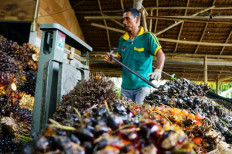
RI palm oil producers unworried as China, India go sustainable
Indonesian palm oil producers are optimistic they can overcome the challenges presented by China and India’s transition toward sustainability, as experts stress the importance of having the country’s local sustainability standards recognized globally.
Economy 3 years ago
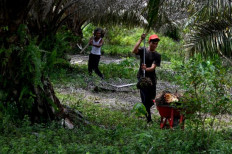
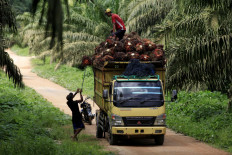
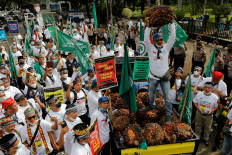
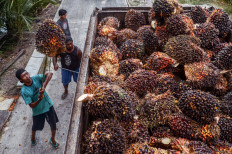
Palm oil prices seen ticking up as rains slash output
Palm oil prices have climbed by around a fifth this month but are still trading far below an all-time high set in March. The expected spike in prices will add to the burden of consumers already hit by inflation triggered by the Russia-Ukraine war, but higher exports and lower production would help major palm oil producers Indonesia and Malaysia bring down inventories.
Economy 4 years ago
PREMIUM
Palm oil board confident export ban could end in May
The world's top palm oil producer expanded an export ban on raw materials for cooking oil to include shipments of crude palm oil and most of its refined products just hours before it took effect at midnight Wednesday, in an attempt to secure domestic supply and bring down soaring prices.
Companies 4 years ago
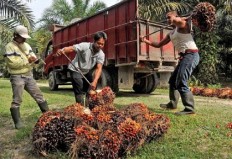
Indonesia's palm oil industry braces for upcoming export ban
The export ban will be imposed on all producers of refined, bleached and deodorized (RBD) palm olein, which is made by processing crushed palm fruit to remove impurities and accounts for about 40 percent of Indonesia's total shipments of palm oil products, according to analysts' estimates.
Editor's Picks
Popular
- Much ado about asset forfeiture
- The benefit of the doubt has expired
- Mass poisonings cast doubt on free meals reforms
- New data rules could unlock cross-border data flows
- Children are no longer the priority, were they ever?
- Prabowo sacks Purbaya, turns to familiar hand at Finance Ministry
- Prabowo replaces Finance Minister Purbaya with his deputy
- Six killed, 129 missing after ferry capsizes off Java
- Indonesia, China eye cooperation to boost 3 million homes program
- SOE dividend grab tests Danantara’s mandate


