The Jakarta Post
Please Update your browser
Your browser is out of date, and may not be compatible with our website. A list of the most popular web browsers can be found below.
Just click on the icons to get to the download page.


Popular Reads
Top Results
No results found. Please check your search term and try again
Can't find what you're looking for?
View all search results
Popular Reads
Top Results
No results found. Please check your search term and try again
Can't find what you're looking for?
View all search resultsmanufacturing


Economy 4 months ago
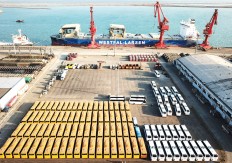
China's economy loses steam at start of Q2
Better-than-expected exports and China's domestic fuel-pricing controls have helped weather the energy shock, but higher input costs threaten to squeeze already weak factory margins and further dampen consumer spending if the conflict drags on.

Economy 5 months ago
PREMIUM
Double hit on manufacturing: What are anticipatory policies?
The manufacturing sector’s growth trend is expected to face many challenges, including higher oil and energy prices due to US and Israeli attacks on Iran, as well as rupiah depreciation, which is pushing up production costs for certain industries.
Economy 5 months ago
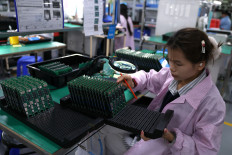
How one factory in China learned to live with tariffs and turmoil
US President Donald Trump's tariffs sought to hurt Chinese manufacturing, but for one electronics maker, a turbulent 2025 ended with a belief that China is a location that is difficult to replicate – as long as things don't change too drastically.

Academia 5 months ago
Why manufacturing remains Indonesia’s key growth driver, accelerating downstreaming
As Southeast Asia’s largest economy, Indonesia has big goals ahead. The government’s plan, from 2025 to 2029, focuses on three outcomes: slashing the poverty rate to between 4.5 and 5 percent, raising the Human Capital Index (IMM) to 0.59 percent and pushing annual economic growth toward the 8 percent mark by 2029.


Editor's Picks
Popular
- Popular discontent is justified. Authoritarianism is not the answer
- Recentralization concerns in fiscal, education heighten
- Govt under pressure as 3 million home drive hits cracks
- Safeguarding Indonesia's AI future
- Batam residents protest data centers amid water crisis
- Canals full, roads submerged as Bangkok declares flood disaster
- Jakarta international airport extends closure after Anak Krakatau eruption
- Japan schoolboy, 11, wins gold while empty seats blight Asian Games
- Philippines pardons, frees Mary Jane Veloso
- Indonesians still have low awareness against pneumonia: Survey


