The Jakarta Post
Please Update your browser
Your browser is out of date, and may not be compatible with our website. A list of the most popular web browsers can be found below.
Just click on the icons to get to the download page.


Popular Reads
Top Results
No results found. Please check your search term and try again
Can't find what you're looking for?
View all search results
Popular Reads
Top Results
No results found. Please check your search term and try again
Can't find what you're looking for?
View all search resultsneanderthal

Science & Tech 2 years ago
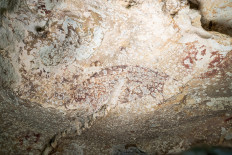
World's oldest cave painting in Sulawesi shows a pig and people
The researchers used a new scientific approach to determine the minimum age of the newly disclosed painting inside the Leang Karampuang cave in the Maros-Pangkep region of South Sulawesi province by using a laser to date a type of crystal called calcium carbonate that formed naturally on top of the painting.

Science & Tech 2 years ago
UK researchers unveil face of 75,000-year-old Neanderthal woman
Named Shanidar Z after the cave in Iraqi Kurdistan where her skull was found in 2018, the latest discovery has led experts to probe the mystery of the forty-something Neanderthal woman laid to rest in a sleeping position beneath a huge vertical stone marker.

Science & Tech 3 years ago
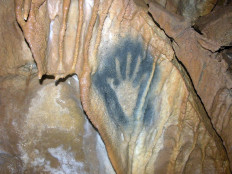
Genetic findings from Siberian caves give glimpse into Neanderthal life
Researchers on Wednesday described genomic findings from the remains of 13 Neanderthals - 11 from Chagyrskaya cave and two from Okladnikov cave in the Altai Mountains of Russia - in one of the largest genetic studies of a Neanderthal population to date.

Science & Tech 3 years ago
Neanderthals, humans co-existed in Europe for over 2,000 years: study
While the study, published in the journal Scientific Reports, did not provide evidence that humans directly interacted with Neanderthals around 42,000 years ago, previous genetic research has shown that they must have at some point.
Science & Tech 4 years ago
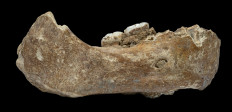
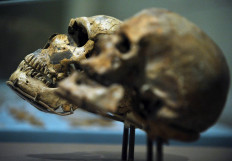
Study places Homo Sapiens in Europe earlier than thought
Up to now, archaeological discoveries had indicated that Neanderthals disappeared from the European continent about 40,000 years ago, shortly after the arrival of their "cousin" Homo sapiens, barely 5,000 years earlier and there was no evidence of an encounter between these two groups.
Editor's Picks
Popular
- Much ado about asset forfeiture
- Mass poisonings cast doubt on free meals reforms
- New data rules could unlock cross-border data flows
- Children are no longer the priority, were they ever?
- Rescuers searching for 140 people from passenger ship in Java Sea
- Three more volcanoes erupt following Sinabung, Anak Krakatau
- BRICS nations call for 'maximum restraint' in Middle East war
- Ministry ready to repatriate five orangutan babies found in India
- Indonesia, China eye cooperation to boost 3 million homes program
- SOE dividend grab tests Danantara’s mandate


