The Jakarta Post
Please Update your browser
Your browser is out of date, and may not be compatible with our website. A list of the most popular web browsers can be found below.
Just click on the icons to get to the download page.


Popular Reads
Top Results
No results found. Please check your search term and try again
Can't find what you're looking for?
View all search results
Popular Reads
Top Results
No results found. Please check your search term and try again
Can't find what you're looking for?
View all search resultspnm
Front Row 2 years ago
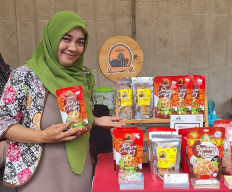
PNM Mekaar client turns bitter melon into unique snacks
Yulianti, a client of PNM Mekaar, has a compelling story in her venture into unique snacks. Her business idea stemmed from her child's aversion to vegetables but love for snacks. She decided to create healthy snacks, leading to the innovation of bitter melon due to its digestive benefits.
Front Row 2 years ago
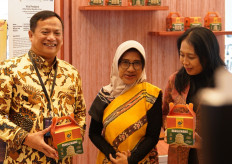
Bold Innovations: Rengginang Kidal Becomes a key business for PNM Mekaar client
PNM Mekaar client Yani Risnawati faced despair after a stroke left her bedridden. However, making rengginang reignited her spirit. Despite initial failures, Yani successfully transformed 5 kilograms of glutinous rice into rengginang.

Front Row 2 years ago
Elly's clover nastar innovation as a PNM Mekaar customer
Residents of Surabaya are certainly familiar with clover nastar, often made into pecel sayur shaped like a clover leaf and steamed and topped with peanut sauce. Many residents of Kendung, Surabaya, sell this clover leaf pecel snack. However, Elly Ermawati decided to innovate.
Front Row 2 years ago
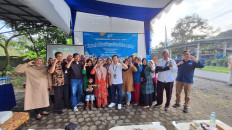
PNM's Budidamber Program: Ideal clustering for Mekaar customers
PT Permodalan Nasional Madani (PNM) through its Purwokerto branch has initiated a small-scale bucket fish farming (budidamber) clustering program at Mekaar Unit Sumbang 2, Banyumas. The program introduces an engaging concept where villagers can cultivate fish in their yards.
Front Row 2 years ago
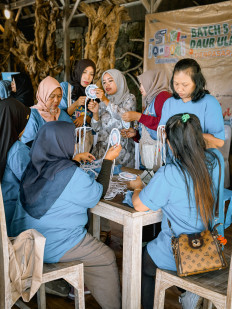
PNM empowers top clients with new recycling initiative
PT Permodalan Nasional Madani (PNM), through its Business Capacity Development (PKU) program, has relaunched its advanced study tour program with the theme #DiscoverNewSteps. This program focuses on recycling waste for profit.

Front Row 2 years ago
PNM optimizes Idul Adha 2024 sacrifice distribution in remote areas
In celebration of Idul Adha 1445 Hijriah, PT Permodalan Nasional Madani (PNM) distributed sacrificial animals to various frontier, outermost and least developed (3T) regions in Indonesia. These locations include Aceh, Palembang, Lampung, Garut, Serang, Banjarmasin, Purwokerto, Solo, Mataram and Makassar.
Front Row 2 years ago
PNM wins BIA 2024 special award, vows to continue empowerment efforts
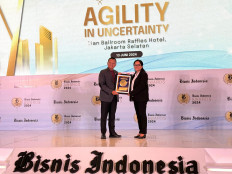
PT Permodalan Nasional Madani (PNM) was bestowed a special award on June 13 at the Bisnis Indonesia Awards (BIA) 2024 in Jakarta, in recognition for “The Most Outstanding Microfinance Programs Empowering Women and Community Development”.

Front Row 2 years ago
Join PNM and SOE Ministry’s modern ‘jamu’ competition
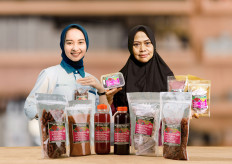
PT Permodalan Nasional Madani (PNM) supports the preservation and development of national assets and culture. This includes promoting traditional herbal tonics made from local spices. Recently, PNM's Business Capacity Development (PKU) program conducted comparative studies and training on traditional jamu (herbal tonic) making.

Editor's Picks
Popular
- Popular discontent is justified. Authoritarianism is not the answer
- Recentralization concerns in fiscal, education heighten
- Govt under pressure as 3 million home drive hits cracks
- Safeguarding Indonesia's AI future
- Batam residents protest data centers amid water crisis
- Canals full, roads submerged as Bangkok declares flood disaster
- Japan schoolboy, 11, wins gold while empty seats blight Asian Games
- Indonesian wildfires threaten critically-endangered orangutan: IUCN
- Jakarta international airport extends closure after Anak Krakatau eruption
- Indonesians still have low awareness against pneumonia: Survey


