The Jakarta Post
Please Update your browser
Your browser is out of date, and may not be compatible with our website. A list of the most popular web browsers can be found below.
Just click on the icons to get to the download page.


Popular Reads
Top Results
No results found. Please check your search term and try again
Can't find what you're looking for?
View all search results
Popular Reads
Top Results
No results found. Please check your search term and try again
Can't find what you're looking for?
View all search resultspolicy
Archipelago 10 months ago
PREMIUM
Batam gets highest 2026 minimum wage in Riau Islands
The provincial capital's minimum wage has been increased 7.38 percent to around Rp 5.36 million for 2026, while the greatest hike was around 9 percent for Bintan regency, where workers can expect a minimum wage of nearly Rp 4.6 million.

Opinion 10 months ago
PREMIUM
Analysis: DHE policy revised again, but gains to foreign reserves remain elusive
The national policy on export proceeds (DHE) from natural resources has been revised for a third time after repeated attempts failed to significantly bolster foreign exchange (forex) reserves or deepen onshore foreign currency liquidity. The latest revision relaxes the mandatory rupiah conversion requirement from 100 percent to 50 percent and requires the placement of DHE in Association of State-Owned Banks (Himbara) members. While this is intended to ease pressure on exporters, it raises questions about whether locking DHE onshore can be effective in the long run without undermining export competitiveness.


Academia 10 months ago
PREMIUM
How to help the world’s poor most effectively
While over 8 percent of the global population is still undernourished, helping children in poor countries in the first 1,000 days of their lives, in the womb and in their first years, can do phenomenal good for little money.

Opinion 10 months ago
PREMIUM
Analysis: Skipping G20, a costly foreign policy blunder for Prabowo
Last month, President Prabowo Subianto skipped the G20 summit in Johannesburg, South Africa, undermining his claim to be a champion of multilateralism as well as his chances of assuming the vacant leadership of the Global South.


Academia 11 months ago
PREMIUM
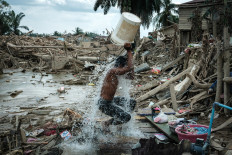
ASEAN floods 2025: Governance at a crossroads
The flooding that peaked last month across the region illustrates a fundamental truth: disaster risk reduction is inextricably tied to governance, including economic policies, and ASEAN must tackle climate issues as a collective agenda.

Opinion 11 months ago
PREMIUM
Analysis: Rethinking Indonesia's DHE policy amid rupiah pressures
The contribution of natural resource export receipt (DHE) to Indonesia's foreign reserves remains limited, intensifying calls to revise Government Regulation (PP) No. 8/2025 on DHE. While the policy temporarily keeps export proceeds onshore, much of the forex (forex) ultimately flows back overseas to service external debt. As a result, the regulation has fallen short of its stated goal of strengthening reserves, an issue that has become more urgent as the rupiah faces renewed depreciation pressures.

Economy 11 months ago
PREMIUM
Indonesia still ‘bright spot’ in troubled world economy: IMF
The International Monetary Fund has praised Indonesia for maintaining economic growth and containing inflation amid mounting pressure from external factors but emphasizes that the country needs the right “policy mix” to secure the future.
Editor's Picks
Popular
- Ten years lost in two
- Three-finger salute raised high, broad and multifaceted in Indonesia
- 'Rhizomatic' movements help youth voice political messages
- RI posts strong GDP growth on better trade balance
- Listyo’s dramatic fall shakes security establishment
- Indonesia lands $385m in AI, industrial investment deals in UK
- Jakarta's flood problem runs deeper than rivers
- Young Indonesians take fight for justice to Constitutional Court
- The twilight of RSPO: A multistakeholder sustainability forum
- Tech stocks stage partial rebound while dollar gains after US jobs data


