The Jakarta Post
Please Update your browser
Your browser is out of date, and may not be compatible with our website. A list of the most popular web browsers can be found below.
Just click on the icons to get to the download page.


Popular Reads
Top Results
No results found. Please check your search term and try again
Can't find what you're looking for?
View all search results
Popular Reads
Top Results
No results found. Please check your search term and try again
Can't find what you're looking for?
View all search resultsStrait of Hormuz to stay closed until port blockade lifts, Iran says
Mohammad Bagher Ghalibaf, speaker of the Iranian parliament, said in a televised address that there has been "progress" in talks with Washington "but there are many gaps and some fundamental points remain."
Change text size
Gift Premium Articles
to Anyone
Share the best of The Jakarta Post with friends, family, or colleagues. As a subscriber, you can gift 3 to 5 articles each month that anyone can read—no subscription needed!
 Set as preferred source
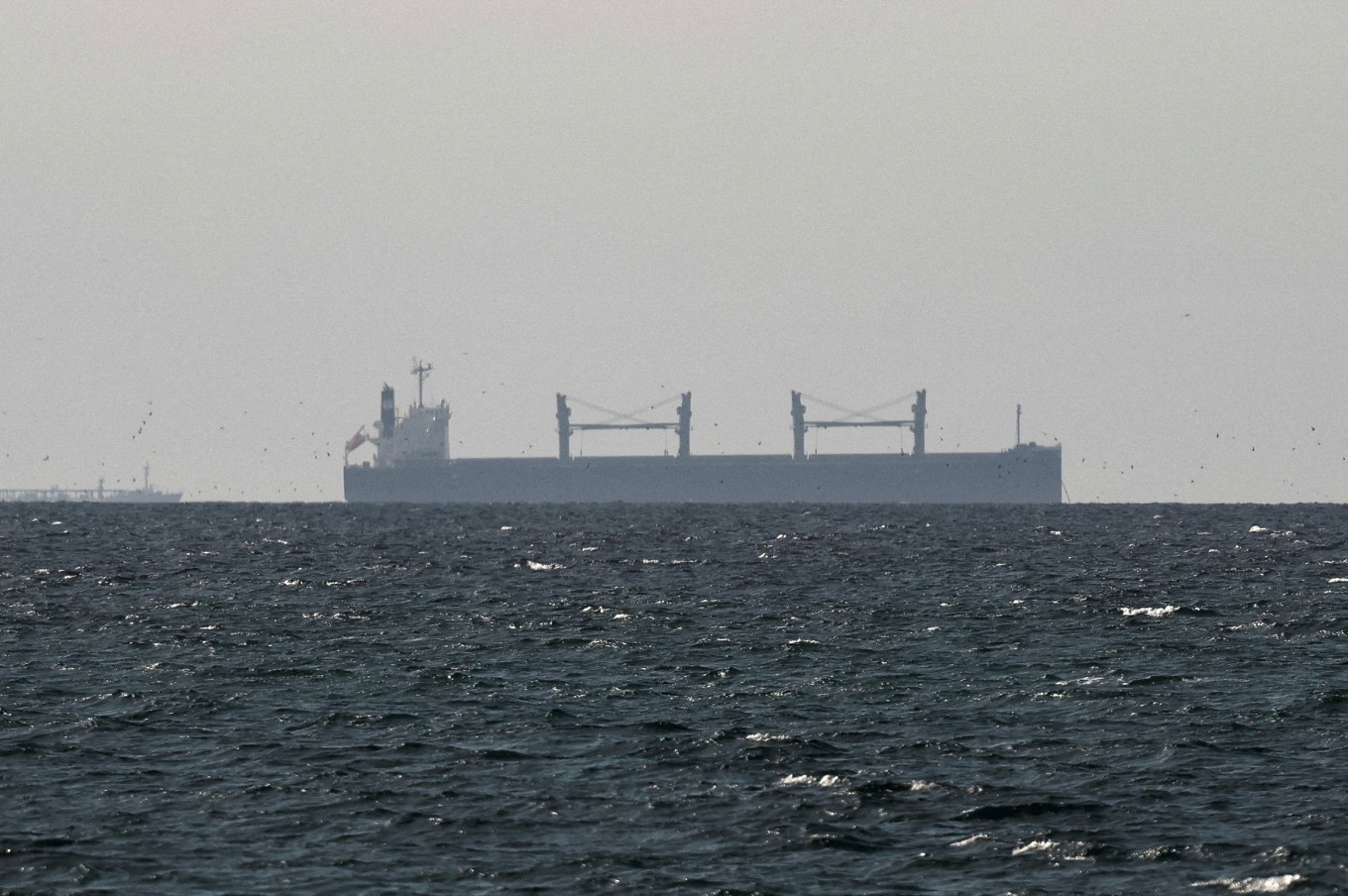 A cargo ship in the Gulf, near the Strait of Hormuz, as seen from northern Ras al-Khaimah, near the border with Oman’s Musandam governance, in United Arab Emirates, March 11, 2026. (Reuters/-)
T
he crucial Strait of Hormuz will not reopen until the United States lifts its naval blockade on Iranian ports, Tehran said Saturday, as a top official warned that a final peace deal remained "far" off.
Mohammad Bagher Ghalibaf, speaker of the Iranian parliament, said in a televised address that there has been "progress" in talks with Washington "but there are many gaps and some fundamental points remain."
"We are still far from the final discussion," said Ghalibaf, one of Tehran's negotiators in the talks aimed at ending the war launched by Israel and the United States against the Islamic Republic.
A two-week ceasefire is set to end on Wednesday unless it is renewed.
US President Donald Trump said meanwhile that "very good conversations" were going on with Iran but warned Tehran against trying to "blackmail" the United States.
On Friday, Tehran had declared the Strait of Hormuz, which usually carries a fifth of the world's oil and liquefied natural gas, open after a ceasefire was agreed in Israel's war with Iran's ally Hezbollah in Lebanon.
This prompted elation in global markets and sent oil prices plunging, but with Trump insisting the blockade of Iranian ports would continue until a deal is struck to end the wider war, Tehran said it was shuttering the strait once more.
"If America does not lift the blockade, traffic in the Strait of Hormuz will definitely be limited," Ghalibaf said.
Iran's supreme leader Mojtaba Khamenei, who has yet to be seen since taking power, said meanwhile in a written message that Iran's navy "stands ready" to defeat the United States.
Trump, speaking to reporters at a White House event, accused Iran of getting "a little cute" with its recent moves and warned Tehran not to try to "blackmail" Washington with its flip-flopping on the Strait of Hormuz.
"We have very good conversations going on," the president said, adding that the United States was "taking a tough stand."
Tehran’s renewed tough messaging caused fresh uncertainty around the Iran conflict, raising the risk that oil and gas shipments through the strait could remain disrupted.
Maritime security and shipping sources said some merchant vessels had received radio messages from Iran’s navy saying no ships were allowed through the waterway, reversing Friday's signs that traffic might resume.
Maritime trackers had earlier shown a convoy of eight tankers transiting the narrow passage in the first major movement of ships since the US-Israeli war on Iran began seven weeks ago.