TheJakartaPost
Please Update your browser
Your browser is out of date, and may not be compatible with our website. A list of the most popular web browsers can be found below.
Just click on the icons to get to the download page.


Popular Reads
Top Results
No results found. Please check your search term and try again
Can't find what you're looking for?
View all search results
Popular Reads
Top Results
No results found. Please check your search term and try again
Can't find what you're looking for?
View all search resultsPakistan army chief in Tehran as Iran weighs US peace offer
The disagreements between Iran and the US remained "deep and extensive", according to the Iranian Foreign Ministry.
Change text size
Gift Premium Articles
to Anyone
Share the best of The Jakarta Post with friends, family, or colleagues. As a subscriber, you can gift 3 to 5 articles each month that anyone can read—no subscription needed!
 Set as preferred source
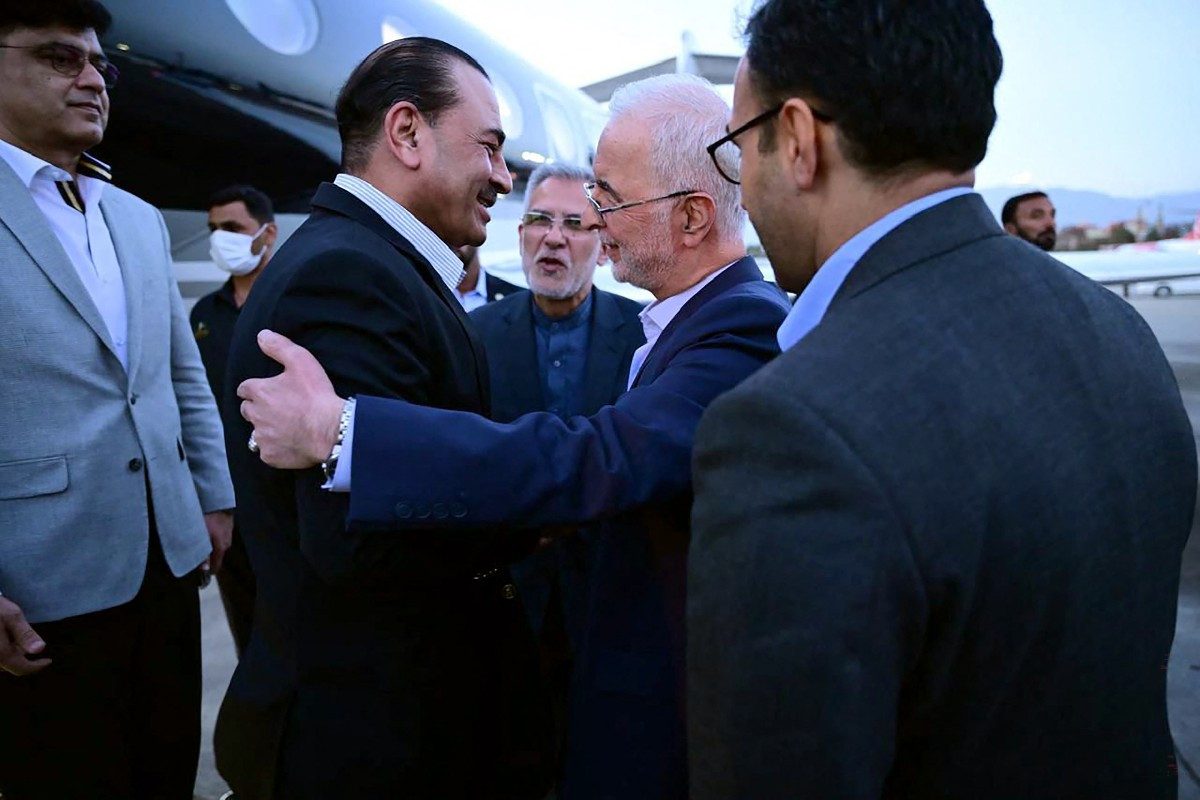 This handout photograph taken and released on May 22, 2026 by Pakistan's Inter-Services Public Relations (ISPR) shows visiting Pakistan’s Army Chief Syed Asim Munir (second left) being greeted by Iran’s Interior Minister Eskandar Momeni upon his arrival in Tehran as part of ongoing mediation efforts between Iran and the United States. (AFP/Handout/Inter-Services Public Relations)
P
akistan's powerful army chief arrived in Tehran on Friday as diplomacy around the Middle East war gathered pace, with Iran weighing a new United States peace proposal while warning that deep divisions still stand in the way of a deal.
Iran's foreign ministry spokesman Esmaeil Baqaei cautioned that the visit did not mean "we have reached a turning point or a decisive situation."
The disagreements between Iran and the US remained "deep and extensive", he added, according to Iran's ISNA news agency.
US Secretary of State Marco Rubio had earlier voiced hope of progress toward ending the war, which began on Feb. 28 with US-Israeli strikes on Iran.
An April 8 ceasefire halted open fighting, but negotiations, including historic face-to-face talks in Islamabad, have yet to produce a lasting agreement.
US President Donald Trump has described the stop-start negotiations as teetering on the "borderline" between a deal and renewed attacks.
Pakistan's military said Field Marshal Asim Munir had "arrived in Tehran as part of ongoing mediation efforts". He was welcomed by Iran's Interior Minister Eskandar Momeni and Pakistan's Mohsin Naqvi.
Naqvi had visited Iran for the second time in a week on Wednesday, meeting Iranian President Masoud Pezeshkian and Foreign Minister Abbas Araghchi.
Baqaei said a Qatari delegation also met Iran's foreign minister Friday.
"In recent days, many countries, both regional and non-regional, have been trying to help bring the war to an end [...] However, Pakistan remains the official mediator," he added.
Pakistan hosted in April the only direct US-Iran talks since the war began. Munir played a central role in that round, greeting both delegations and showing public warmth with US Vice President JD Vance.
But the talks failed, with Iran accusing Washington of making "excessive demands". Since then, the two sides have traded proposals under the constant threat of renewed war.
Hormuz squeeze
Rubio, speaking on the margins of a NATO meeting in Sweden, said there had been "some progress" in the talks, but warned that Washington was "not there yet".
"It may not" change, Rubio said. "We're dealing with a very difficult group of people. And if it doesn't change, then the president's been clear he has other options."
Rubio said Trump "prefers the negotiated option" but had expressed concern that a deal "maybe [...] is not possible".
He also said Trump's "disappointment" with NATO allies over their lack of support in the Iran war would need to be "addressed".
European countries may need a "Plan B", Rubio said, to help force open the Strait of Hormuz if the war drags on.
Tehran effectively closed the key shipping lane, which normally carries large volumes of oil and gas, in retaliation for the US-Israeli strikes.
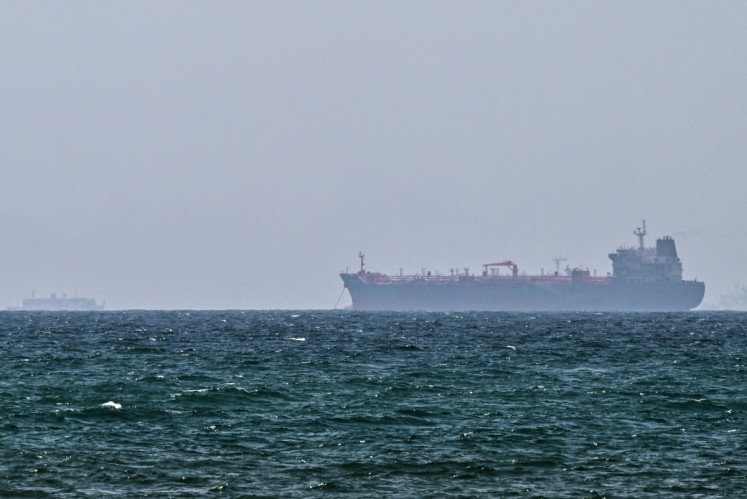
The future of Hormuz remains a key sticking point, with fears growing that the global economy will suffer as pre-war oil stockpiles run down.
Markets nevertheless took some comfort from the diplomacy, with Wall Street rising Friday and the Dow closing at a second straight record high as investors bet talks could eventually produce an off-ramp.
Oil prices also rose, however, underscoring fears that disruption in Hormuz will keep feeding inflation. US consumer sentiment fell to its lowest level since records began in 1952, with high prices still eroding household finances.
European Union nations moved Friday towards sanctions on Iranian officials and others blamed for blocking the strait.
Baqaei said Hormuz and the US blockade of Iranian ports were also under discussion: "The issue of ending the war on all fronts, including Lebanon, is very important."
Lebanon front
Hezbollah drew Lebanon into the war with rocket fire at Israel after Iran's supreme leader was killed in US-Israeli strikes.
Since an April 17 truce, Israel has continued strikes, demolitions and evacuation orders in south Lebanon, saying it is targeting Hezbollah, which has also kept up attacks.
Late Friday, Lebanon's state-run National News Agency said Israel carried out five airstrikes in the east of the country near the Syrian border, targeting the Nabi Sreij area outside the town of Brital.
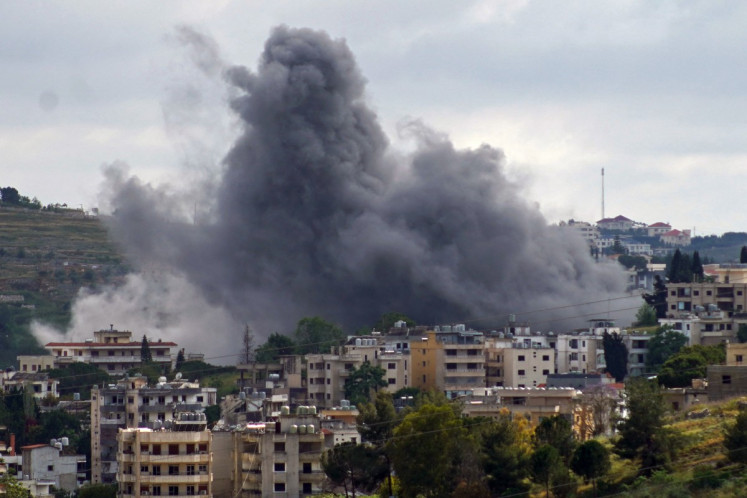
The agency said the area had been spared from attacks since the ceasefire, and that the strikes came after Israel called for the evacuation of two areas in southern Lebanon.
Lebanon's health ministry said Israeli attacks have killed at least 3,111 people in Lebanon since March 2. The ministry said Israeli strikes on the south killed 10 people on Friday, including six rescuers and a child.
The Israeli military announced a separate strike that killed two people in southern Lebanon.
The US on Thursday sanctioned nine Hezbollah-linked individuals, including two officers, accused of "obstructing the peace process in Lebanon." They were the first Lebanese officers sanctioned by Washington.