TheJakartaPost
Please Update your browser
Your browser is out of date, and may not be compatible with our website. A list of the most popular web browsers can be found below.
Just click on the icons to get to the download page.


Popular Reads
Top Results
No results found. Please check your search term and try again
Can't find what you're looking for?
View all search results
Popular Reads
Top Results
No results found. Please check your search term and try again
Can't find what you're looking for?
View all search resultsBudget cuts undermine Indonesia’s geopolitical strategy, warns study
Centralized policymaking on foreign policy may weaken the country’s institutional capacity in responding to a potential conflict between bigger nations in the Indo-Pacific, as suggested by a recent report.
Change text size
Gift Premium Articles
to Anyone
Share the best of The Jakarta Post with friends, family, or colleagues. As a subscriber, you can gift 3 to 5 articles each month that anyone can read—no subscription needed!
 Set as preferred source
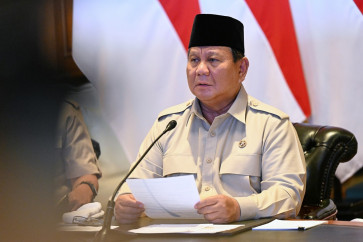
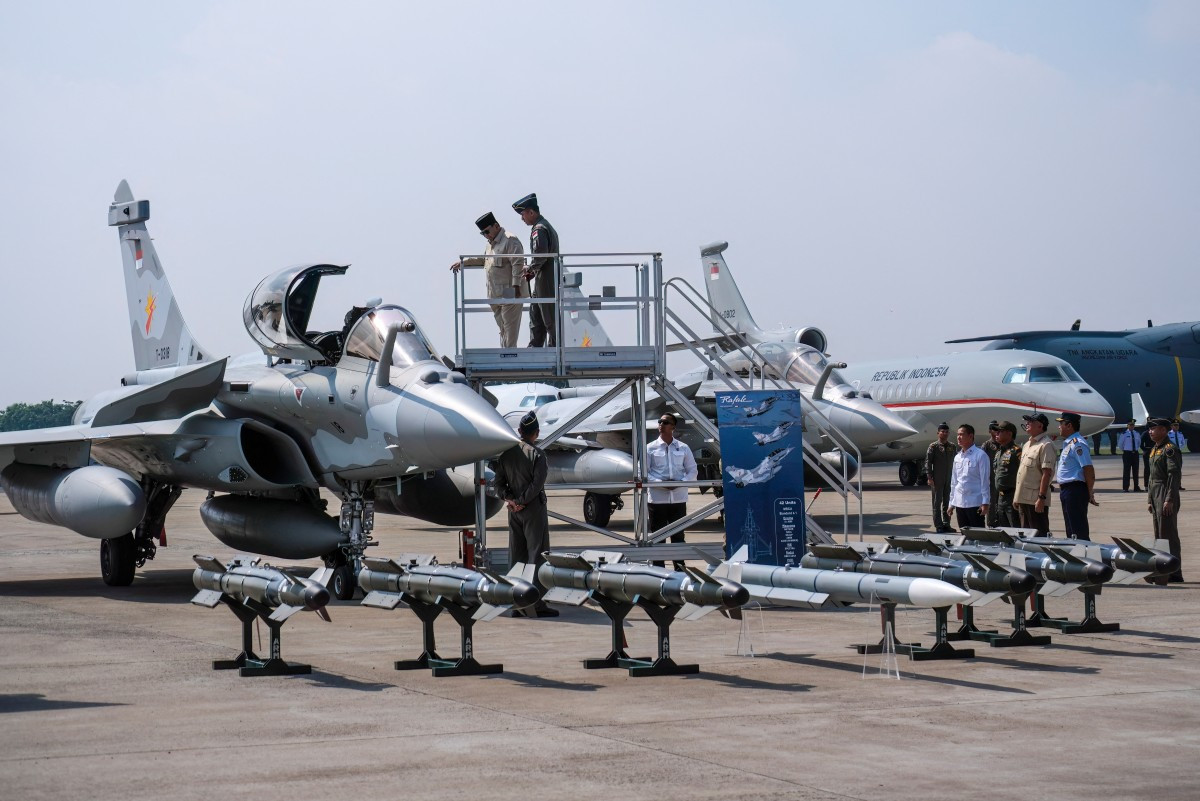 President Prabowo Subianto (left) looks inside the cockpit of a Rafale jet fighter during a ceremony to hand over six new Rafale jet fighters, four Dassault Falcon 8X aircrafts and one Airbus A400M Atlas aircraft to the Air Force at Halim Perdanakusuma Air Force Base in Jakarta on May 18, 2026. (AFP/Bay Ismoyo)
I
ndonesia’s challenge in any conflict in the Indo-Pacific stems not from a direct military threat, but domestic governance and austerity measures that leave the country less resilient to economic shocks and geopolitical spillover, as suggested by a recent study.
The study, conducted by Asia Society Australia and supported by the Australian Department of Defense, examined how five maritime Southeast Asian nations, including Indonesia, would respond to an open conflict between major powers. They assessed each country’s foreign policy, economic and security alignments, as well as domestic factors shaping their international positioning.
Drawing on a two-year analysis based on interviews with experts and retired officials, the report found Indonesia to be likely to struggle to maintain its non-aligned stance in the event of an open conflict.
“The President’s significant influence over foreign policy, combined with institutional limitations stemming from budget constraints, shapes a pragmatic approach that treats China as an indispensable economic partner and the [United States] as its most trusted security partner,” the authors wrote in the study issued in May.
“Under conflict conditions, however,” they continued,” this balance becomes more precarious.”
Under its long-standing “free and active” foreign policy, Indonesia has sought to maintain strategic neutrality in navigating power rivalries, with successive administrations varying in how they balanced relations with China and the US, depending on their policy priorities.
Former president Joko “Jokowi” Widodo, for example, was widely perceived as placing greater emphasis on ties with China, with his economic and infrastructure-driven agenda frequently aligning with Beijing’s initiatives.