The Jakarta Post
Please Update your browser
Your browser is out of date, and may not be compatible with our website. A list of the most popular web browsers can be found below.
Just click on the icons to get to the download page.


Popular Reads
Top Results
No results found. Please check your search term and try again
Can't find what you're looking for?
View all search results
Popular Reads
Top Results
No results found. Please check your search term and try again
Can't find what you're looking for?
View all search resultsASEAN gets first shared supercomputer in Indonesia
Hosted by Indonesia’s National Research and Innovation Agency (BRIN) and South Korea’s Institute of Science and Technology Information (KISTI), the facility is intended to allow researchers from across ASEAN to remotely access computing resources that remain limited in much of the region.
Change text size
Gift Premium Articles
to Anyone
Share the best of The Jakarta Post with friends, family, or colleagues. As a subscriber, you can gift 3 to 5 articles each month that anyone can read—no subscription needed!
 Set as preferred source
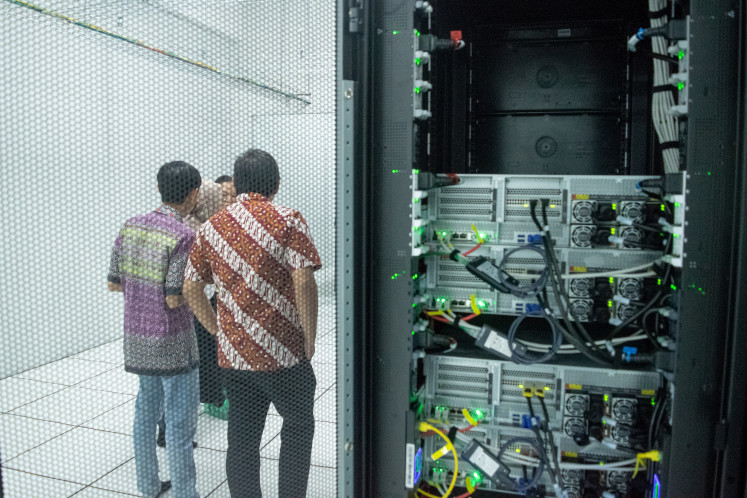
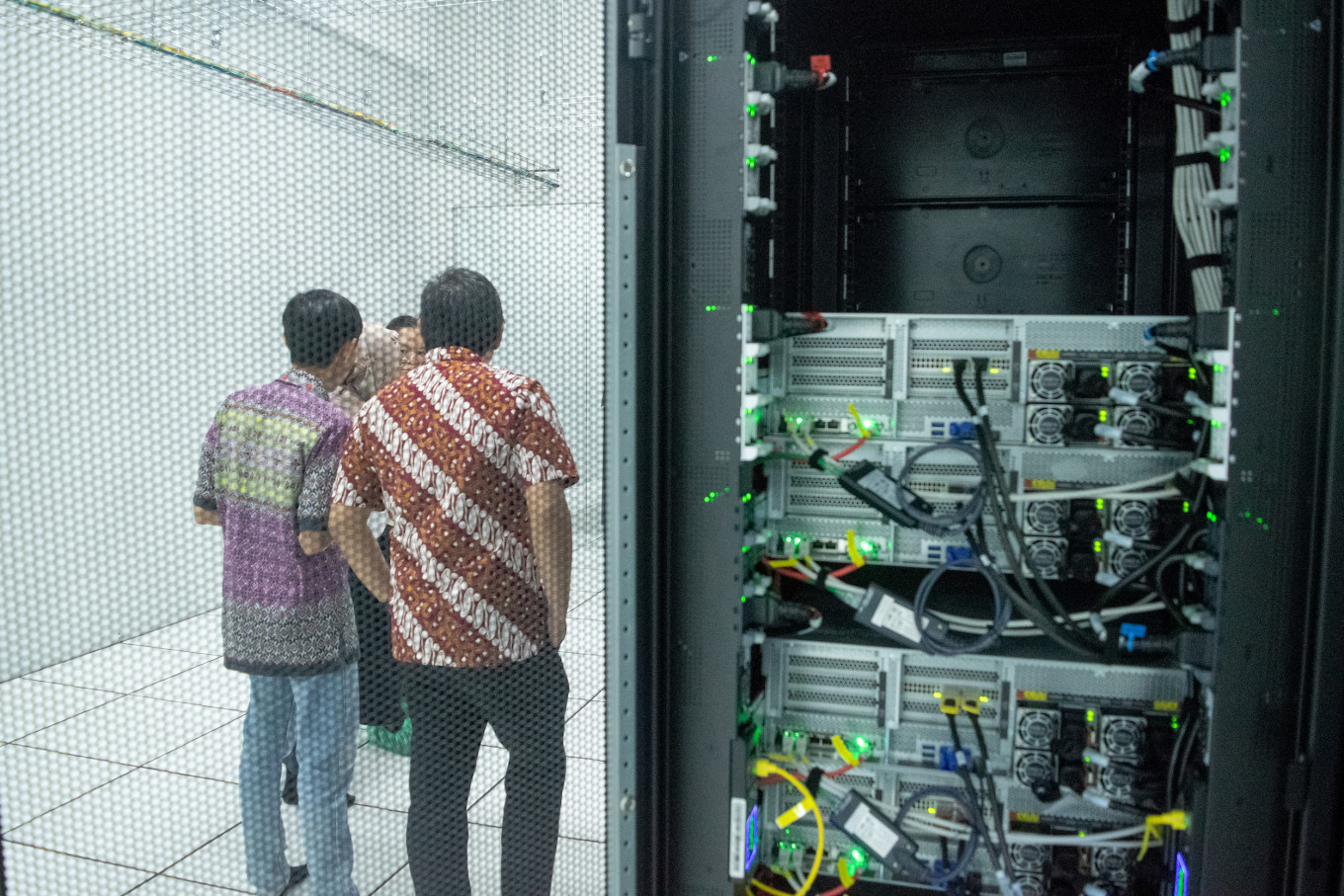 A closer look at a supercomputer, on Wednesday. BRIN and the South Korean delegation to ASEAN gives a tour to representatives of ASEAN member states of the HPC facility in Cibinong, West Java. (JP/Salman M. Vermonte)
I
ndonesia has become home to ASEAN’s first shared high-performance computing (HPC) facility, giving researchers across the region access to a supercomputer designed to support artificial intelligence, climate modeling, disaster forecasting and other data-intensive research.
The facility in Cibinong, West Java, was presented to delegations from all 11 ASEAN member states on Wednesday as the most tangible piece of digital infrastructure to emerge from the ASEAN-South Korea partnership, a five year, US$10 million initiative under the Korea-ASEAN Digital Innovation Flagship (KADIF).
Hosted by Indonesia’s National Research and Innovation Agency (BRIN) and South Korea’s Institute of Science and Technology Information (KISTI), the facility is intended to allow researchers from across ASEAN to remotely access computing resources that remain limited in much of the region.
"This facility is a significant milestone of the strengthened digital partnership between ASEAN and Korea," South Korean Ambassador to ASEAN Lee Chul told The Jakarta Post, calling it a strategic regional asset that could advance innovation in areas ranging from AI and biotechnology to disaster forecasting and industry.
Cibinong was selected partly because of its existing research infrastructure and its proximity to Jakarta, home to the ASEAN Secretariat and a key center for regional policy and administrative processes. The facility is housed at BRIN’s Data Center, allowing it to use existing research networks and a reliable power supply needed to operate and maintain the HPC system.
Read also: ASEAN ‘benches’ in Jeju celebrate bloc’s ties with South Korea
The facility has a current test capacity of 3.2 petaflops, with a theoretical peak of about 4.2 petaflops. One petaflop represents 1 quadrillion calculations per second; a rate that would take a human making one calculation per second about 31 million years to match.