TheJakartaPost
Please Update your browser
Your browser is out of date, and may not be compatible with our website. A list of the most popular web browsers can be found below.
Just click on the icons to get to the download page.


Popular Reads
No popular reads data found
Top Results
No results found. Please check your search term and try again
Can't find what you're looking for?
View all search results
Popular Reads
No popular reads data found
Top Results
No results found. Please check your search term and try again
Can't find what you're looking for?
View all search resultsinvestigation

Archipelago 1 week ago
PREMIUM
North Sumatra University investigates student over alleged sexual harassment
Following the widely publicized sexual harassment case at UI in June, USU has opened a probe into a business student who allegedly harassed around 60 female students, asking all victims to report to its sexual harassment task force.
Politics 1 week ago
PREMIUM
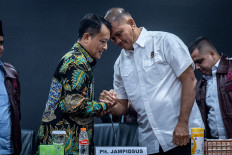
Eyes on AGO after takeover of probe into ex-top prosecutor
Concerns over due process and accountability grew after the National Police handed over an investigation into corruption cases implicating the former assistant attorney general for special crimes Febrie Adriansyah to the Attorney General's Office (AGO).
Academia 3 weeks ago
PREMIUM
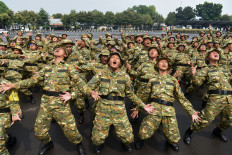
Death by omission: The true cost of militarizing cooperatives
What began as a signature government initiative has spiraled into an institutional disaster, where a toxic blend of military indoctrination, extreme fiscal bypasses and fatal medical negligence resulted in the deaths of five civilian trainees. Halting the program is not enough, the state must be held fully accountable for subjugating a grassroots civilian economy to a lethal, top-down military culture.

Academia 3 weeks ago
PREMIUM
The money game is bond, Patriot Bond — or is it a shield?
By carving a permanent, legally protected blind spot into its financial system, Indonesia’s new bond shield risks turning the nation into a premier conduit for global money laundering. In a single legislative session, Jakarta may have traded a decade of hard-won international trust for short-term sovereign capital.

Archipelago 1 month ago
PREMIUM
Death of family of four while camping caused by carbon monoxide poisoning, police say
Muhamad Ali Munawar, 52, his wife Maghfirah, 43, and their two sons, Bagas Amar Hakiki, 21, and Alvino Evan Hakim, 16 were found unresponsive inside their tent on May 27 after a campground caretaker approached them to remind them of the check-out time. Authorities later confirmed that all four had died.
Politics 1 month ago
PREMIUM
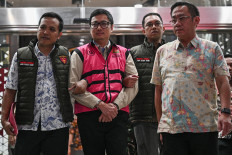
More suspects arrested as AGO widens probe into free meals corruption
The Attorney General’s Office (AGO) has arrested two more suspects related to corruption in the free nutritious meal program, widening its probe, which has already ensnared three former leaders of the National Nutrition Agency (BGN) in charge of the project.
Academia 1 month ago
PREMIUM
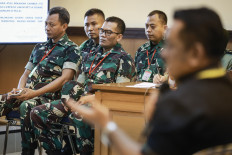
A test of legal certainty: Prabowo's impasse over the Andrie case
As President Prabowo finds himself in an international spotlight over a brutal chemical attack on a human rights defender, a landmark pretrial ruling has exposed a deep systemic clash between civilian accountability and entrenched military impunity.
Academia 3 months ago
PREMIUM
The constitutional challenge: Addressing the architecture of military impunity
Indonesia’s "architecture of impunity" transforms personal vendettas into institutional shields, allowing military personnel to bypass civilian justice. By exploiting legislative loopholes and expanding into civil governance, the TNI risks dismantling the very constitutional safeguards designed to ensure democratic accountability.