Opinion Articles & News Commentary
Please Update your browser
Your browser is out of date, and may not be compatible with our website. A list of the most popular web browsers can be found below.
Just click on the icons to get to the download page.


Popular Reads
Top Results
No results found. Please check your search term and try again
Can't find what you're looking for?
View all search results
Popular Reads
Top Results
No results found. Please check your search term and try again
Can't find what you're looking for?
View all search results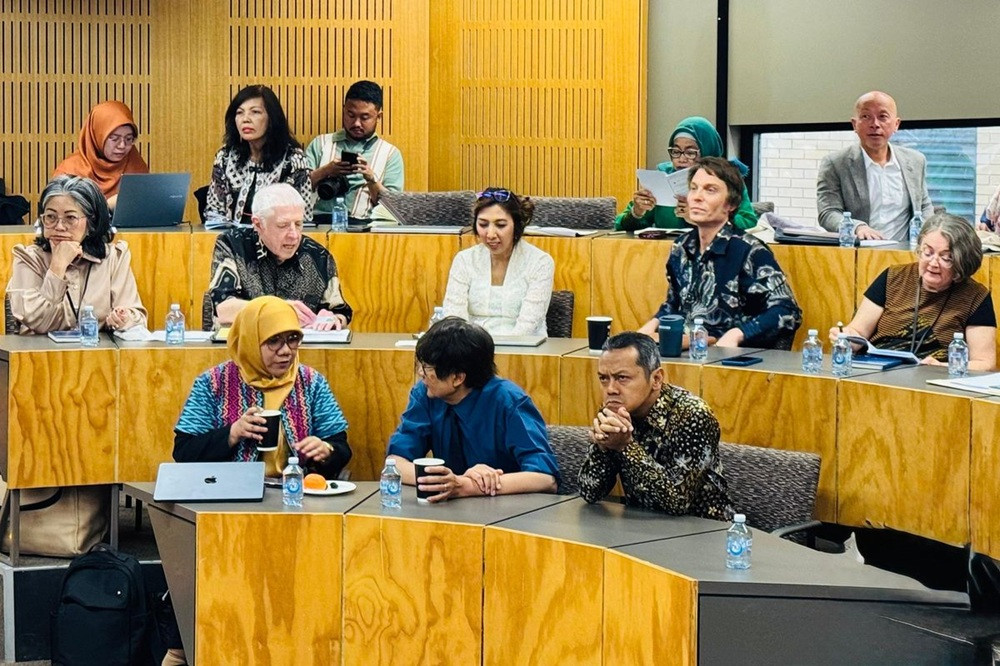
Academia
premium
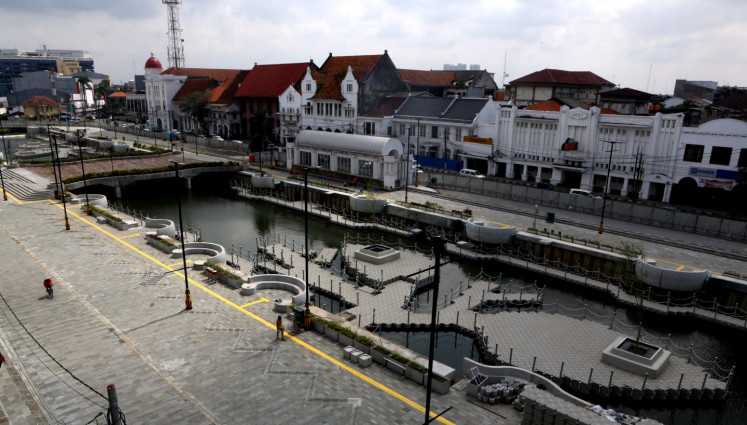
The fading away of Indonesian in Australia
As Indonesian faces functional extinction in Australian classrooms by 2031, both nations stand on the brink of a costly strategic blind spot.
1 week ago
Academia
premium
India-Indonesia: Multipolarity and Global South
India maintains that a global multipolar order must start with a multipolar Asia, rejecting both a US-dominated unipolar structure and a China-centric "Asia for Asians" model. ...
1 week ago
Academia
Net zero timing matters for the future of El Niño
Extreme El Niños are coming. Reaching net zero sooner means facing fewer of them. ...
1 week agoThe Latest
Academia
Why the Asia-Pacific needs stronger development finance institutions
Indonesia’s journey, and PT SMI’s contribution to it, is but one part of a broader regional narrative. What I carried home from Colombo was a profound sense of optimism that our development finance institutions are becoming more than financiers of growth; we are becoming a community of practice, united by a shared purpose and enriched by the exchange of ideas and experience.
1 week ago
Academia
premium
Foreign Ministry back in the driver's seat, but not alone
Arrmanatha’s appointment puts diplomats back in the driver’s seat of Indonesian foreign policy, but navigating today’s volatile geopolitical landscape requires soldiers, economists and the Palace to chart the course together.
1 week ago
Academia
premium
How worried should we be about the global economy?
The global economy is entrenched in a cycle of sluggish economic growth, with rates in many countries, particularly the major developed economies, stalling well below 3 percent.
1 week ago
Academia
premium
The House’s right to act and the political agenda of 2029
The controversy over Gibran’s credentials is no longer just about a diploma: It is a defining test of whether the national legislature still checks executive power or merely bows to it.
1 week ago
Academia
premium
From farm innovation to food security for all
The main challenge to food security for all is not innovation but adoption, which involves localizing proven solutions and ensuring that they are affordable to use, maintain and grow.
1 week ago
Academia
premium
When investor protection risks becoming financial immunity
Indonesia’s push to lure capital through Danantara’s special bonds risks turning investor protection into a legal shield for financial crime and tax evasion.
1 week ago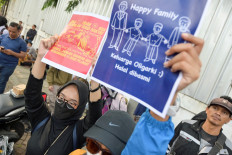
Academia
premium
Indonesia badly needs inclusive institutions, not rhetoric
Indonesia’s path to lasting prosperity depends not on the myth of a strongman savior, but on dismantling elite capture to build institutions that are truly fair, accountable and built to outlast power.
1 week ago
Academia
premium
Public investment is fiscally responsible
Governments’ fiscal policies should be judged by whether they strengthen the economy’s capacity to meet public obligations over time.
1 week ago
Academia
premium
Women in power, corruption and the limits of affirmative action
Affirmative action can open the corridors of power to women, but it was never meant to be an immunity card against the corrupting machinery of Indonesian politics.
1 week ago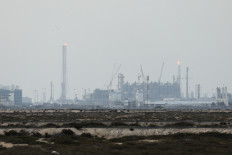
Academia
Middle East LNG industry remains hostage of Iran war
Until a durable resolution of the United States-Israeli war with Iran is reached, Gulf shipments will be heavily curtailed, leaving the global LNG market seriously strained.
1 week ago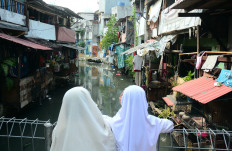
Academia
premium
The rich world’s climate distraction
Development must focus on the best ways to help the poor, who are more vulnerable to everything, not just climate change.
1 week ago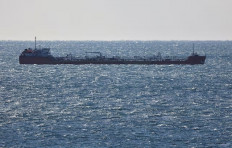
Academia
premium
Trump’s Russian diesel deal is a warning to Asia
By breaking ranks to cut a private fuel deal with Moscow, Washington just handed Asia an urgent lesson: Build your own energy reserves, or get priced out of the scramble.
1 week ago
Academia
premium
Bending, not breaking? Indonesia’s resilience paradox
Indonesia’s increasingly centralized economic model promises greater protection against external shocks. Yet concentrating both authority and financial risk in the state may be eroding the many shock absorbers on which the country’s resilience has long depended.
1 week ago
Academia
The next world order will be built on systems capacity
Autonomy will increasingly depend on whether societies can keep essential systems functioning, respond to disruption and create new capabilities when existing ones become obsolete.
1 week ago
Academia
premium
Indonesia generates smoke, ASEAN merely suffers
Southeast Asia has mastered moving capital across borders. Now it must stop letting corporate responsibility stall at customs while millions breathe transboundary haze.
1 week ago
Academia
Can Central Java afford the water cost of AI?
Java’s northern coast faces severe water-catchment degradation, yet an AI center requiring massive amounts of water is planned there.
1 week ago
Academia
Shifting mental health care to communities
Millions remain locked away in psychiatric institutions under the guise of care—it is time to replace outdated confinement with dignity, community support, and fundamental human rights.
1 week ago
Academia
premium
Why producing more food is no longer enough
Record harvests mean little if plates stay empty: Indonesia must stop measuring food security by the tonne and start measuring it by nutrition, access and ecological sense.
1 week ago
Academia
premium
Why pharmaceutical sovereignty must become a national priority
Indonesia covers nearly its entire population under national health insurance, yet relying on imports for 90 percent of its active medicine ingredients leaves the country dangerously exposed to the next global shock.
2 weeks ago
Academia
Resetting the World Bank-IMF’s relationship with the world
In the decades of their work, various challenges have arisen in relation to negative impact on human rights, and social and environmental issues.
2 weeks ago
Academia
premium
Outlook of the national palm oil sector in 2027
The government should put an end to the various rules that stifle investment and instead focus on building a healthy, competitive business climate that ensures legal certainty.
2 weeks ago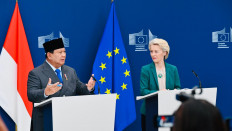
Academia
premium
EU–Indonesia CEPA: Turning commitments into trade and investment opportunities
Sweden and Indonesia’s partnership is increasingly focused on the future: supporting Indonesia’s industrial transformation while accelerating digitalization and the green transition in a rapidly changing global economy.
2 weeks ago
Academia
premium
The extractivist logic haunts the AI data center rush in Indonesia, Malaysia
Behind the promise of Southeast Asia’s AI revolution lies a destructive reality: an old-school scramble for power, land and minerals that is reviving fossil fuels and pushing fragile ecosystems to the brink.
2 weeks ago
Academia
premium
Indonesia-China: Maritime cooperation without compromising national interests
Maritime cooperation with Beijing cannot come at the expense of sovereign rights: for Indonesia, the smart play is engagement backed by unyielding legal firewalls and a fortified presence in the North Natuna Sea.
2 weeks ago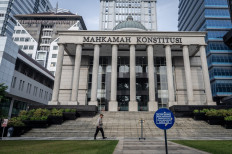
Academia
premium
Impeachment and democratic consolidation
Can impeachment strengthen a democracy, or does it only wound it?
2 weeks ago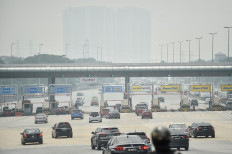
Academia
premium
Fires and cross-border haze: What can still be done
Southeast Asia’s latest haze crisis was entirely foreseeable. As millions choke beneath toxic skies, halting the blazes today must come before the inevitable, unsparing reckoning tomorrow.
2 weeks ago
Academia
premium
Gibran wiped from the 2029 contest without a crisis
The court saga surrounding Gibran's credentials has essentially spelled the end of the Widodo political dynasty, not by killing it outright but by ensuring that it fades away.
2 weeks agoPopular
- RI urges umrah pilgrims to avoid Singapore, Malaysia transit flights
- Prabowo begins third year with tighter grip as public support slips
- Indonesia's gas export cuts: A costly blow to trust and regional leadership
- Power for the people
- Indonesia, Singapore at odds as gas export cut raises energy concerns
- Jakarta should not lower the bar for Myanmar
- Decolonization and the geopolitics of legitimacy: From Morocco to Papua
- Navy thwarts departure of 12 Vietnamese from Batam to Malaysia
- Indonesia has a mountain of rice, but not food security
- In Singapore, Merz seeks to widen market access to counter trade restrictions