The Jakarta Post
Please Update your browser
Your browser is out of date, and may not be compatible with our website. A list of the most popular web browsers can be found below.
Just click on the icons to get to the download page.


Popular Reads
Top Results
No results found. Please check your search term and try again
Can't find what you're looking for?
View all search results
Popular Reads
Top Results
No results found. Please check your search term and try again
Can't find what you're looking for?
View all search resultsThe vitality of volcanoes: a new method in the fight against stunting
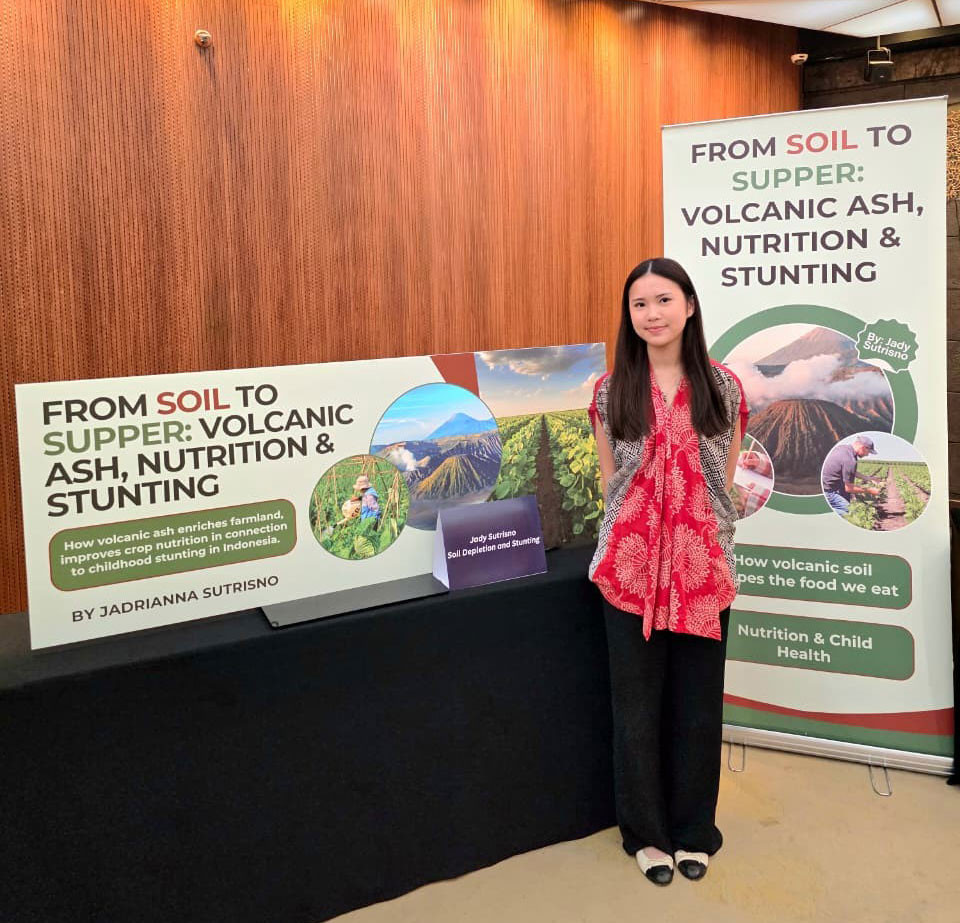
Jadrianna Sutrisno, 16-year-old student from Jakarta Intercultural School (JIS), examines the correlation between soil used for agriculture complemented by volcanic ash, and the statistics of stunting in each province.
Change text size
Gift Premium Articles
to Anyone
Share the best of The Jakarta Post with friends, family, or colleagues. As a subscriber, you can gift 3 to 5 articles each month that anyone can read—no subscription needed!
 (Courtesy of The Jakarta Post)
W
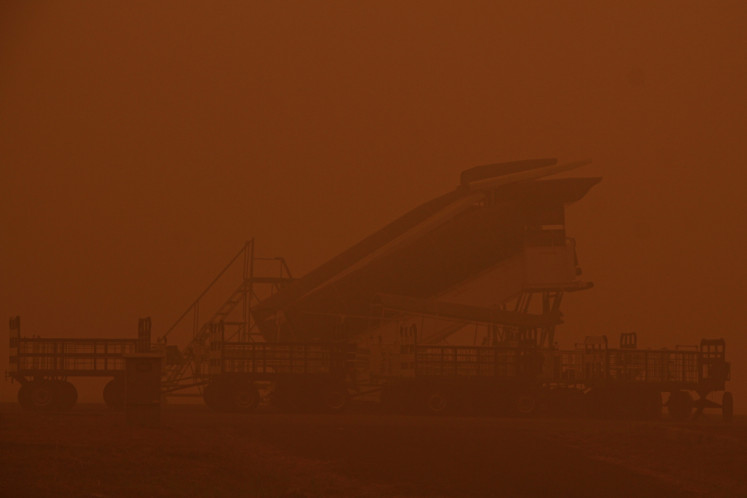
ith Indonesia’s strategic position within what is known as the Pacific ring of fire, the country is home to 141 volcanoes recorded by The Smithsonian Institution, with around 130 of them being active. The strategic position means Indonesia has the highest numbers of eruptions.
To name a few historical disasters, Indonesia’s volcanic eruptions have affected the world’s climate, notably the volcano that led to the creation of Lake Toba with its super-eruption around 74,000 years ago, which caused a six-year volcanic winter. In addition, Mount Tambora’s eruption in 1815 and the Krakatau explosion in 1883 have been linked to plunging world temperature’s.
On the other side, areas with high volcanic activity also have some of the world’s most fertile farmlands due to the release of plant nutrients such as potassium and phosphorus, which leads to better agriculture and food security.
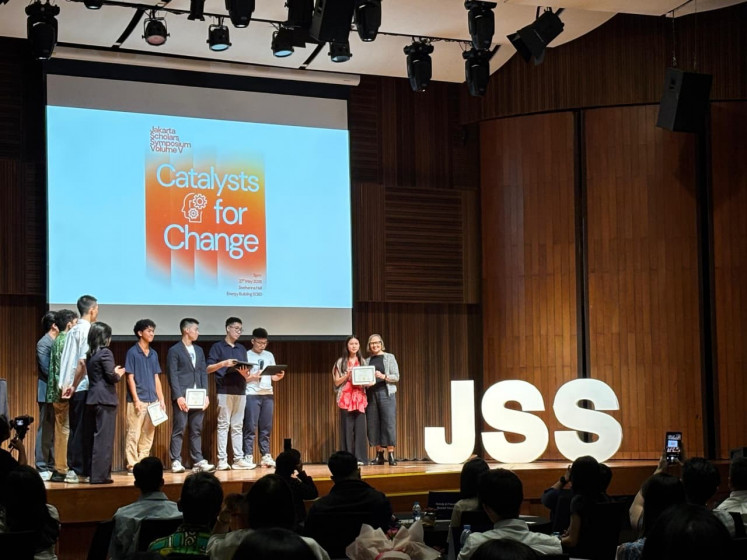
This is particularly highlighted in the research done by 11th grader Jadrianna Sutrisno in her project entitled “From Soil to Supper: Agriculture and Child Health in Indonesia”. Presented during this year’s Jakarta Scholars Symposium (JSS) on May 27, she makes a case of how the after-effects of volcanoes can be the key to food security.
Turning soil to supper
According to a research paper published by Vincent Neall of Massey University, while volcanic soils only cover 1 percent of the world’s land surface, they can support 10 percent of the world’s population, including some areas with the highest population densities.

“I think it's important to see that just because they seem dangerous or destructive doesn't necessarily mean that that's all there is. So, I think we should look at volcanoes in a different light. Not specifically all positive. But there are positive benefits to things that seem destructive as well,” said Jadrianna, who aims to inform her peers on the positive side of volcanic eruptions in Indonesia.
For instance, it is recorded that several years after Mount Galunggung in West Java erupted in April 1982, crop productivity in the local area of Tasikmalaya was boosted exponentially, as is the same with other mountainous areas. Dutch scientist ECJ Mohr observed in 1938 that regions with soils derived from volcanic ash have higher population densities.
Meanwhile, the 2024 Indonesian Nutritional Status Survey (SSGI) also recorded that the national stunting rate sits at 19.8 percent, which is a decrease from 27.7 percent in 2019, attributed to the result of interventions over the years. However, it remains one of Indonesia's most critical public health challenges, as the second-highest rate in Southeast Asia, and roughly one in five children under five suffers from chronic malnutrition.
“Essentially, I've always been interested in the environment and always been interested in science. And I wanted to research something and research a topic that I think is relevant to Indonesia, which is why I chose stunting because it is a pretty relevant and prevalent problem in Indonesia. And I wanted to combine that with my own passion, which is environmental science,” Jadrianna said in the preface to her project.
Regional disparities
Based on the benefit that volcanic ash can produce to maximize crop production, Jadrianna found a correlation between soil and stunting rates in each province. She found that the area with the lowest stunting rate of 15.9 percent was West Java, an area that has rich volcanic terraces, while the highest stunting rate of 40.8 percent is located in the middle of Papua island, which is an area that has no volcanic activity and very limited arable land.
“I basically did a lot of research on the soil and the regions in Indonesia and we found a positive correlation between the soil fertility from the ash enrichment and stunting. Because obviously what we eat and what we're consuming directly affects our nutrition. And this directly correlates to child health and nutrition in Indonesia,” she explained.
Taking a closer look at the distribution of mountains and the different types of agriculture in the different provinces, she delved deeply into how it has influenced nutrition through agriculture and food production, which is a key reason for the prevalence of stunted children.
“Papua is actually known for its peat soils, which are basically acidic soils that easily degrade, which means that they do not support agriculture, and are not suitable for intensive farming. As you can see, nitrogen, phosphorus and potassium levels are extremely low in areas in Papua, which means that plants do not receive enough nutrients to help them grow,” she further clarified.
Moreover, another area that she highlighted is East Nusa Tenggara (NTT). She added that 72 percent of the land in NTT receives less than 2,000 millimeters of rainfall annually, which means that on top of the nutrients not being there, there is also not enough water for crops to grow sufficiently.
While Jadrianna is aware of other limitations that may lead to the rate of stunted children, such as poverty, maternal nutrition, healthcare access and sanitation, she also emphasized that the correlation between agriculture and the number of children is one that should not be overlooked.
Visualizing the data to be more readable through a table chart, she proved that areas with higher volcanic ash exposure and easier terrain often have higher nutrition levels and lower stunting levels.
Offering a solution
She concluded her presentation with three steps that are vital to combat the inequality of each province. Which are: peatland restoration, improvement in irrigation and water management and improvement infrastructure, along with food access and health care.
“Let's first look at peatland restoration. Do you remember Papua? Papua is actually well known for its peatlands because the soil there is very acidic and easily degrades, which means that it is not suitable and does not support crop farming there. By restoring these, we can protect the nutrients in the plants and promote crop growth,” she explained about the first solution.
In addition to improving the soil to be able to sustain successful crop production, Jadrianna also highlighted the need for a better irrigation system throughout the islands, to be modeled after the efficiency of systems used in Java. It is hoped that by finding a better way to regulate water supply, farmers can reduce the dependency on rainfall, doubling down on that by harvesting rainwater during the rainy season to use during times of drought.
Lastly, she brought attention to the lack of infrastructure to support access to food and healthcare for all Indonesians. She noted the importance of improving the country’s transportation infrastructure.
“We now know that obviously volcanic ash is very beneficial to the soil, and therefore soil is very important for crop growth, having a straight direct correlation to a child's nutrition and health in Indonesia. So the next time you eat food on your plates, I want you all to think, maybe something as destructive as volcanoes actually help put your food there,” she said, closing her presentation.