The Jakarta Post
Please Update your browser
Your browser is out of date, and may not be compatible with our website. A list of the most popular web browsers can be found below.
Just click on the icons to get to the download page.


Popular Reads
Top Results
No results found. Please check your search term and try again
Can't find what you're looking for?
View all search results
Popular Reads
Top Results
No results found. Please check your search term and try again
Can't find what you're looking for?
View all search resultsLocal student empowers neurodiversity community by improving access to quality education
Ryan Angouw, founder of MagnaMinds, continues to advocate for neurodivergent students across Indonesia as he advances his mission to create a safe space and inclusive education for all.
Change text size
Gift Premium Articles
to Anyone
Share the best of The Jakarta Post with friends, family, or colleagues. As a subscriber, you can gift 3 to 5 articles each month that anyone can read—no subscription needed!
 Set as preferred source
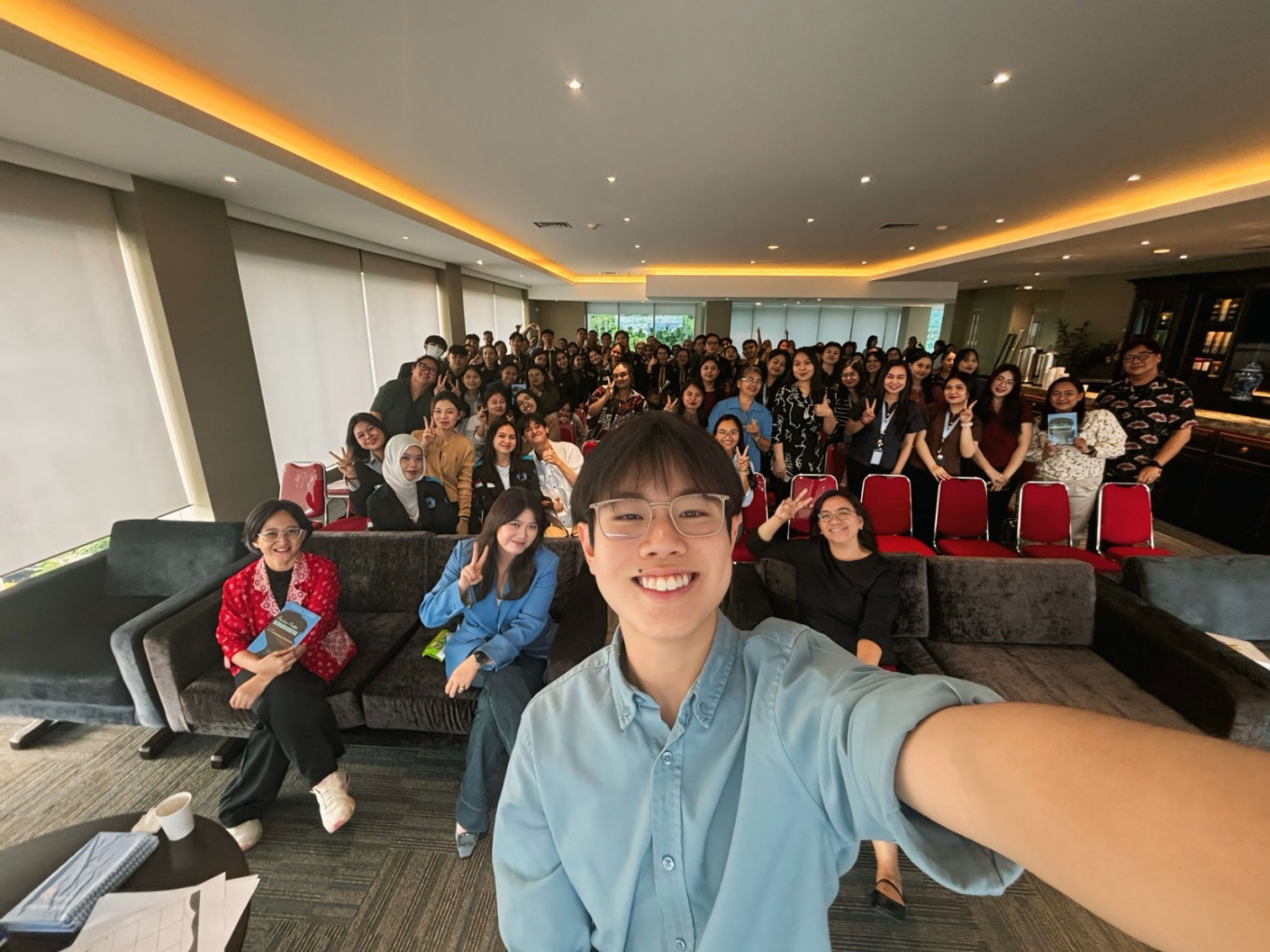 (Courtesy by Ryan Winston Angouw)
S
ometimes the brightest of ideas come when you least expect it. At least, that’s how it happened for 15-year-old Ryan Angouw, a student at Jakarta Intercultural School (JIS).
In an attempt to skip a subject dedicated to reading in the seventh grade, Ryan stumbled into a club that ran concurrently. What started from that tiny rebellious act became the catalyst of his contribution to Indonesia.
“The club was called Advocates for Change and it focused on the social side of neurodiversity by normalizing neurodiversity to neurotypical people. Bullying and making fun of neurodiverse people is a big problem, and through that, I was pretty touched by what we were doing as a club. I thought to myself that this is a form of service that I definitely want to do in the future,” he recalled, adding that he has relatives who are also autistic.
The inspiration came three years ago, and it has turned into MagnaMinds, launched in June of last year. The NGO is on a mission to improve the quality and access to education for neurodivergent children in Indonesia, specifically focusing on people who are socioeconomically disadvantaged.
In order to fulfil that dream, Ryan also aims to raise awareness about the condition to ensure that the people who need help the most will not be overlooked.
Understanding neurodiversity

“Neurodiversity is the social concept that every person's brain naturally has differences in the way that it receives, processes, and responds to information. It supports the belief that there's no single correct way to think and experience the world because everyone naturally does those things differently anyway,” Ryan explained.
According to Psychology Today, the term originally referred most commonly to autism, but has since come to include ADHD, dyslexia, Tourette's syndrome, synaesthesia, as well as other learning and developmental differences. While it has been widely known in recent years, misdiagnosis and the stigma around it are still prevalent in Indonesia and Southeast Asia.
Ryan makes the case that those that live in lesser-developed areas may not have the same access to proper services that provides qualified doctors, hospitals or screening services, compared with their counterparts in bigger cities such as Jakarta or Surabaya.
“And that means many neurodivergent children will go undiagnosed. And the impact of this goes deeper than people might think because the critical time for diagnosis for neurodivergent children is between 18 and 24 months,” he warned.
He continued, “I think the best way to raise awareness, in my opinion, is by increasing interaction between neurotypical and neurodiverse people. That can be done through a lot of ways.”
Practicing inclusivity
Through MagnaMinds, Ryan often highlights the need for an inclusive education to be able to make sure that neurodivergent people are allowed the same space to grow and flourish as every other child in the classroom. However, he is aware that Indonesia’s education infrastructure still has a long way to go to accomplish this goal.
“I'd say the traditional conventional way of education for neurodivergent students is separating them into a disability-specific school and a normal school. I personally think that inclusive education is amazing, but it's very difficult to implement,” he said. “But if it's done right, it can be extremely beneficial.”
By having students interact with different types of people, empathy can be the driving force behind eradicating the stigmatization of neurodiversity. Moreover, the system will help neurodivergent kids assimilate in the real world, which will inevitably put them in uncomfortable situations, but still controlled to a certain extent. This way, they will learn how to control their emotions step-by-step, instead of turning an obstacle into a traumatic experience.
Giving credit to Indonesia’s educational policy to ensure that every child has a right to a good inclusive education, Ryan also notes that the implementation is severely lacking, especially in areas where education is either massively underfunded, or teachers don't receive the proper training and qualifications. This is the core of what MagnaMinds is trying to change.
“When it comes to their needs, I think these needs stem from a lack of action in response to the decisions made by our government. We know that these teachers probably don't have access to the most premium resources or facilities. So, we create something that they could just apply in their daily lives, but still make should be makes an impact on their students,” he elaborated.
The Neurodiversity Playbook
Ryan admitted that his research prompted sympathy for caregivers to neurodivergent children, especially those who may not have access to the same information he has been privy to through research.
“Imagine how much those parents are struggling. So from that, I wanted to create a comprehensive guide. I didn't know that it was going to be a book at the time, but I wanted something that was streamlined, something that was packed with information and something really helpful for people who want to create adaptations in their daily lives to accommodate neurodiverse needs,” he said.
What started as a passion project turned into something more when he simultaneously did a summer internship at Jakarta Behavior Center (JBC), a place that provides quality therapy for special needs children between the ages of 4 and 15 years old in the capital city.
Through his internship, he was able to improve the guide with feedback from board certified behavior analyst Felicia Soemarjono, and approval to publish by Prof. Dr. Hardiono D. Pusponegoro, Sp.A, Subsp.Neuro(K), a renowned neurologist and child development expert.
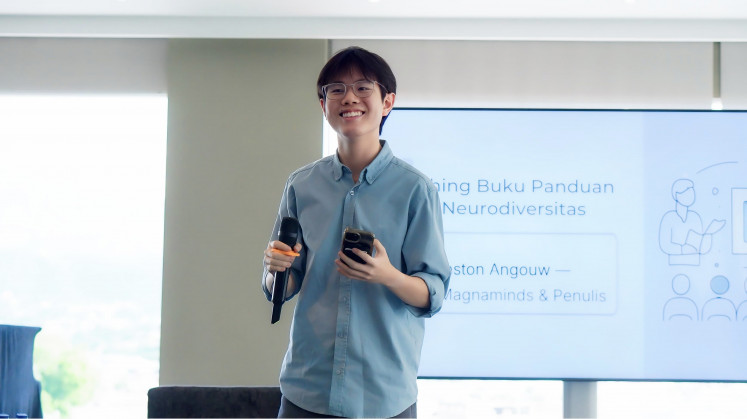
He was also able to consult two psychologists: Anita Chandra and Margaretha T. Kuera, who served as speakers for his event in Manado, North Sulawesi, on Jun. 13, entitled “Neurodiversity as Strength: Collaboration in Inclusive Education.”
The event marked the official launch of The Neurodiversity Playbook, a practical guide designed to help parents, teachers and schools create more inclusive learning environments.
“I think that allowing each child to develop optimally is extremely important because I personally believe that youth and neurodivergent people have immense potential if they're given the correct nurturing environment that encourages them to persevere and ultimately grow. As youth, we as the next generation will be the next policy makers, doctors, teachers, and ordinary members of society,” he stated.
A representative from the North Sulawesi Education Agency who works in the development of special needs services, Merry Christien Wuisan, stated that, “As a member of the regional agency, I feel motivated to accelerate the implementation of inclusive education. Let us all, along with the central government, guide schools that accept and educate students with special needs so that they receive the same rights and obligations as their neurotypical peers.”
Building a community
Ryan chose Bangkok as the host of his first event in February. While similar to Indonesia in culture, Thailand has a few more resources that give it the leg up. He explained, “I wanted to visit somewhere where they were doing it better than us, but it wasn't so different that we had to completely revamp.”
Choosing his hometown of Manado as the backdrop for his second event earlier this month, he expressed his hopes to do more events across Indonesia in the future. He also mentioned his desire to focus on a topic that is equally important to inclusive education, which is the ability for neurodivergent youth to be able to live independently, financially, in the future.
To make that dream a reality, MagnaMinds is launching a program to connect neurodivergent talent to businesses, making the organization operate like a talent agency. Other than that, MagnaMinds stays true to its mission to create a diverse society that belongs to everyone.
“I know that I'm 15, I'm not the most experienced person in the world. But if there's anything I've learned so far, it’s that if everyone humbles themselves a little bit, listens more to what other people say, and values what other people bring to the table, the world will be a better place,” he concluded.