The Jakarta Post
Please Update your browser
Your browser is out of date, and may not be compatible with our website. A list of the most popular web browsers can be found below.
Just click on the icons to get to the download page.


Popular Reads
Top Results
No results found. Please check your search term and try again
Can't find what you're looking for?
View all search results
Popular Reads
Top Results
No results found. Please check your search term and try again
Can't find what you're looking for?
View all search results'Handful' of G20 countries reject US stance on excess industrial capacity
Change text size
Gift Premium Articles
to Anyone
Share the best of The Jakarta Post with friends, family, or colleagues. As a subscriber, you can gift 3 to 5 articles each month that anyone can read—no subscription needed!
 Set as preferred source
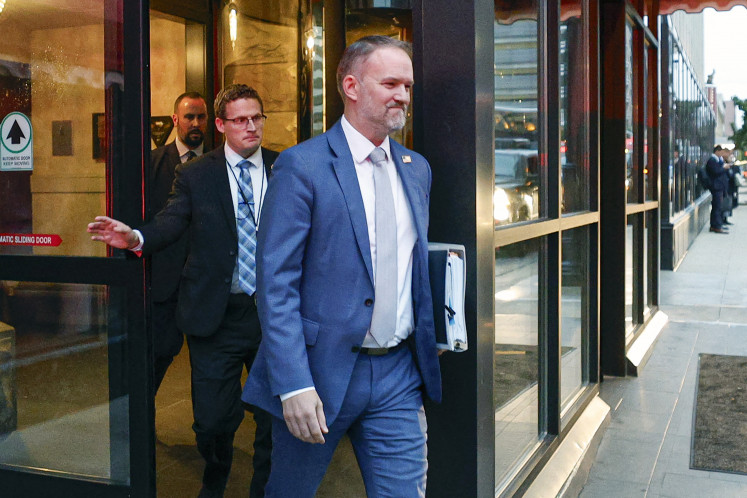
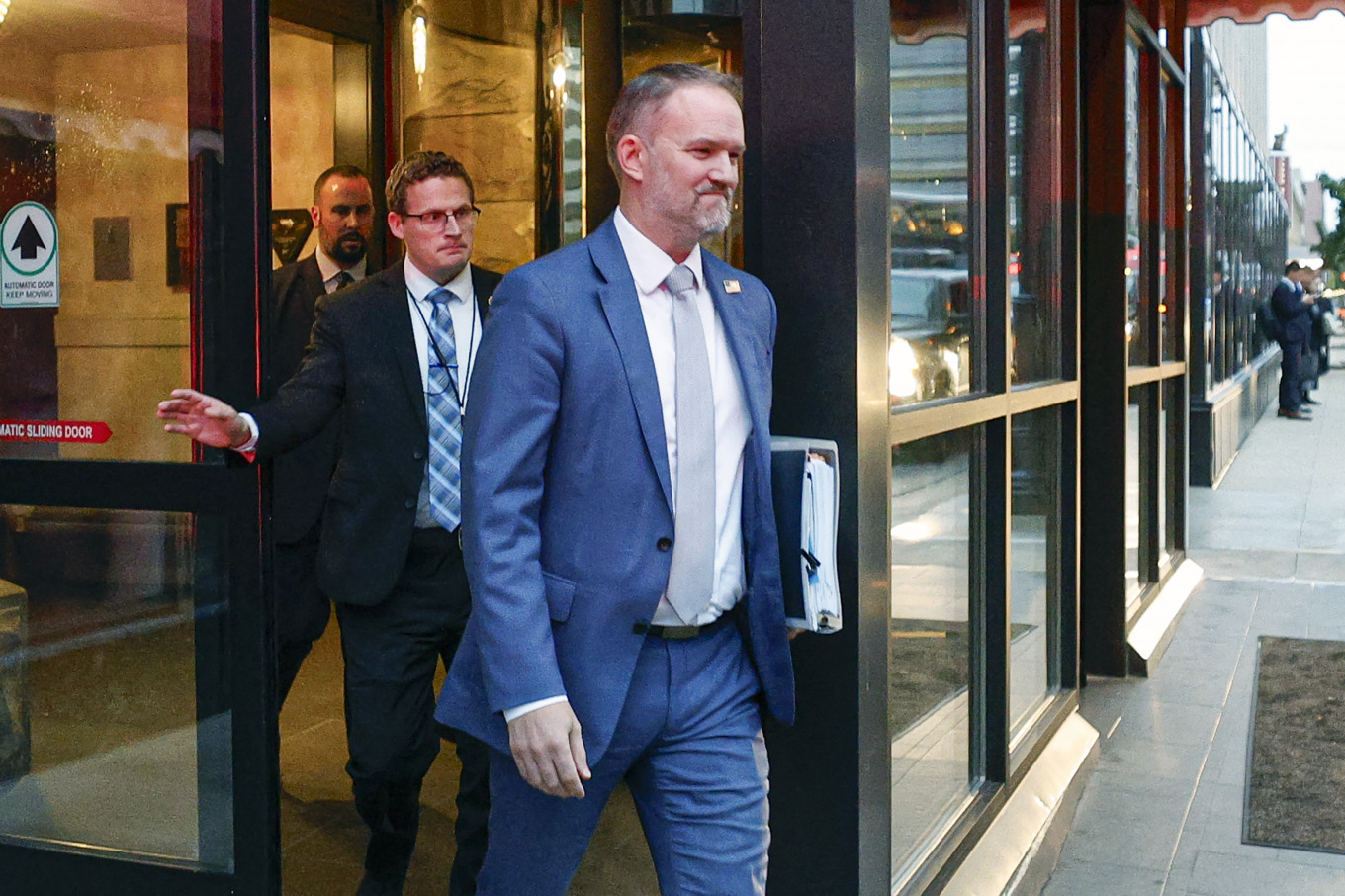 US Trade Representative Jamieson Greer is photographed during the first day of the G20 Trade Ministerial Conference in Milwaukee, Wisconsin, United States, on Sept. 30, 2026. (AFP/Kamil Krzaczynski )
A
"handful" of Group of 20 trade ministers rejected calls by the United States to curb excess industrial capacity and "non-market" policies, the US Trade Representative's office said on Friday, exposing divisions within the group of major economies.
The US, this year's G20 chair, issued the statement a day after a trade meeting in Milwaukee that revealed that only two countries — Mexico and Argentina — signed on to a US-led statement calling for more work and cooperation to eliminate mgoods produced with forced labor from supply chains.
The rejection from the vast majority of G20 countries follows the Trump administration's imposition of tariffs of 10 or 12.5 percent on goods from 59 countries and the European Union over allegations that they fail to adequately enforce bans on forced labor.
USTR also is conducting a second "Section 301" tariff investigation into 16 trading partners that show signs of excess industrial capacity. The probe is widely expected to lead to new duties in coming months.
The USTR statement did not name countries that objected to the excess-capacity statement. But China had objected to a similar G20 statement denouncing forced labor and nonmarket economic policies that lead to excessive exports at a finance leaders' meeting a month ago in North Carolina.
"The draft ministerial statement was supported by all but a handful of members, a few of whom firmly rejected creating this pathway toward cooperative action" on excess capacity, the statement said, adding that this "severely disappointed" the US G20 presidency.

China's excess industrial capacity and industrial subsidies have been key themes of the US-led G20 ministerial meetings so far this year. Beijing has rejected claims that its industrial policies have created excess capacity, accusing Western countries of using the issue to justify protectionist measures.
The US said that G20 trade ministers reached consensus on denouncing the weaponization of food trade, with members agreeing that trade in food or agricultural inputs should not be used as a tool for economic or political coercion.
In that G20 joint statement, the ministers defined the weaponization of food as measures to "slow, stop, block or direct the flow of food and agricultural inputs" to exert coercive pressure to extract unrelated geopolitical concessions.
"We condemn food weaponization, as it poses a significant humanitarian and economic threat," the G20 trade ministers said.
After pressure from US President Donald Trump that included the threat of a US diesel export ban, Group of Seven countries on Friday agreed to release some 100 million barrels of diesel reserves to try to drive down record-high US diesel prices. The fuel is widely used in agricultural production.
Tariff structure discussions
US Trade Representative Jamieson Greer said on Thursday that he did not seek a joint statement on a fourth discussion topic, reforming the "most favored nation" system of published, unconditional global tariff rates that underpin the World Trade Organization. MFN tariffs have defined the global trading system since the end of World War Two.
Greer has argued that the MFN principle has been abused by non-market-oriented economies such as China that have subsidized industries, but it does not allow these countries to be treated differently.
The US statement said some G20 members had expressed a willingness to consider changes to MFN, including expanding exceptions to the principle and issuing new legal interpretations to enable greater use of existing exceptions.