The Jakarta Post
Please Update your browser
Your browser is out of date, and may not be compatible with our website. A list of the most popular web browsers can be found below.
Just click on the icons to get to the download page.


Popular Reads
Top Results
No results found. Please check your search term and try again
Can't find what you're looking for?
View all search results
Popular Reads
Top Results
No results found. Please check your search term and try again
Can't find what you're looking for?
View all search resultsGovernment to halt clearing forests, boost output from existing paddies
The President's climate and energy envoy told a sustainability forum on Monday that the country had achieved rice self-sufficiency three years earlier than planned, so no additional forests would be cleared to make way for paddies.
Change text size
Gift Premium Articles
to Anyone
Share the best of The Jakarta Post with friends, family, or colleagues. As a subscriber, you can gift 3 to 5 articles each month that anyone can read—no subscription needed!
 Set as preferred source
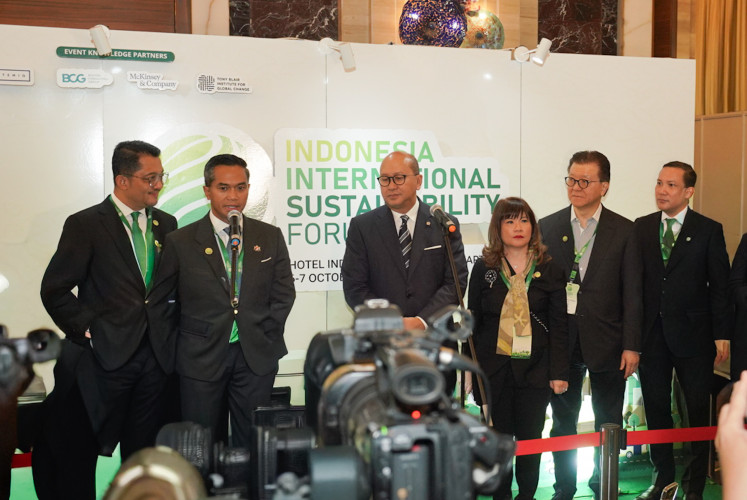
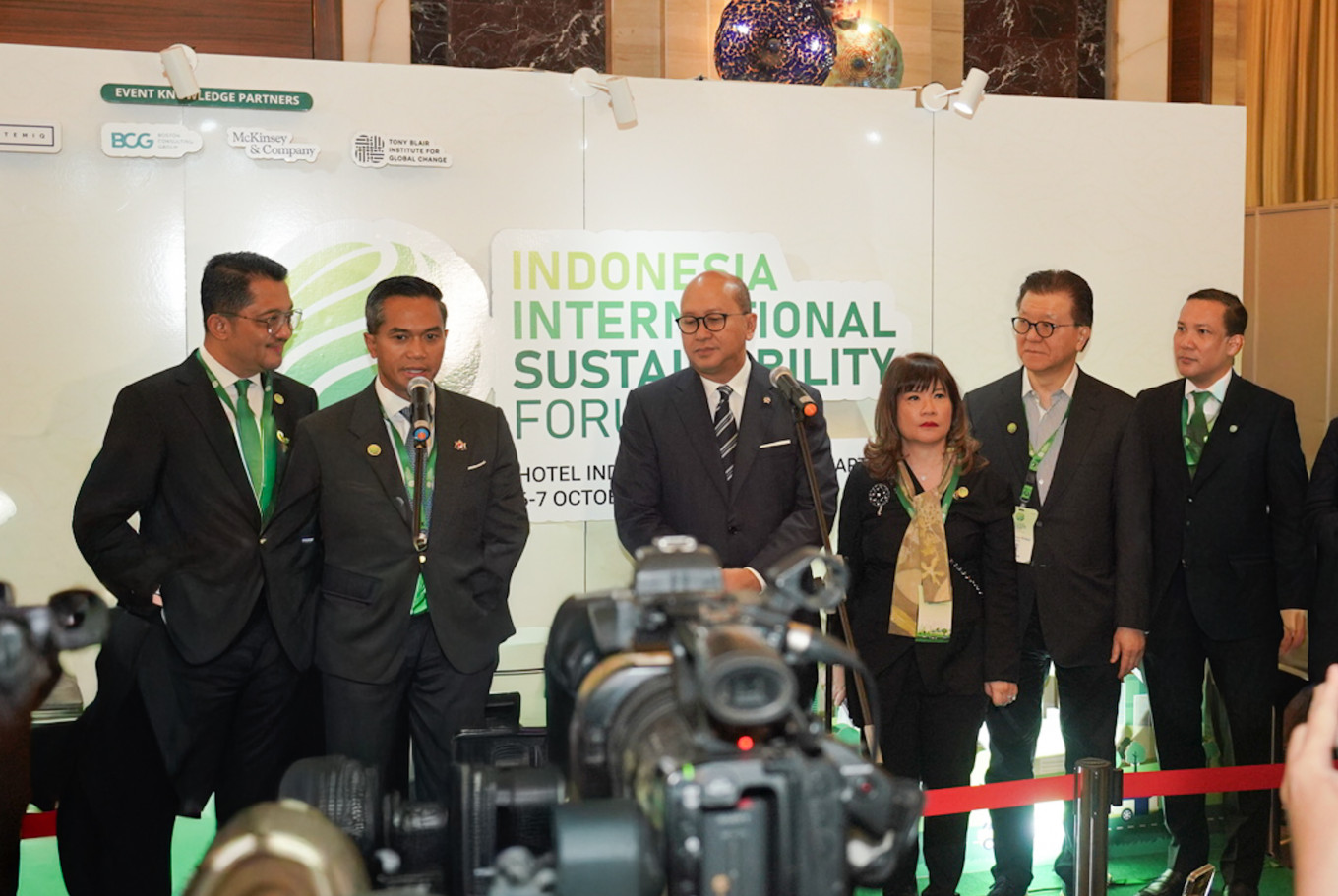 Anindya Bakrie (second left), chairman of the Indonesian Chamber of Commerce and Industry (Kadin), shares the stage with Investment and Downstream Minister Rosan Roeslani (fourth right) and Apindo chairwoman Shinta Kamdani (third) as well as other leading business figures on Oct. 6, the first day of the Indonesia International Sustainability Forum 2026 at Hotel Indonesia Kempinski in Central Jakarta. (ISF 2026/- )
T
he government will halt the expansion of rice fields into forest areas since the country had achieved self-sufficiency in the staple grain three years earlier than the 2029 target, according to special presidential envoy for climate and energy Hashim Djojohadikusumo.
Speaking on Monday at the Indonesia International Sustainability Forum (ISF) 2026 in Central Jakarta, Hashim said the national rice reserve had reached 5.3 million tonnes and continued to increase, exceeding the storage capacity of state-owned warehouses.
The government therefore saw no need to clear additional forests for rice cultivation, including for its planned 2-million-hectare food estate program.
“We will not embark on extensification of arable areas. We will embark and continue intensification measures using new [varieties], new seeds, superior seeds of rice and soybeans,” said Hashim, who is also the younger brother of President Prabowo Subianto.
The government’s focus has instead shifted to intensifying existing agricultural land, supported by a 50 percent increase in the price floor of rice per kilogram to Rp 6,500 (36 US cents) from Rp 4,000 and a 20 percent cut in fertilizer costs.
The special envoy said the country aimed to achieve soybean self-sufficiency in around three years, while sugar remained a more difficult commodity. He added that food security gains would help the country’s readiness for potential future disruptions, such as “the next COVID”.

Hashim also highlighted the government’s energy self-sufficiency agenda, which included a plan to develop 100 gigawatts (GW) of solar capacity and a 7 GW nuclear power program alongside the progressive biofuel development program.