The Jakarta Post
Please Update your browser
Your browser is out of date, and may not be compatible with our website. A list of the most popular web browsers can be found below.
Just click on the icons to get to the download page.


Popular Reads
Top Results
No results found. Please check your search term and try again
Can't find what you're looking for?
View all search results
Popular Reads
Top Results
No results found. Please check your search term and try again
Can't find what you're looking for?
View all search resultsTourism, climate puts Raja Ampat's ‘walking shark’ under pressure
The shallow coastal waters of the Raja Ampat archipelago in Southwest Papua are home to the population of the shark (Hemiscyllium freycineti), one of 10 known “walking shark” species discovered worldwide, six of which are mainly found in eastern Indonesian waters.
Change text size
Gift Premium Articles
to Anyone
Share the best of The Jakarta Post with friends, family, or colleagues. As a subscriber, you can gift 3 to 5 articles each month that anyone can read—no subscription needed!
 Set as preferred source
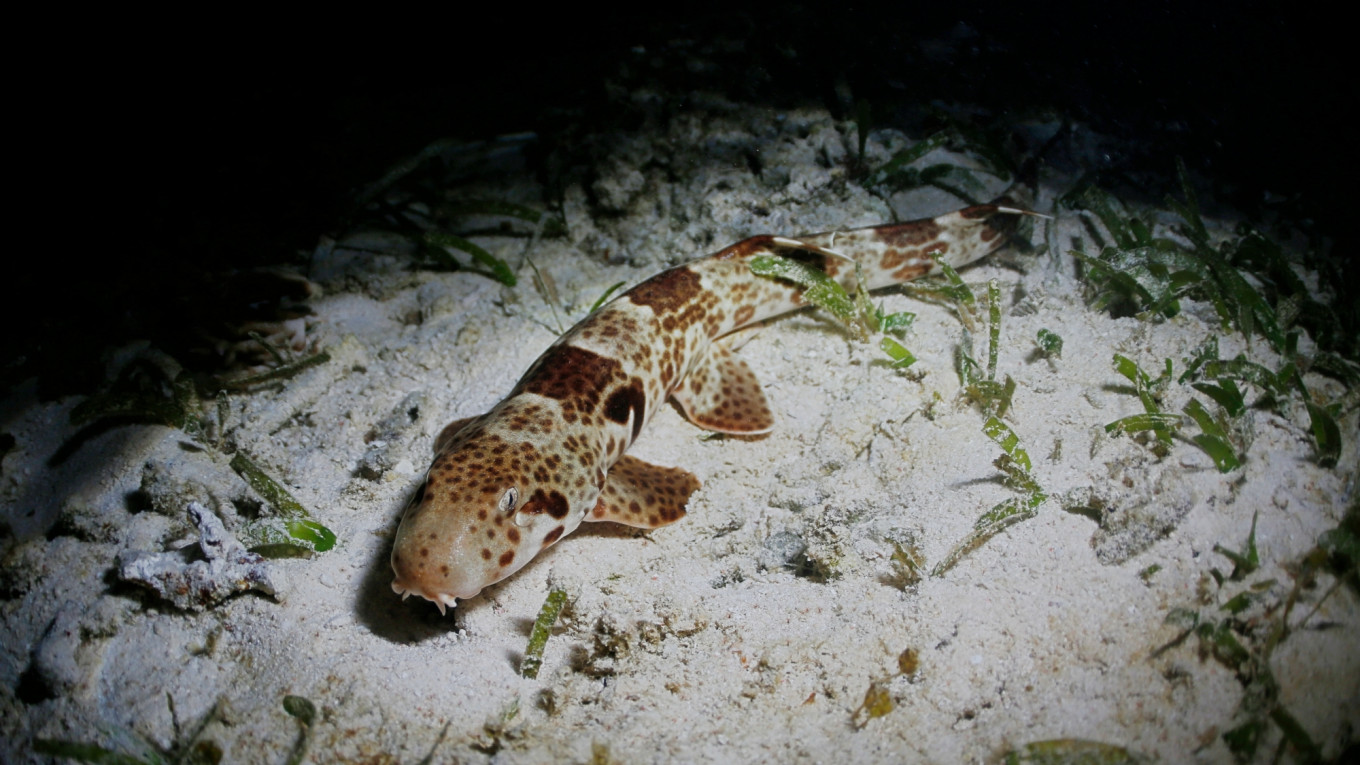 An epaulette shark (Hemiscyllium freycineti) is captured in its coral habitat in Arborek Island in Raja Ampat regency, Southwest Papua in April 2026. The shark, which has developed an ability to "walk" on the seabed and land using an undulating crawling motion, relies on coral reefs as its nursery habitat. (Courtesy of Edy Setyawan/-)
T
he Raja Ampat epaulette shark, locally known as the “walking shark”, is facing growing threats from tourism development and the impacts of climate change, prompting a push for concrete measures to protect the species’ habitat and ensure its survival.
The shallow coastal waters of the Raja Ampat archipelago in Southwest Papua are home to the population of the shark (Hemiscyllium freycineti), one of 10 known “walking shark” species discovered worldwide, six of which are mainly found in eastern Indonesian waters.
While it is able to swim, the small fish that has a recognizable spotted pattern on its body is known for moves using its pectoral and pelvic fins to “walk” across shallow reefs, a behavior earning it the moniker “walking shark”.
A recently published study has found more biological and spatial ecological information about the shark, which has a population density of up to 2,462 individuals per square kilometer, the highest recorded globally for the genus.
The study, published in Frontiers in Fish Science academic journal on June 17, suggested coral reefs are mainly used by sharks as nursery habitats, or places where the juveniles are produced. During an observation between February 2024 and April 2025, researchers for the study observed 69 percent of immature sharks between coral reefs.
Meanwhile, adults of the nocturnal fish were observed foraging among seagrass and mangrove roots.

Read also: Tension and grievances in Raja Ampat