The Jakarta Post
Please Update your browser
Your browser is out of date, and may not be compatible with our website. A list of the most popular web browsers can be found below.
Just click on the icons to get to the download page.


Popular Reads
Top Results
No results found. Please check your search term and try again
Can't find what you're looking for?
View all search results
Popular Reads
Top Results
No results found. Please check your search term and try again
Can't find what you're looking for?
View all search resultsFree-meal buffet trial leaves safety risks unresolved
A buffet-style system currently being tested under President Prabowo Subianto’s free meals program does not eliminate the risk of food contamination, as meals are still prepared at kitchens outside school complexes and must be transported to schools.
Change text size
Gift Premium Articles
to Anyone
Share the best of The Jakarta Post with friends, family, or colleagues. As a subscriber, you can gift 3 to 5 articles each month that anyone can read—no subscription needed!
 Set as preferred source
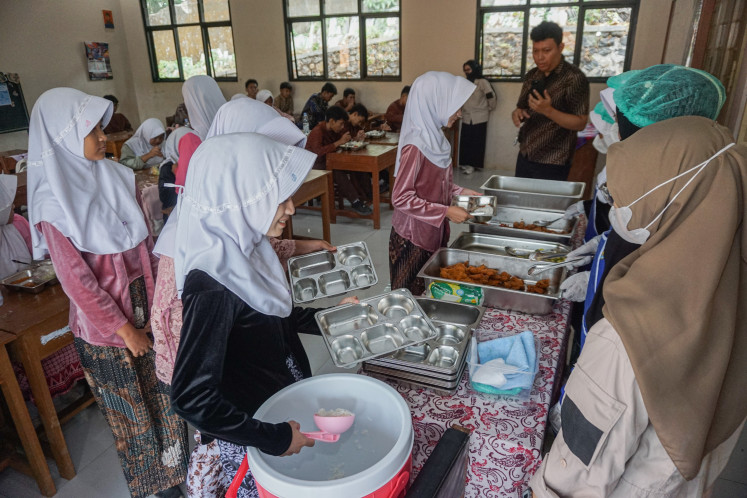
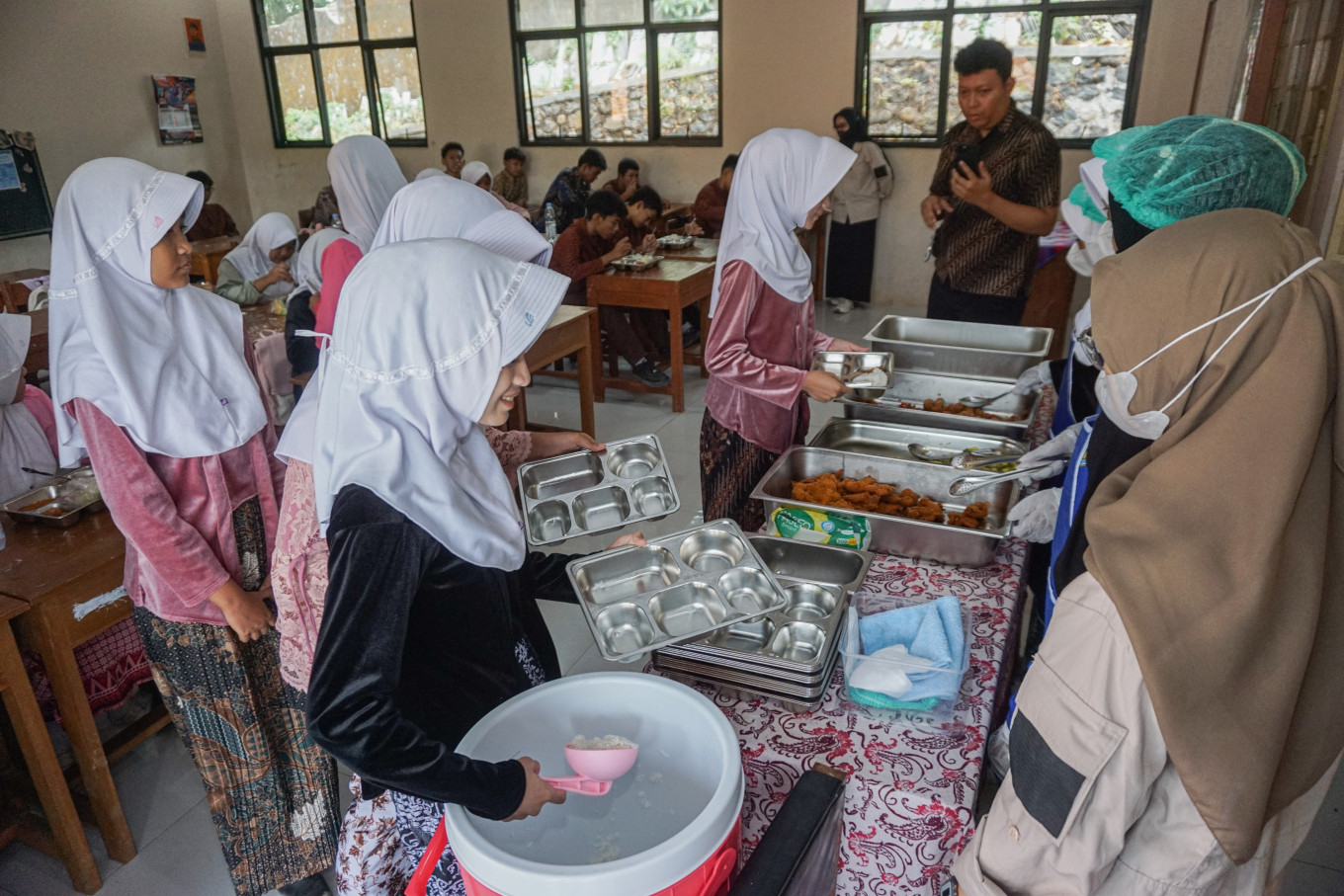 Students collect buffer meals at state junior high school SMPN 2 Kandeman in Batang regency, Central Java, on Oct. 8, 2026. The National Nutrition Agency (BGN) is testing a buffet-style meal service model to provide warmer and fresher meals, reduce the risk of food spoilage that could cause health problems and strengthen the educational experience for beneficiaries. (Antara/Harviyan Perdana Putra)
A
buffet-style system currently being tested under President Prabowo Subianto’s free nutritious meal program may do little to address concerns over food safety and program management, while involving students in serving meals could disturb their learning and break time, critics say.
The National Nutrition Agency (BGN) introduced the system earlier this week, saying it had drawn lessons from countries that have integrated school meals with education. BGN head Sudaryono said the method, being piloted in at least 60 free meals kitchens known as SPPG, was comparable to school lunch practices in Japan.
Under the system, the meals are delivered warm from kitchens to classrooms, where designated students help portion the food. Their classmates then line up with trays to collect their meals before eating at their desks.

Japan’s long established national lunch program, however, goes beyond meal distribution. It treats lunchtime as an educational activity that teaches children about nutrition, food culture and table manners.
Students take turns serving and distributing meals as part of established school routines, supported by nutritional guidance and food-safety practices. Meals are also prepared at in-site school kitchens, unlike Indonesia’s SPPG-based distribution system.
Read also: BGN tests buffet-style free school meals, citing Japan model

Education observer Ubaid Matraji of the Indonesian Education Monitoring Network (JPPI) said the BGN approach could disrupt students’ lunch breaks and overall learning schedules, as having students distribute meals manually could take longer than necessary.