TheJakartaPost
Please Update your browser
Your browser is out of date, and may not be compatible with our website. A list of the most popular web browsers can be found below.
Just click on the icons to get to the download page.


Popular Reads
Top Results
No results found. Please check your search term and try again
Can't find what you're looking for?
View all search results
Popular Reads
Top Results
No results found. Please check your search term and try again
Can't find what you're looking for?
View all search resultsLetter: The oil reality
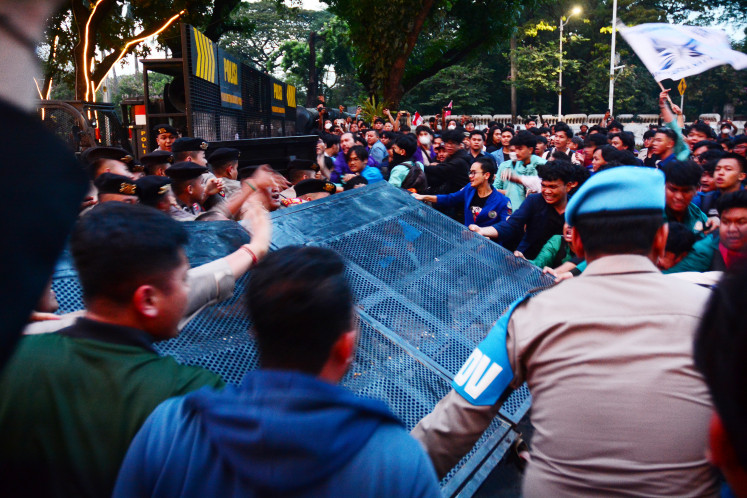
The plan to increase the price of gasoline on April 1 has sparked a wave of protests, demonstrations, and a backlash from the majority of the Indonesian public
Change text size
Gift Premium Articles
to Anyone
Share the best of The Jakarta Post with friends, family, or colleagues. As a subscriber, you can gift 3 to 5 articles each month that anyone can read—no subscription needed!

T
he plan to increase the price of gasoline on April 1 has sparked a wave of protests, demonstrations, and a backlash from the majority of the Indonesian public.
Political parties have joined in their opposition against the proposed plan, which adds more tension to the final years of Yudhoyono’s presidency. Gasoline prices in Indonesia are relatively low, thanks to the subsidy provided by the government, and have stayed at that level as global oil prices have spiked in recent years.
Thus, it would make sense for the Indonesian public to become irate over a proposed plan to increase fuel prices. Many of the protesters and demonstrators typically belong to the lower economic class of Indonesian society, and their objection is heard all throughout Indonesia as they are the ones who will be impacted the most by the proposed plan.
However, there is a possibility that the extra money earned from oil and energy reserves could be allocated to other sectors like education, healthcare, and especially public transportation. It is obvious that the biggest shortfall of the Indonesian government has been its failure to invest in public transportation, which could have been extremely useful during difficult times in recent months.
The sad irony behind the chaos is how many Indonesians still lack basic education. What makes the negative uproar interesting is that one never hears about Indonesian society protesting against the price of cigarettes, which for some brands is priced at Rp 12,000. In addition, the main consumers of cigarettes come from the lower-middle class to the lower class, which is the same group of people carrying out the mass protests and demonstrations this month.
Of course, it is not easy to convince many Indonesians that the surplus of funds will be allocated to other sectors. That is partly due to the government’s fault when they began losing the public’s trust, evident through public’s reaction to the many corruption scandals that have plagued the Democratic Party and other high officials within the Indonesian government.
Major corruption scandals have emerged since 2011, and it is this lack of integrity and distrust in money management within the government that will make it difficult for any Indonesian to believe in any possible fund reallocation or benefit from the proposed plan.
To sit contentedly and expect gasoline price to stay low is not a reality for anyone in any part of the world. Expecting anything to the contrary it is neither logical nor possible. The majority of Indonesians should be able to still afford gasoline even if the price increases, because Indonesia’s economy has grown and continues to grow.
Cantika Paramitha R.
Bandung