The Jakarta Post
Please Update your browser
Your browser is out of date, and may not be compatible with our website. A list of the most popular web browsers can be found below.
Just click on the icons to get to the download page.


Popular Reads
Top Results
No results found. Please check your search term and try again
Can't find what you're looking for?
View all search results
Popular Reads
Top Results
No results found. Please check your search term and try again
Can't find what you're looking for?
View all search resultsHow local content rules impede renewable energy projects
Lenders do not enforce minimum TKDN thresholds, but encourage parties to use domestic products by offering rewards to parties that use domestic products in their renewable projects.
Change text size
Gift Premium Articles
to Anyone
Share the best of The Jakarta Post with friends, family, or colleagues. As a subscriber, you can gift 3 to 5 articles each month that anyone can read—no subscription needed!
 Set as preferred source
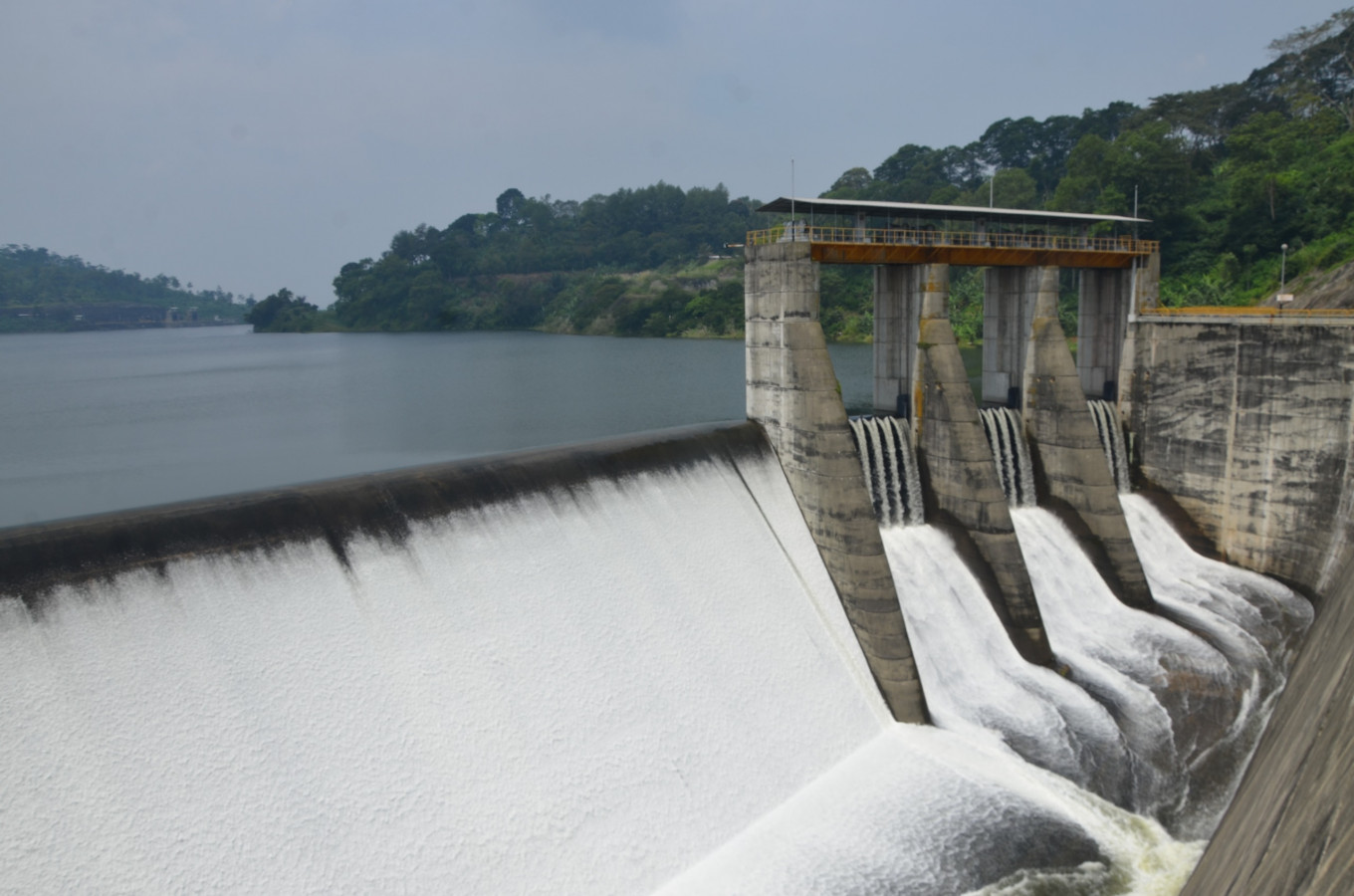 Water cascades down the watergate of the Saguling hydroelectric power plan in West Java. (PLN/-)
State electricity company PT PLN has implemented the Accelerated Renewable Energy Development (ARED) program to establish renewable power plants with a total capacity of 62 gigawatts (GW) by 2040. This development is closely tied to the local content obligation for every procurement of renewable power plants according to Industry Ministerial Regulation No. 54/2012.
For the construction of renewable energy power plants, PLN cannot do it alone. This requires support in the form of sustainable financing from banks to ensure the success of the ARED program. One preferable source of funding is from development financial institutions (DFIs) such as the World Bank, Germany’s KFW, the Japan International Cooperation Agency (JICA), the Asian Development Bank (ADB) and the Islamic Development Bank (IDB), which can offer lower interest rates compared with commercial loans.
In fact, DFIs have already implemented optimized domestic product usage in their lender’s guidelines through their domestic preference provisions. However, the government does not consider the lenders’ policies as aligned with the obligation to use domestic products as stipulated in the 2012 ministerial regulation. This disharmony has become a barrier to the financing and funding disbursement to PLN, which ultimately may slow down energy transition development in Indonesia.
According to the regulation, the minimum threshold for local content requirements (TKDN) must be met in the construction of every renewable power plant. For example, geothermal power plants with capacities between 10 and 60 megawatts are required to achieve a minimum combined TKDN of goods and services at 33.24 percent. PLN will face administrative sanctions and fines for failure to comply with the regulation.
Unlike the domestic preference provisions in the lender’s guideline, lenders do not enforce minimum TKDN thresholds. However, lenders encourage parties to use domestic products by giving rewards to parties who do so in their renewable projects. This approach shows that lenders still prioritize project owners using domestic products over those using imports without insisting parties meet minimum TKDN thresholds on renewable projects.

Furthermore, lenders believe that imposing a minimum TKDN threshold would conflict with the principle of fairness as embodied in the domestic preference provisions, and which are internationally recognized for competitive bidding.
The difference between the ministry’s regulation and the lenders’ guidelines has caused delays in the implementation of several projects at PLN.