The Jakarta Post
Please Update your browser
Your browser is out of date, and may not be compatible with our website. A list of the most popular web browsers can be found below.
Just click on the icons to get to the download page.


Popular Reads
Top Results
No results found. Please check your search term and try again
Can't find what you're looking for?
View all search results
Popular Reads
Top Results
No results found. Please check your search term and try again
Can't find what you're looking for?
View all search resultsPoliticians tend to avoid responsibility for costs of climate policy
Currently, the world gets almost four-fifths of all its energy from fossil fuels. If we quickly ended our use of fossil fuels, billions would die.
Change text size
Gift Premium Articles
to Anyone
Share the best of The Jakarta Post with friends, family, or colleagues. As a subscriber, you can gift 3 to 5 articles each month that anyone can read—no subscription needed!
 Set as preferred source
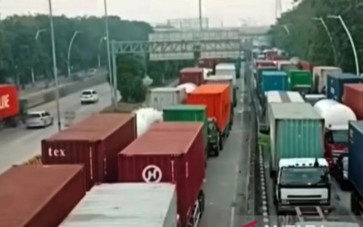
 Wasting fuel: Container trucks are pictured caught in traffic congestion on Jl. Yos Sudarso as they head for Tanjung Priok Port in North Jakarta on May 15, 2024. (Antara/Instagram @jakut.info)
W
e endlessly hear the flawed assertion that because climate change is real, we should “follow the science” and end fossil fuel use. We hear this claim from politicians who favor swift carbon cuts, and from natural scientists themselves, as when the editor-in-chief of Nature insists “The science is clear – fossil fuels must go”.
The assertion is convenient for politicians because it allows them to avoid responsibility for the many costs and downsides of climate policy, painting these as inevitable results of diligently following the scientific evidence. But it is false because it confounds climate science with climate policy.
Careful climate science is clearly needed to shape thoughtful climate policy because it tells us what the physical impact will be of emitting more or less carbon dioxide. But climate policy, like any policy, should be the democratic outcome of a deliberation of the benefits of cutting emissions versus the costs.
Climate science tells us about some of these benefits, but tells us nothing of the costs, which instead come from the much-less hyped field of climate economics.
The story told by activist politicians and climate campaigners suggests that there is nothing but benefits to ending fossil fuels, versus a hellscape if nothing is done.
But the reality is that the world over the past centuries has improved dramatically largely because of the immense increase in available energy that has come mostly from fossil fuels. Life spans have more than doubled, hunger has dramatically declined and incomes have increased 10-fold.

While the impact of climate change is likely negative it is typically enormously exaggerated. We constantly hear about extreme weather such as droughts, storms, floods and fires, although even the United Nations Climate Panel finds that evidence of them worsening cannot yet be documented for most of these.