The Jakarta Post
Please Update your browser
Your browser is out of date, and may not be compatible with our website. A list of the most popular web browsers can be found below.
Just click on the icons to get to the download page.


Popular Reads
Top Results
No results found. Please check your search term and try again
Can't find what you're looking for?
View all search results
Popular Reads
Top Results
No results found. Please check your search term and try again
Can't find what you're looking for?
View all search resultsBeyond oil: What is Prabowo’s energy diplomacy really securing?
As Prabowo spreads his diplomatic wings and travels the world making deals to secure immediate, future and broader energy needs, the real issue at hand is whether the country's energy transition can take flight as part of a comprehensive strategy once he lands back in Jakarta.
Change text size
Gift Premium Articles
to Anyone
Share the best of The Jakarta Post with friends, family, or colleagues. As a subscriber, you can gift 3 to 5 articles each month that anyone can read—no subscription needed!
 Set as preferred source
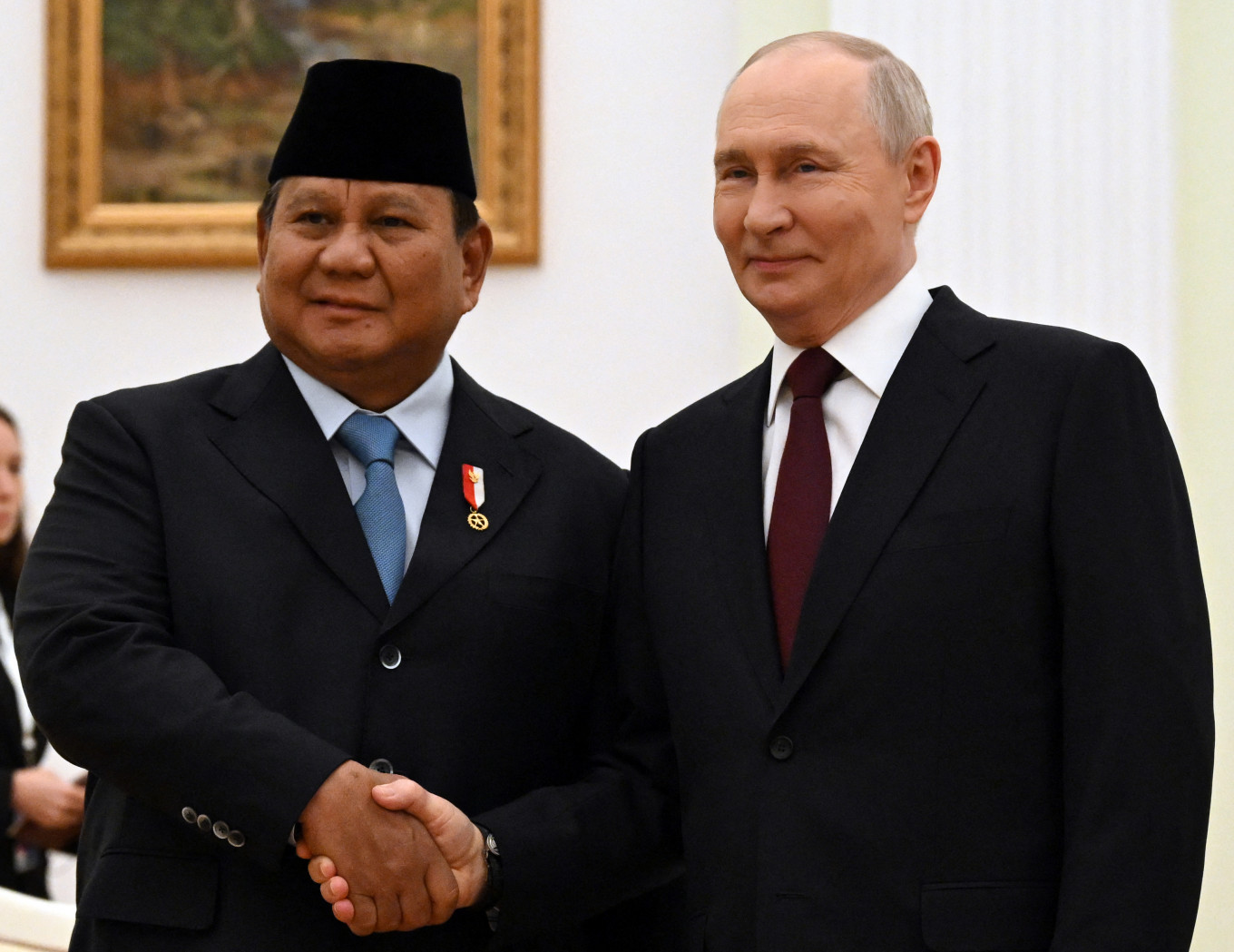 President Prabowo Subianto (left) and Russian President Vladimir Putin shake hands in a photo op on April 13, 2026, during their meeting at the Kremlin in Moscow. (AFP/Pool/Igor Ivanko)
P
resident Prabowo Subianto has never been shy about defending his travel schedule. At a government work meeting on April 8, he brushed off critics with a line that landed well: “Some say I travel overseas because I like traveling. But to secure oil, I have to go everywhere.”
It was effective because it captured the urgency of the moment. With the war in the Middle East disrupting energy markets and reviving anxiety around the Strait of Hormuz, few would dispute that energy security has become a pressing concern for Indonesia, a net oil importer.
But focusing only on oil risks obscuring the broader strategy taking shape.
Prabowo has now visited Japan, South Korea, Russia and France in the span of a few weeks. The itinerary looks scattered until the logic becomes clearer: Two tracks are running at once.
The first is immediate: securing oil, stabilizing supply and containing the domestic consequences of global disruption. The second is quieter but more consequential: Through each visit, Jakarta is trying to place itself inside the supply chains, financing arrangements and technology partnerships that will shape the next energy era.
Russia sits clearly on the first track. The April 13 meeting at the Kremlin, where Energy Minister Bahlil Lahadalia joined Prabowo, centered on long-term cooperation in energy and mineral resources, including oil and gas, energy security and the downstream sector. The attraction is obvious amid a global supply scare. Any government would want to cushion itself against future price spikes and shipment disruptions.

Japan and South Korea tell a different story. In Tokyo, Prabowo did not only speak the language of emergency procurement. He also spoke about moving “in a big way” on renewable energy, targeting 100 gigawatts of solar and accelerating the transition precisely because of what was happening in the Gulf. The Japanese side met him there, highlighting cooperation on geothermal projects, waste to energy, liquefied natural gas, critical minerals and civil nuclear cooperation under the framework of the Asia Zero Emission Community.