TheJakartaPost
Please Update your browser
Your browser is out of date, and may not be compatible with our website. A list of the most popular web browsers can be found below.
Just click on the icons to get to the download page.


Popular Reads
Top Results
No results found. Please check your search term and try again
Can't find what you're looking for?
View all search results
Popular Reads
Top Results
No results found. Please check your search term and try again
Can't find what you're looking for?
View all search resultsHaj in a new era
Indonesia's historic haj services overhaul brings shorter wait times and better safety in the desert, even as old logistical headaches and corruption shadows persist.
Change text size
Gift Premium Articles
to Anyone
Share the best of The Jakarta Post with friends, family, or colleagues. As a subscriber, you can gift 3 to 5 articles each month that anyone can read—no subscription needed!
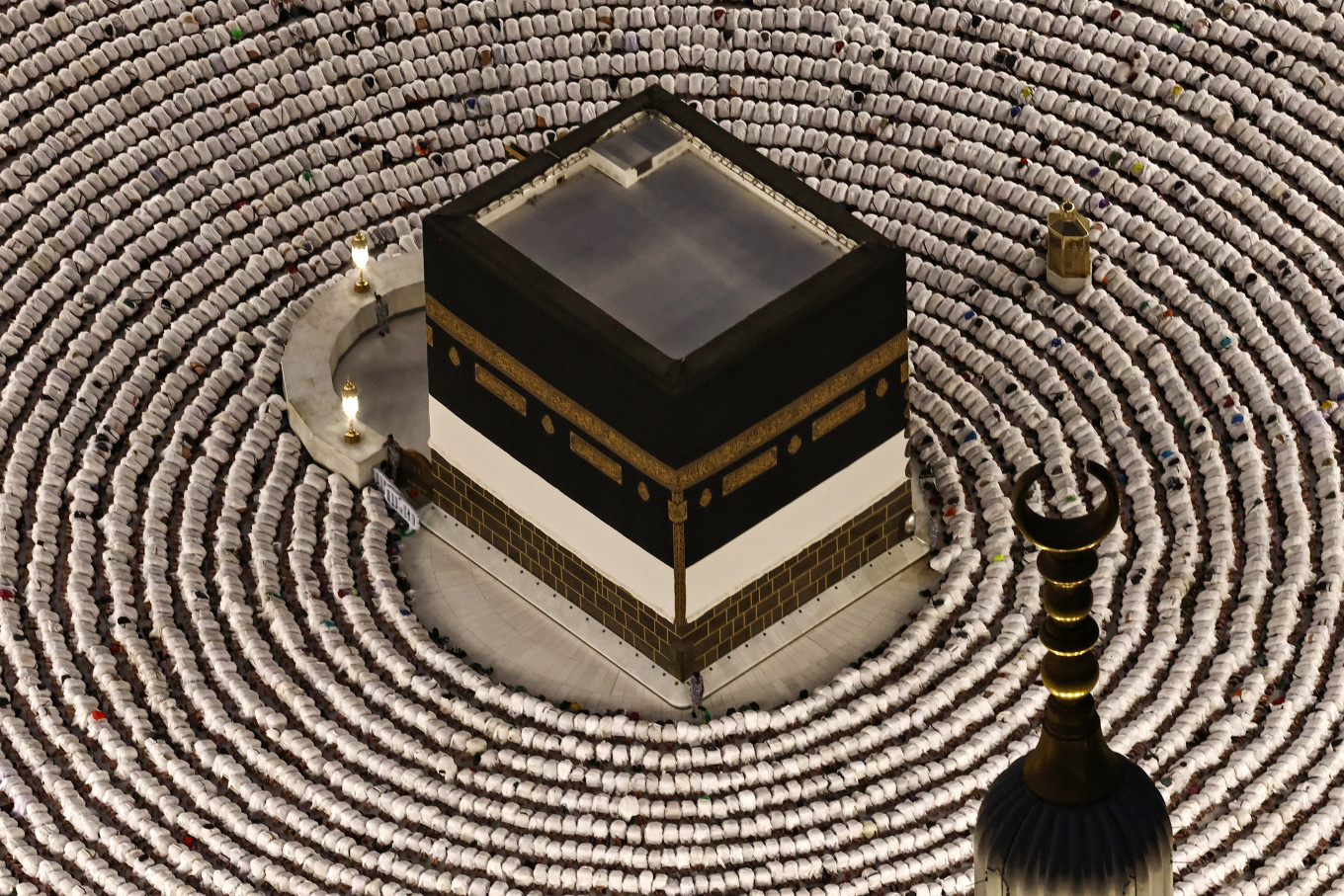 Silent devotion: Muslims perform the evening prayer on May 24 around the Kaaba, Islam’s holiest site, at the Grand Mosque complex in Mecca, Saudi Arabia, ahead of the annual haj. Over 1.5 million pilgrims have arrived from outside the kingdom for the upcoming haj, according to a Saudi official, exceeding the number of international visitors last year despite the war in the Middle East. (AFP/Zain Jaafar)
S
ome 221,000 Indonesian pilgrims are in Saudi Arabia for the haj under a punishing desert sun, joining more than 1.5 million others from around the world amid the backdrop of a regional Middle East war triggerred by a United States-Israeli attack on Iran.
As home to the world's largest Muslim population, Indonesia sends what is likely the largest contingent of pilgrims every year. Among them this year are tens of thousands of elderly pilgrims and hundreds of people with disabilities or special needs, all expected to endure a 7-kilometer walk during the symbolic jumrah (stoning of the devil) ritual in Mina, which began on Wednesday.
To accommodate these vulnerable groups, the elderly-friendly protocol was reinforced this season. This included deploying specialized medical teams equipped with mobile cooling units to combat heat exhaustion, alongside designated safari wukuf services that allowed non-ambulatory or severely ill pilgrims to complete their core rituals via customized, air-conditioned ambulances.
The newly established Haj and Umrah Ministry has been focusing its attention on this procession, which marks the final days of this year’s pilgrimage running until today. To ensure pilgrim safety, the ministry has deployed 2,098 officers on the ground in Saudi Arabia.
Digital integration is a key to success in the government’s administration of the haj this season. The new ministry has scaled up the use of smart cards and localized tracking apps to monitor pilgrim movements through the grueling Mina bottlenecks, allowing field officers to pinpoint distressed or lost pilgrims in real time—a crucial upgrade given the extreme weather conditions.
So far, this year’s haj has been touted for major logistical and health service improvements following years of criticism. It is the first season fully managed by the new standalone ministry, following its separation from the Religious Affairs Ministry late last year under a revised haj law.

In stark contrast to last year’s hundreds of fatalities, this year has recorded far fewer deaths among Indonesian pilgrims, though a few illness-related fatalities have been reported.