The Jakarta Post
Please Update your browser
Your browser is out of date, and may not be compatible with our website. A list of the most popular web browsers can be found below.
Just click on the icons to get to the download page.


Popular Reads
Top Results
No results found. Please check your search term and try again
Can't find what you're looking for?
View all search results
Popular Reads
Top Results
No results found. Please check your search term and try again
Can't find what you're looking for?
View all search resultsFixing a broken food program
Success shouldn't be measured by headline-grabbing numbers, but by whether free meals actually reach the vulnerable children who need them most.
Change text size
Gift Premium Articles
to Anyone
Share the best of The Jakarta Post with friends, family, or colleagues. As a subscriber, you can gift 3 to 5 articles each month that anyone can read—no subscription needed!
 President Prabowo Subianto inspects the implementation of the free nutritious meals program at State Junior High School (SMPN) 111 Jakarta on June 2, 2026. (Courtesy of/The Palace's Press Bureau (BPMI))
P
resident Prabowo Subianto’s flagship free nutritious meals program to combat stunting and malnutrition has faced intense public scrutiny since its launch early last year, owing to what many view as an overly ambitious target of reaching nearly 83 million students and pregnant women nationwide, as well as its massive budget allocation.
This year’s budget was initially set at Rp 335 trillion (US$18.65 billion) before being reduced to Rp 268 trillion to improve efficiency and sharpen targeting, amid reports that some beneficiaries, particularly from middle-income households, had rejected the program over concerns about food quality, nutritional value and safety.
Adding to those concerns, the Indonesian Education Monitoring Network (JPPI) reported that more than 37,000 students nationwide experienced food poisoning after consuming meals distributed through the program between January 2025 and May 2026.
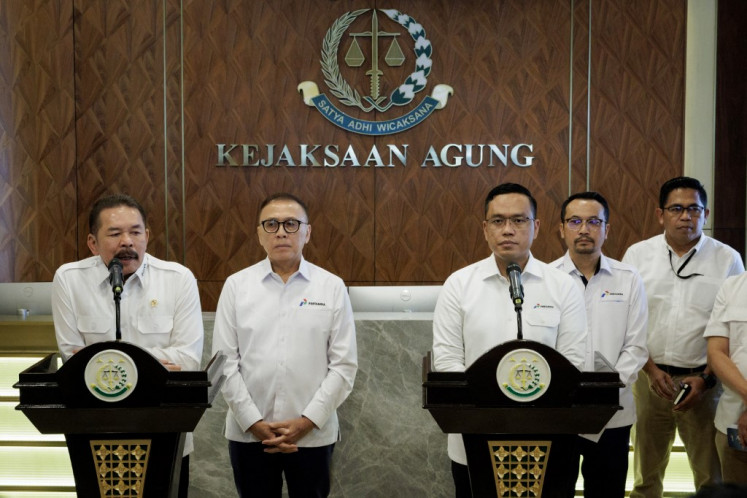
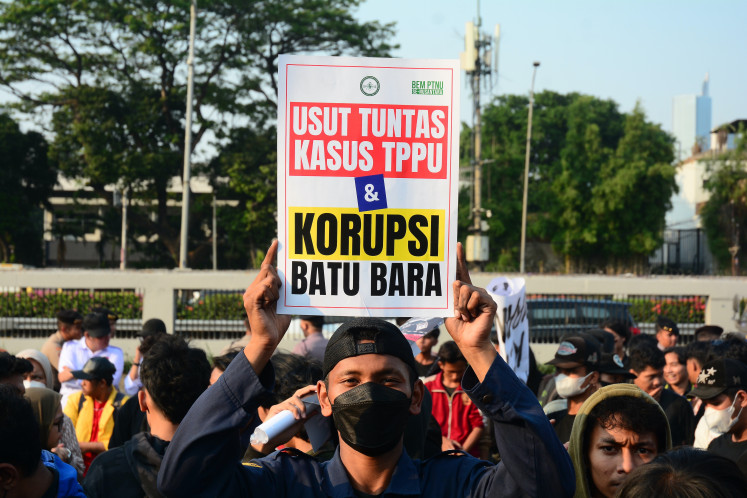
The initiative has also been tainted by allegations of budget markups and corruption, with the Attorney General’s Office (AGO) detaining and naming three former leaders of the National Nutrition Agency (BGN), which administers the program, as suspects just a day after they were removed from their positions on June 2.
These developments have exposed the risks of prioritizing rapid expansion over sound governance and quality control. While the objective of improving children's nutrition and reducing stunting remains commendable, the government must acknowledge that a program of this scale cannot be judged solely by the number of beneficiaries it reaches.
Upon being appointed BGN head on June 8, former deputy head for public communications and investigation Nanik S. Deyang pledged to improve the program’s governance by prioritizing budget efficiency and service quality over simply expanding the number of beneficiaries.

The shift signals a departure from President Prabowo’s emphasis on rapid expansion. On several occasions, the President has lauded the program’s growth, citing its ability to reach 55 million beneficiaries within a year, compared with Brazil’s school feeding program, which took 11 years to serve 40 million recipients. Yet the success of such a nutrition program should not be measured by the speed or scale of its rollout, but by its ability to improve outcomes among those who need intervention the most.