The Jakarta Post
Please Update your browser
Your browser is out of date, and may not be compatible with our website. A list of the most popular web browsers can be found below.
Just click on the icons to get to the download page.


Popular Reads
Top Results
No results found. Please check your search term and try again
Can't find what you're looking for?
View all search results
Popular Reads
Top Results
No results found. Please check your search term and try again
Can't find what you're looking for?
View all search resultsHow (not) to conserve tropical forests
Tropical countries face opportunity costs when conserving forests, so it falls on northern countries to compensate them for conservation efforts that benefit everyone.
Change text size
Gift Premium Articles
to Anyone
Share the best of The Jakarta Post with friends, family, or colleagues. As a subscriber, you can gift 3 to 5 articles each month that anyone can read—no subscription needed!
 Set as preferred source
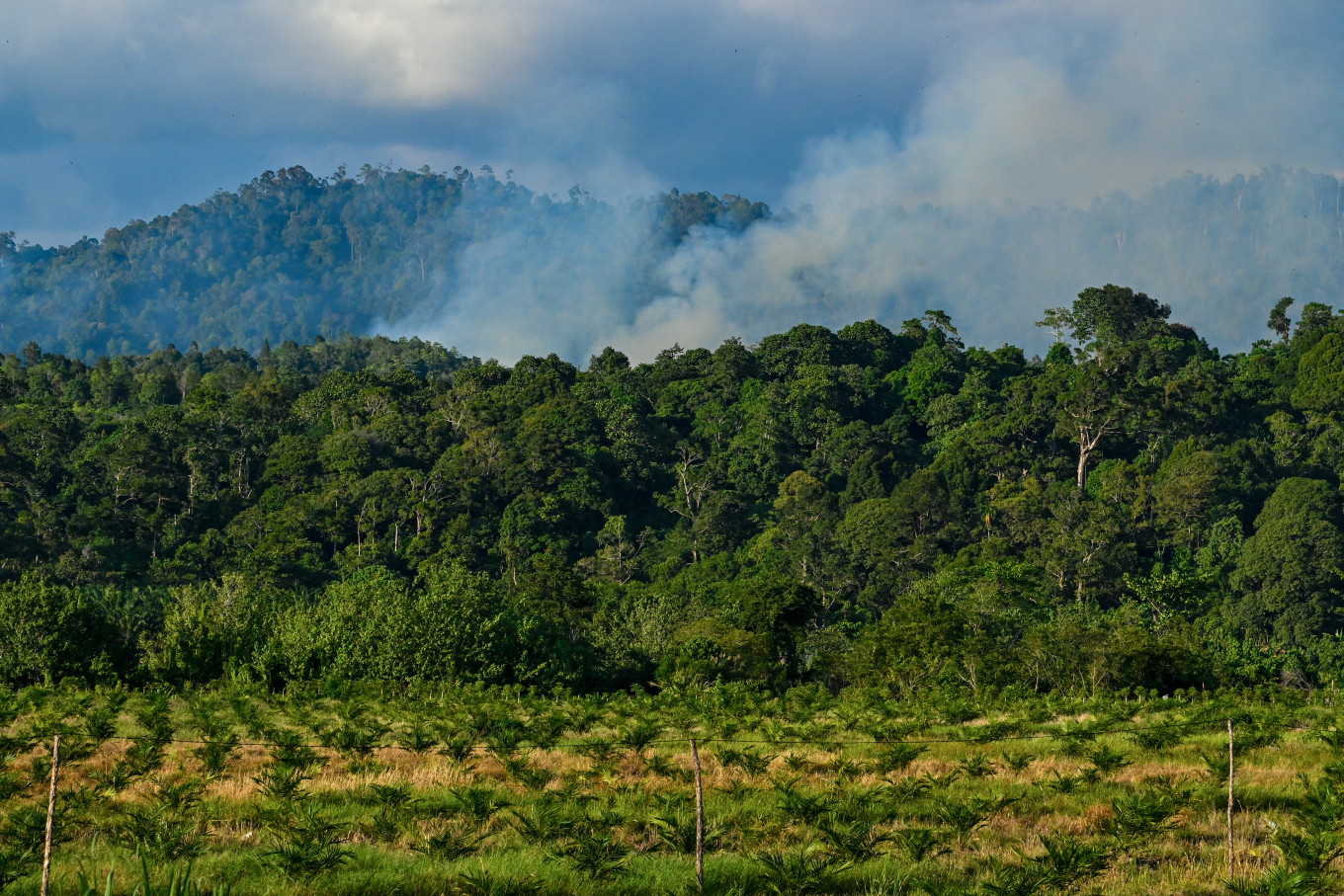 Smoke rises during the deforestation of a new planting area for oil palm plantations in Lamno, Aceh, on Jan. 18, 2026. (AFP/Chaideer Mahyuddin )
S
ix months after last year’s United Nations Climate Conference (COP30), the Tropical Forest Forever Facility (TFFF) has gone from being a headline-grabbing promise to a test of whether climate finance can survive contact with markets, politics and time.
The TFFF’s purpose, conserving tropical forests, is of paramount importance. Tropical deforestation and land-use changes have contributed to nearly one-fifth of the world’s cumulative carbon dioxide emissions since 1850. Tropical forests are also among the world’s most biodiverse ecosystems and home to many Indigenous Peoples and local communities.
But tropical countries face opportunity costs when conserving forests, so it falls on northern countries to compensate them for conservation efforts that benefit everyone. Such was the reasoning behind the Brazilian COP presidency’s TFFF proposal.
Within the TFFF is a Tropical Forest Investment Fund (TFIF) that seeks to raise US$125 billion, part of which will be invested in emerging and developing economies. The hope is that, with sponsor capital, guarantees and a high credit rating, investors will be satisfied with a return of, say, 5 percent. If the portfolio return is 8 percent, the difference could be used to compensate countries that have conserved their tropical forests. Depending on the actual return, each eligible country would receive up to $4 per hectare of qualifying standing forest. But the area used to calculate the payment would be discounted for forest loss: each hectare deforested would reduce the payment base by 100–200 hectares, while each hectare of fire-degraded forest would reduce it by 35 hectares.
So far, the TFFF has raised only $6.7 billion. Although Norway, Germany, France and others (the facility’s financial arm will be hosted in Luxembourg) are working on raising additional financial support, the main concern is that the scheme is unlikely to succeed. After all, there is no “free lunch” in international capital markets. To satisfy investors and simultaneously retain money for alternative purposes is a tall order.
Moreover, governments in tropical countries may not be so motivated to conserve, because the sum of the compensation they can expect is uncertain and may not even arrive while they are still in office. Future governments could even reverse the decision to conserve, and with no other consequence than forfeiting future compensation. For these and other reasons, economists have criticized the scheme, and several potential donor countries, such as the United Kingdom, have been skeptical of it.

Fortunately, there are better alternatives. In 2022, Chile and Uruguay issued sovereign sustainability-linked bonds (SLBs) whose interest rates are linked to whether certain performance targets are met. For Uruguay, one of the targets is forest conservation: If less is conserved, the coupon steps up; if the target is exceeded, the coupon steps down. Similarly, a sustainability-linked loan (SLL) can tie the future interest rate, and even the maturity date, to success in forest conservation.