The Jakarta Post
Please Update your browser
Your browser is out of date, and may not be compatible with our website. A list of the most popular web browsers can be found below.
Just click on the icons to get to the download page.


Popular Reads
Top Results
No results found. Please check your search term and try again
Can't find what you're looking for?
View all search results
Popular Reads
Top Results
No results found. Please check your search term and try again
Can't find what you're looking for?
View all search resultsNo such thing as free lunch: Hidden cost of Indonesia’s food system
While food may appear affordable in supermarkets or politically attractive like the free nutritious meals program or food self-sufficiency campaign, the true costs are often hidden.
Change text size
Gift Premium Articles
to Anyone
Share the best of The Jakarta Post with friends, family, or colleagues. As a subscriber, you can gift 3 to 5 articles each month that anyone can read—no subscription needed!
 Set as preferred source
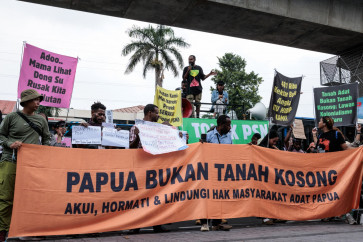
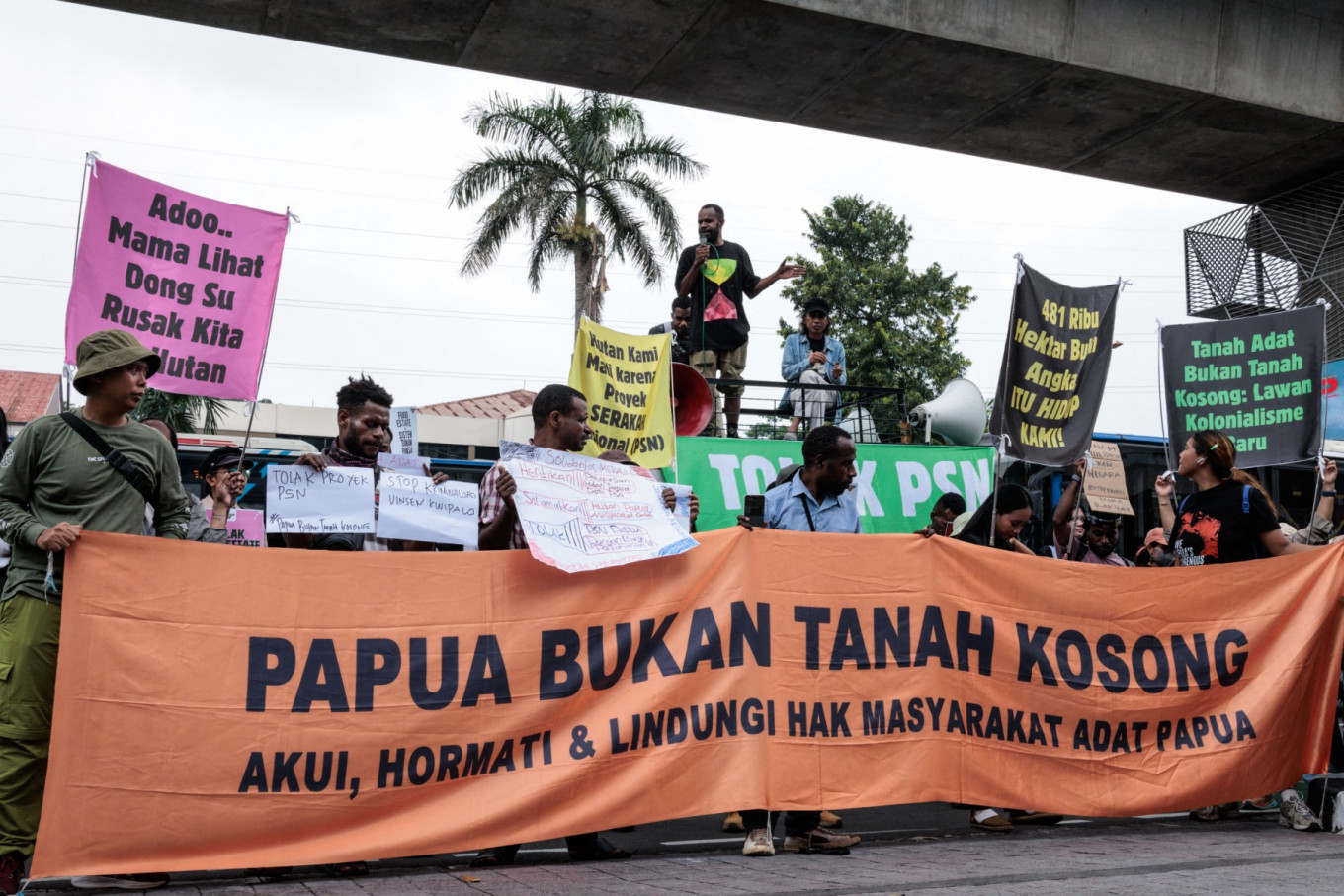 Demonstrators hold a banner reading “Papua is not vacant land” on Oct. 7, 2025, during a rally in front of the Agrarian and Spatial Planning Ministry office in South Jakarta against a plan to release forest areas in South Papua for national strategic projects (PSN) on food, energy and defense. (AFP/Yasuyoshi Chiba)
T
he saying “there is no such thing as a free lunch” has rarely been more relevant than in today’s debate on Indonesia’s food system, or the activities surrounding production, consumption, governance, economics of food and its impact on nature and population health.
While food may appear affordable in supermarkets or politically attractive like the free nutritious meals program or food self-sufficiency campaign, the true costs are often hidden. It is quietly paid elsewhere, by local communities who lose their land in competition with state-supported plantation expansion, by people displaced by erosion and floods after upland forest has been cleared for agricultural use, by children exposed to water pollution and other environmental risk linked to poorly regulated agriculture and land practices. Subsidies, permits and public investment priorities that favor extractive food production and agriculture have pushed the ecosystem beyond limits resulting in deforestation, water pollution, land degradation and ultimately jeopardizing long-term food security.
Our recent study highlights the undeniable reality of these challenges. It is estimated that Indonesia’s food system generates hidden costs equivalent to a staggering 28–45 percent of GDP in 2023, across many activities. These costs include environmental degradation, health impacts from poor diets and pollution, water scarcity, greenhouse gas emissions, natural resources depletion, food loss and waste, and more.
These figures represent tangible suffering, as farmers struggle with declining soil fertility and extreme weather from climatic change, families exposed to floods and landslides and children facing undernutrition, micronutrient deficiencies and overnutrition (overweight and obesity), that coexist at the same time.
Indonesia’s food production and agriculture generate significant environmental externalities through deforestation, peat degradation and agriculture practices that degrade soil, pollute water resources, deplete natural resources, cause land conflicts and more. While these impacts are excluded from market prices, they accumulate long-term damage to ecosystems, public health and social equity.
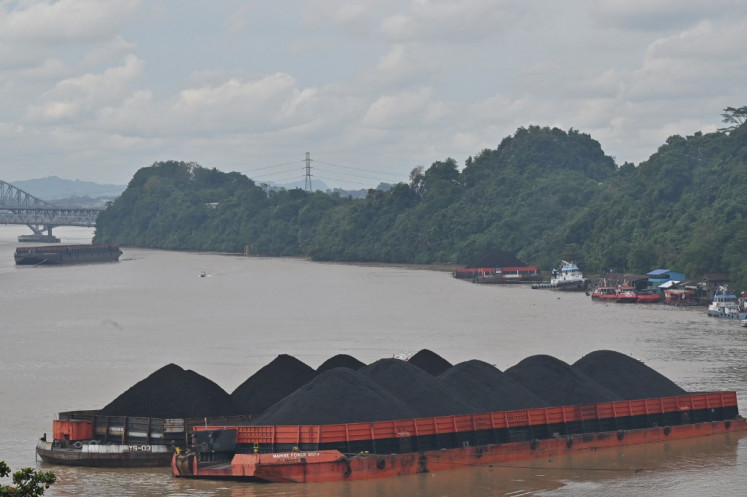
When ecological limits are exceeded or social protection fails, they resurface abruptly in the form of agrarian conflict, livelihood loss or disaster. The most devastating example is the large land use changes in Sumatra as the impact of palm oil expansion left minimal water absorption areas, which led to huge floods that hit Aceh, West Sumatra and North Sumatra last year that cost Rp 51.73 trillion (US$2.9 billion).

At the core of these issues is how land and production resources are used, and who controls them. Indonesia’s food system has long relied on large scale land conversion for monoculture crops, plantations and infrastructure projects framed as promoting food security and economic growth. However, this model has weakened natural systems that historically regulated water flow, protected soils and supported local livelihoods.