The Jakarta Post
Please Update your browser
Your browser is out of date, and may not be compatible with our website. A list of the most popular web browsers can be found below.
Just click on the icons to get to the download page.


Popular Reads
Top Results
No results found. Please check your search term and try again
Can't find what you're looking for?
View all search results
Popular Reads
Top Results
No results found. Please check your search term and try again
Can't find what you're looking for?
View all search resultsRefugee women’s voices matter in reforming Indonesia’s refugee policy
As Indonesia reviews its decade-old regulation on refugee management, the fiction of "temporary transit" has collapsed into the harsh reality of prolonged displacement. Reforming this framework is no longer just a matter of immigration security but an urgent humanitarian necessity to protect vulnerable refugee women from systemic exploitation and legal invisibility.
Change text size
Gift Premium Articles
to Anyone
Share the best of The Jakarta Post with friends, family, or colleagues. As a subscriber, you can gift 3 to 5 articles each month that anyone can read—no subscription needed!
 Set as preferred source
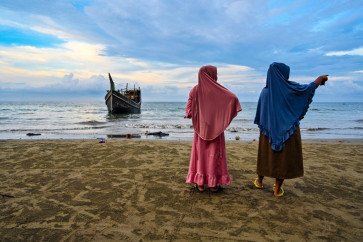
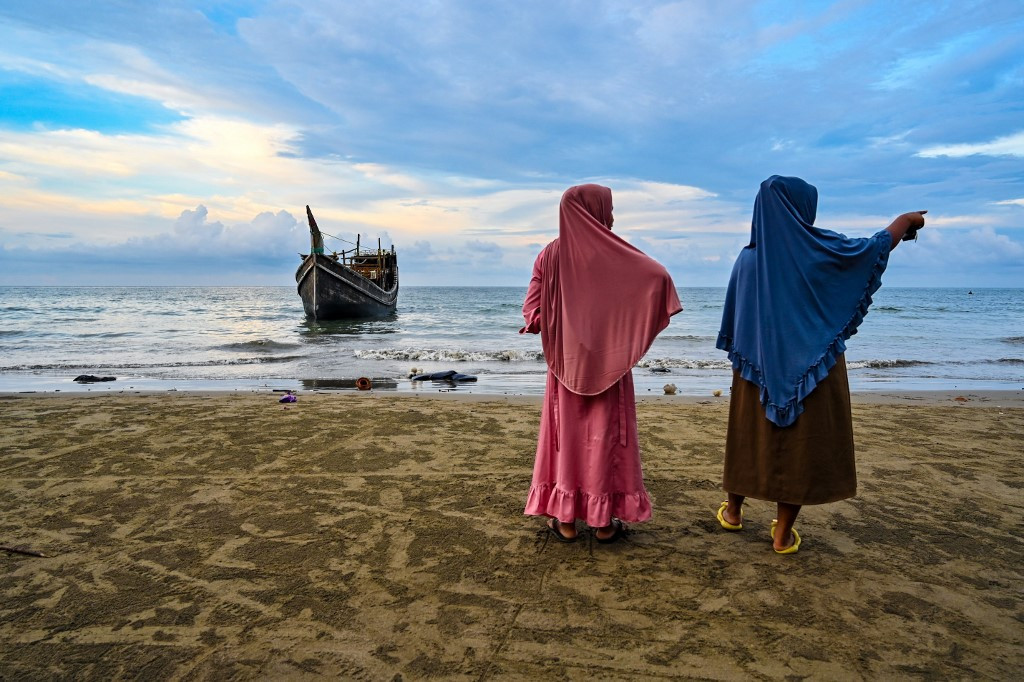 Two women gaze out at sea from the shore on Dec. 10, 2023, near the boat that carried more than 300 Rohingya refugees, the largest group since 2015, to Laweueng Beach in Pidie district, Aceh. (AFP/Chaideer Mahyuddin)
N
early a decade after its adoption, Presidential Regulation (Perpres) No. 125/2016 on the handling of foreign refugees is finally under review. The timing is overdue.
As a non-signatory to the 1951 Refugee Convention, Indonesia found much-needed legal clarity in the Perpres, which established essential procedures for rescue, temporary accommodation and interagency coordination. Yet the regulation was built on a key assumption that no longer holds: that refugees would remain in Indonesia only temporarily before being permanently resettled in third countries.
Today, global resettlement opportunities have declined sharply while conflicts in countries of origin remain unresolved. Thousands of refugees now spend years in Indonesia, waiting for a durable solution that may never come. What was originally designed to manage sudden refugee arrivals has effectively become a flawed framework for managing prolonged displacement.
Managing arrivals, however, is not the same as providing protection. Reflecting the policy thinking of its time, the 2016 Perpres was structured primarily around immigration management and security coordination. Consequently, it pays limited attention to the structural challenges that emerge when displacement becomes permanent: access to health care, education, livelihoods, mental health support and protection from violence.
A recent seminar on refugee governance at the University of Indonesia highlighted that modern refugee management extends far beyond emergency shelter and immigration supervision: It directly intersects with local government capacity, public service delivery and community relations.
No group illustrates the shortcomings of this outdated approach more clearly than refugee women.

In its 2024 monitoring report, The Wait That Kills Hope, the National Commission on Violence Against Women (Komnas Perempuan) documented the harrowing experiences of women refugees in Aceh, Cisarua in West Java, Ciputat in Banten and Makassar in South Sulawesi. For them, displacement is no longer defined solely by the persecution they fled but by years of legal limbo, strict restrictions on work, interrupted education, total economic dependence and a profound sense of hopelessness.