The Jakarta Post
Please Update your browser
Your browser is out of date, and may not be compatible with our website. A list of the most popular web browsers can be found below.
Just click on the icons to get to the download page.


Popular Reads
Top Results
No results found. Please check your search term and try again
Can't find what you're looking for?
View all search results
Popular Reads
Top Results
No results found. Please check your search term and try again
Can't find what you're looking for?
View all search resultsElections are an engine of corruption. Let’s change that
As lawmakers finally prepare to debate new electoral law, the runaway cost of election campaigns deserves to be at the center of the discussion.
Change text size
Gift Premium Articles
to Anyone
Share the best of The Jakarta Post with friends, family, or colleagues. As a subscriber, you can gift 3 to 5 articles each month that anyone can read—no subscription needed!
 Set as preferred source
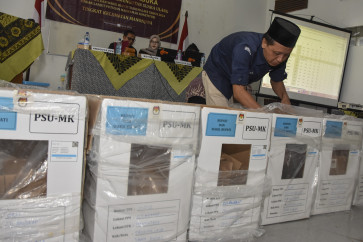
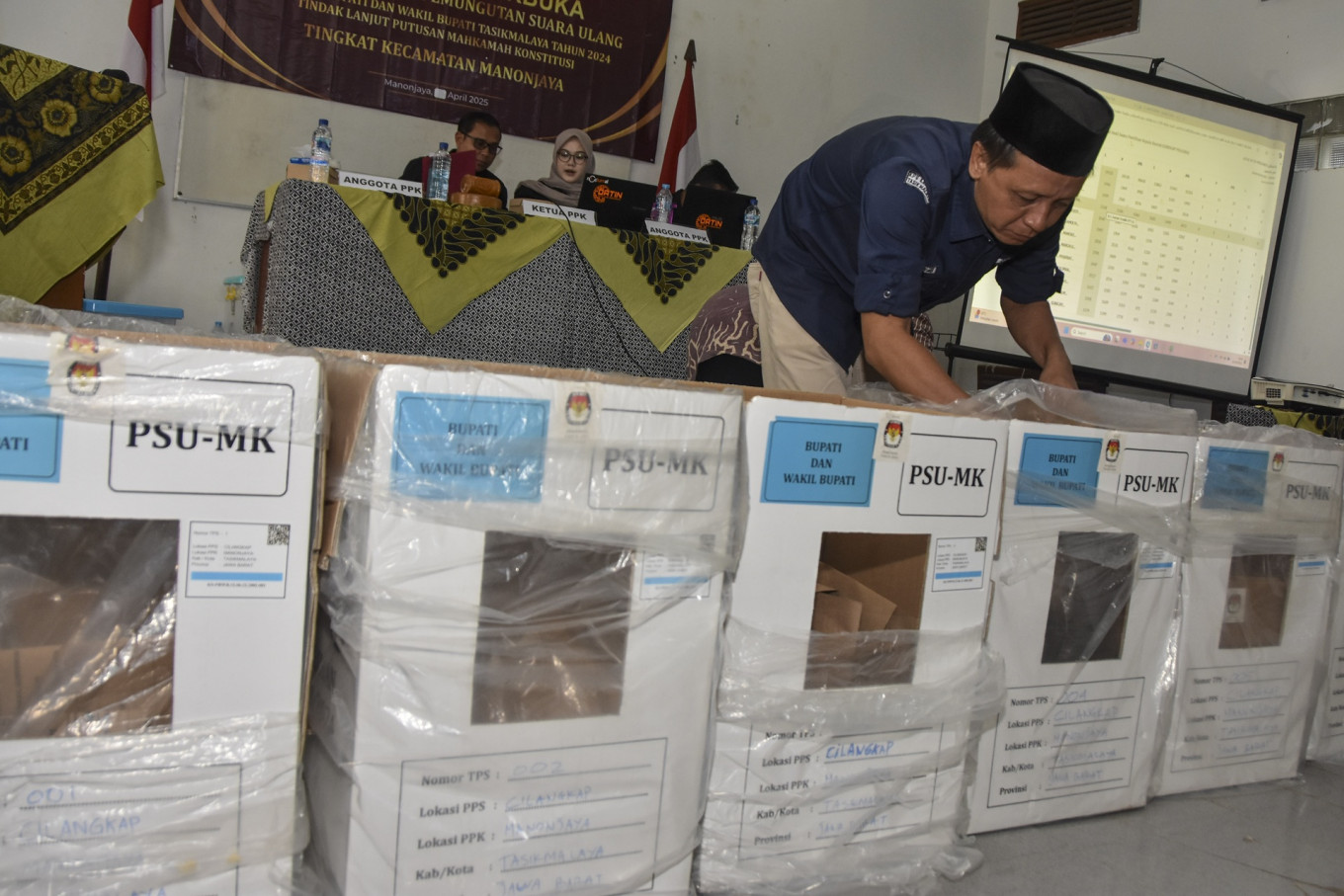 A district election committee (PPK) opens ballot boxes during a vote tabulation of the Tasikmalaya regency regional election revote in West Java on April 21, 2025. The regency was one of 24 regions ordered by the Constitutional Court in February to hold reruns of the 2024 regional elections. (Antara/Adeng Bustomi)
T
he revision of Indonesia’s electoral law has stalled. More than a year after it entered the legislative agenda, the overhaul of the General Elections and Regional Elections laws, now floated as an “omnibus law on politics”, has still not been formally debated, even as Commission II of the House of Representatives targets July or August this year to begin.
So far the public argument has fixated on legislative thresholds and on a recurring push to let regional legislatures, rather than voters, choose governors, regents and mayors. One issue has barely featured, though it may matter more than any of these: the staggering and corrosive cost of running for office.
On June 29, researchers from Gadjah Mada University (UGM) and the Royal Netherlands Institute of Southeast Asian and Caribbean Studies (KITLV) will launch a report that shows how serious that cost has become.
We conducted a survey of 478 candidates in the 2024 local elections across 10 provinces, in which we asked candidates to assess each other’s spending rather than rely on their own under-reported figures. These politicians assessed that winning candidates spent, on average, Rp 36.8 billion (US$2.05 million) to capture a single district. That is roughly 468 times what an ordinary Indonesian earns in a year.
Measured per voter, Indonesian campaigns are more expensive than those in Pakistan, India, Kenya or even Liberia. The numbers candidates submit to the General Elections Commission (KPU), rarely above Rp 3.5 billion, are a polite fiction.
This is not merely extravagant. These campaign costs are a primary engine of corruption. A politician who spends tens of billions to win office faces an overwhelming incentive to recoup the money once in power, by selling official positions, skimming procurement or auctioning permits.

Between 2004 and 2024, some 171 regional heads and 441 legislative council members were convicted of corruption. Much of that corruption is not simple greed. It is the predictable consequence of a system that forces candidates to spend fortunes they then have to earn back at the public’s expense.