The Jakarta Post
Please Update your browser
Your browser is out of date, and may not be compatible with our website. A list of the most popular web browsers can be found below.
Just click on the icons to get to the download page.


Popular Reads
Top Results
No results found. Please check your search term and try again
Can't find what you're looking for?
View all search results
Popular Reads
Top Results
No results found. Please check your search term and try again
Can't find what you're looking for?
View all search resultsThe 5Es of economic growth and their impact on exchange rates (Part 2 of 3)
To safeguard economic sovereignty against foreign currency shocks and exploitative tech monopolies, developing nations must pivot from exporting raw materials to mandating "balanced exports" and reclaiming local control over their digital economies.
Change text size
Gift Premium Articles
to Anyone
Share the best of The Jakarta Post with friends, family, or colleagues. As a subscriber, you can gift 3 to 5 articles each month that anyone can read—no subscription needed!
 Set as preferred source
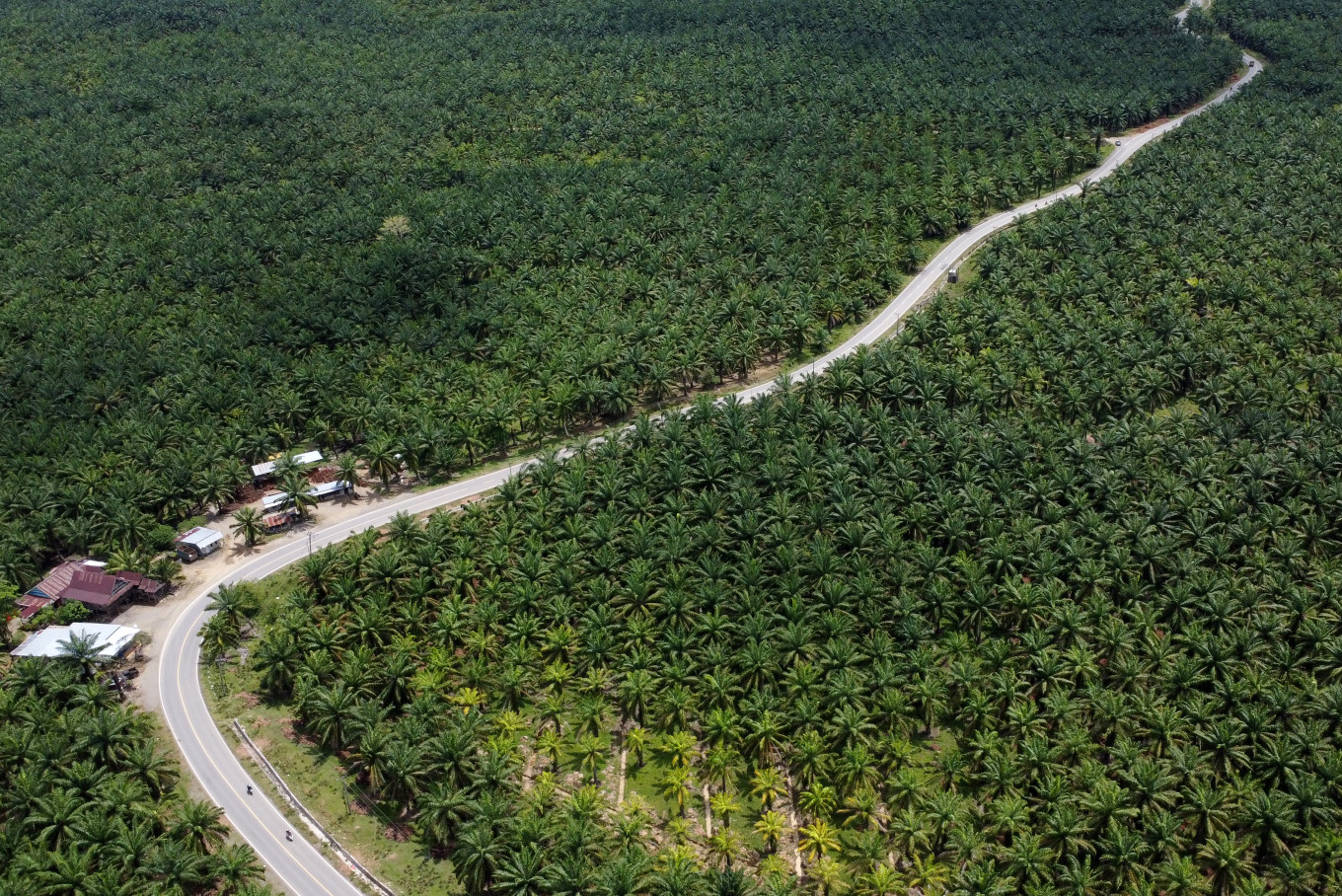 Vehicles pass through a palm oil plantation owned by a company on Oct. 29, 2025, in Central Mamuju Regency, West Sulawesi. The Indonesian Palm Oil Association (Gapki) recorded crude palm oil (CPO) production of 35.65 million tonnes by August 2025, a 13 percent increase compared to 34.522 million tonnes in the same period in 2024. (Antara/Akbar Tado)
I
n my previous article on June 18, I outlined why governments must adopt long-term policies focused on the 5Es of contemporary economics: Energy, Exports, E-Commerce, Equity Markets and Employment.
Without a structural commitment to these critical pillars, developing economies will remain hostage to spasmodic currency fluctuations and debilitating, long-term structural declines. While a weakening currency can theoretically boost exports, the reality is that most large developing nations have become deeply dependent on imports for essential goods.
This structural imbalance exerts relentless downward pressure on domestic currencies, a vulnerability currently visible in Indonesia, where the US dollar-to-rupiah exchange rate has approached depths not seen since the 1997–1998 Asian Financial Crisis.
China’s dramatic ascent from a struggling developing country in the 1980s to an assertive global superpower underscores the transformative power of a state-backed export strategy. In 2025, China exported US$3.7 trillion worth of products. Supported by state subsidies, robust government funding and a highly integrated e-commerce ecosystem, Chinese exporters have systematically penetrated global markets. This apparatus generated a massive trade surplus of $1.19 trillion in 2025.
A significant portion of this trade imbalance is concentrated within Southeast Asia, where China’s trade surplus with ASEAN reached $276 billion in 2025. This reveals that Beijing has identified ASEAN as a highly receptive trade environment, benefiting from markets that have progressively opened without requiring reciprocal market access. Consequently, low-tech, low-value (LTLV) products—such as plastics, garments, homeware and stationery—have flooded the region, displacing local manufacturing sectors that had sustained domestic economies for decades.
Policymakers must recognize that when domestic manufacturing shrinks and micro-SMEs shift from producers to mere traders to survive, a nation effectively cedes economic sovereignty to overseas entities. This is not pragmatic reform; it is a profound policy failure that perpetuates the middle-income trap.

To counter this vulnerability, developing nations must execute a concerted push toward "balanced exports"—specifically, prioritizing processed, high-value goods over raw commodities. Value addition and job creation occur when agricultural or mineral resources are processed domestically, fundamentally anchoring economic stability. Conversely, merely exporting raw resources and importing finished products traps an economy in a structural quagmire.