The Jakarta Post
Please Update your browser
Your browser is out of date, and may not be compatible with our website. A list of the most popular web browsers can be found below.
Just click on the icons to get to the download page.


Popular Reads
Top Results
No results found. Please check your search term and try again
Can't find what you're looking for?
View all search results
Popular Reads
Top Results
No results found. Please check your search term and try again
Can't find what you're looking for?
View all search resultsAnalysis: Militarization, business risk in cooperatives program
Change text size
Gift Premium Articles
to Anyone
Share the best of The Jakarta Post with friends, family, or colleagues. As a subscriber, you can gift 3 to 5 articles each month that anyone can read—no subscription needed!
 Set as preferred source
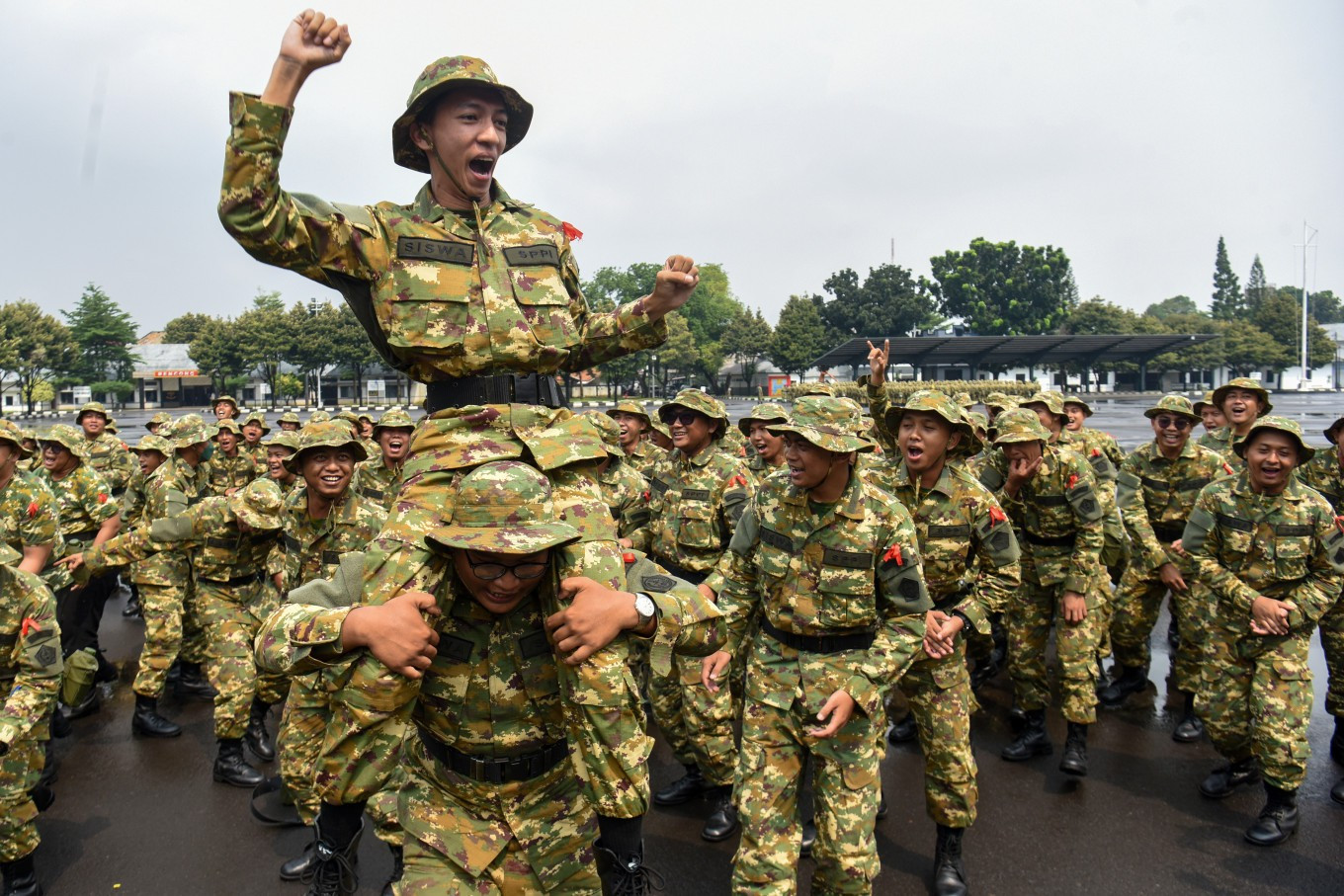 Participants in basic military training for prospective managers of the Red and White Cooperatives program chant slogans at the 1st Marine Infantry Brigade in Cilandak, Jakarta on June 25, 2026. ( Antara/Indrianto Eko Suwarso)
T
he controversy over military-style training for candidate managers of the Red and White Cooperatives and Fisherman’s Villages programs points to something larger than a single policy failure: the steady expansion of the Indonesian Military (TNI) into civilian governance and economic management. While the deaths of five civilian trainees has sparked public alarm, the deeper concern is how state institutions are being reshaped around military discipline and authority.
The cooperatives program aims to build roughly 80,000 cooperatives nationwide to boost rural economies, distribute subsidized goods and support a target of 8 percent economic growth by 2029. To manage this vast network, around 35,000 prospective managers were required to complete 45 days of military-led training at TNI facilities.
Officials describe the training as necessary for building discipline, leadership and shared national values among future managers. But relying on military institutions for this purpose raises real questions about institutional boundaries and whether military methods belong in economic management.
These concerns intensified after five trainees died within the program's first 10 days, from causes including cardiac arrest, heat stroke, tuberculosis and pneumonia. Rather than suspending the program, the government reviewed it, scaled back its physical intensity and dropped some military elements like shooting exercises, while keeping the program running. This response signals a high tolerance for operational risk and suggests the initiative carries significant political weight, raising concerns for investors about governance standards and crisis management in state-led programs.
The training's content has also drawn scrutiny. Though officially framed as character-building, it includes nationalism, discipline and ideological instruction resembling military reserve training. Critics argue this amounts to indoctrination rather than practical skill-building. Despite government denials that the program is militaristic, heavy involvement from the Defense Ministry and TNI personnel reinforces the perception that civilian economic actors are being molded within a military framework.
This fits into the broader context of the Reserves Component (Komcad) program, under which civilians, including civil servants, receive basic military training and can be mobilized during national emergencies. In 2026, thousands of state civil apparatus personnel joined this reserve system after training designed to instill nationalism and discipline. Though officially framed around national defense, such programs raise concerns about dual-use capabilities, blurring the line between civilian roles and military readiness.

The cooperatives program carries its own economic risks independent of the militarization issue. At an estimated cost of around Rp 400 trillion (US$25 billion), analysts warn of fiscal strain and the risk of villages falling into debt cycles. Cooperatives have a history of vulnerability to mismanagement and corruption, and well-funded, state-backed cooperatives could crowd out the small businesses that sustain local rural economies.