The Jakarta Post
Please Update your browser
Your browser is out of date, and may not be compatible with our website. A list of the most popular web browsers can be found below.
Just click on the icons to get to the download page.


Popular Reads
Top Results
No results found. Please check your search term and try again
Can't find what you're looking for?
View all search results
Popular Reads
Top Results
No results found. Please check your search term and try again
Can't find what you're looking for?
View all search resultsWhat the world can learn from Ukraine’s constitutional legacy
Centuries before modern democracies took shape, Ukraine was forging a radical blueprint for freedom, a deep-rooted constitutional legacy that remains its ultimate armor today.
Change text size
Gift Premium Articles
to Anyone
Share the best of The Jakarta Post with friends, family, or colleagues. As a subscriber, you can gift 3 to 5 articles each month that anyone can read—no subscription needed!
 Set as preferred source
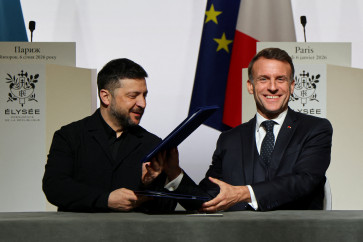
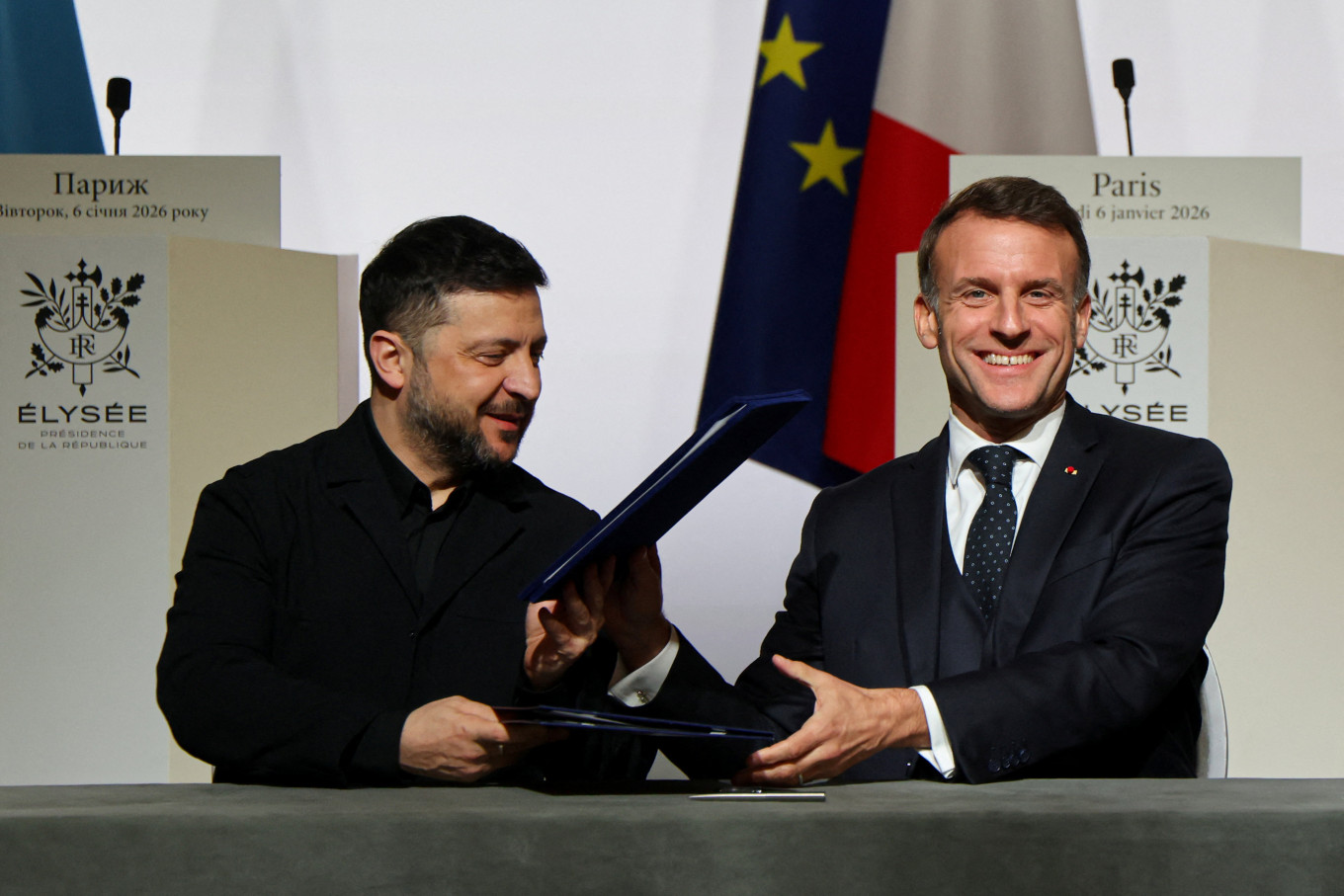 Ukraine’s President Volodymyr Zelenskiy (left) and France’s President Emmanuel Macron react on Jan. 6, 2026, upon the signing of the declaration on deploying a post-ceasefire force in Ukraine during the so-called “Coalition of the Willing” summit, at the Elysee Palace in Paris. (Pool via Reuters/Ludovic Marin)
T
his year, Ukraine marks the 30th anniversary of its modern Constitution, a milestone honoring three decades of an institutional framework that enshrines statehood, the rule of law and civil liberties.
Yet, Ukrainian constitutionalism did not begin in the late 20th century. To understand the modern document, one must look back more than three centuries to an era when democratic governance and institutional checks and balances were first forged on the European continent.
Long before many modern nations drafted their founding texts, Ukraine became the birthplace of an unprecedented legal instrument defining civic rights. On April 5, 1710, during the Great Northern War, the Cossack Council approved “The Pacts and Constitutions of Rights and Freedoms of the Zaporizhzhian Host”, known today as the Constitution of Pylyp Orlyk.
Conceived in Baturyn, the capital of the Hetmanate (the Ukrainian Cossack state of that era), this text consisted of a preamble and 16 articles. Viewed historically, it reflects an enduring aspiration for complete separation from Muscovy, underscoring a deep legacy of struggle for independence.
Remarkably, the 1710 document established a clear division of government into legislative, executive and judicial branches to prevent the usurpation of power, a pioneering achievement that predates Montesquieu’s The Spirit of the Laws. It limited the executive authority of the Hetman (the head of state), created a democratically elected parliament called the General Council, and recognized the Zaporizhzhian Host as a self-governing republic of free citizens.
Socially and economically, it extended protections to unprivileged peasants and townspeople, strictly forbade serf labor, granted tax exemptions to small traders and liberated cities from mandatory war taxes. It also asserted religious independence, placing the Orthodox faith under the jurisdiction of the Patriarchate of Constantinople while firmly rejecting subordination to Moscow.

Written in both Latin and Old Ukrainian, its surviving manuscripts span centuries. The Latin copy is held in the National Archives of Sweden, while the Old Ukrainian text remains in Moscow, where it was verified by researchers in 2008.