The Jakarta Post
Please Update your browser
Your browser is out of date, and may not be compatible with our website. A list of the most popular web browsers can be found below.
Just click on the icons to get to the download page.


Popular Reads
Top Results
No results found. Please check your search term and try again
Can't find what you're looking for?
View all search results
Popular Reads
Top Results
No results found. Please check your search term and try again
Can't find what you're looking for?
View all search resultsA decade of water progress, but the world must move faster
The world community has the solutions and the funding to solve the global water crisis—now we just need the political will to deploy them before time runs out.
Change text size
Gift Premium Articles
to Anyone
Share the best of The Jakarta Post with friends, family, or colleagues. As a subscriber, you can gift 3 to 5 articles each month that anyone can read—no subscription needed!
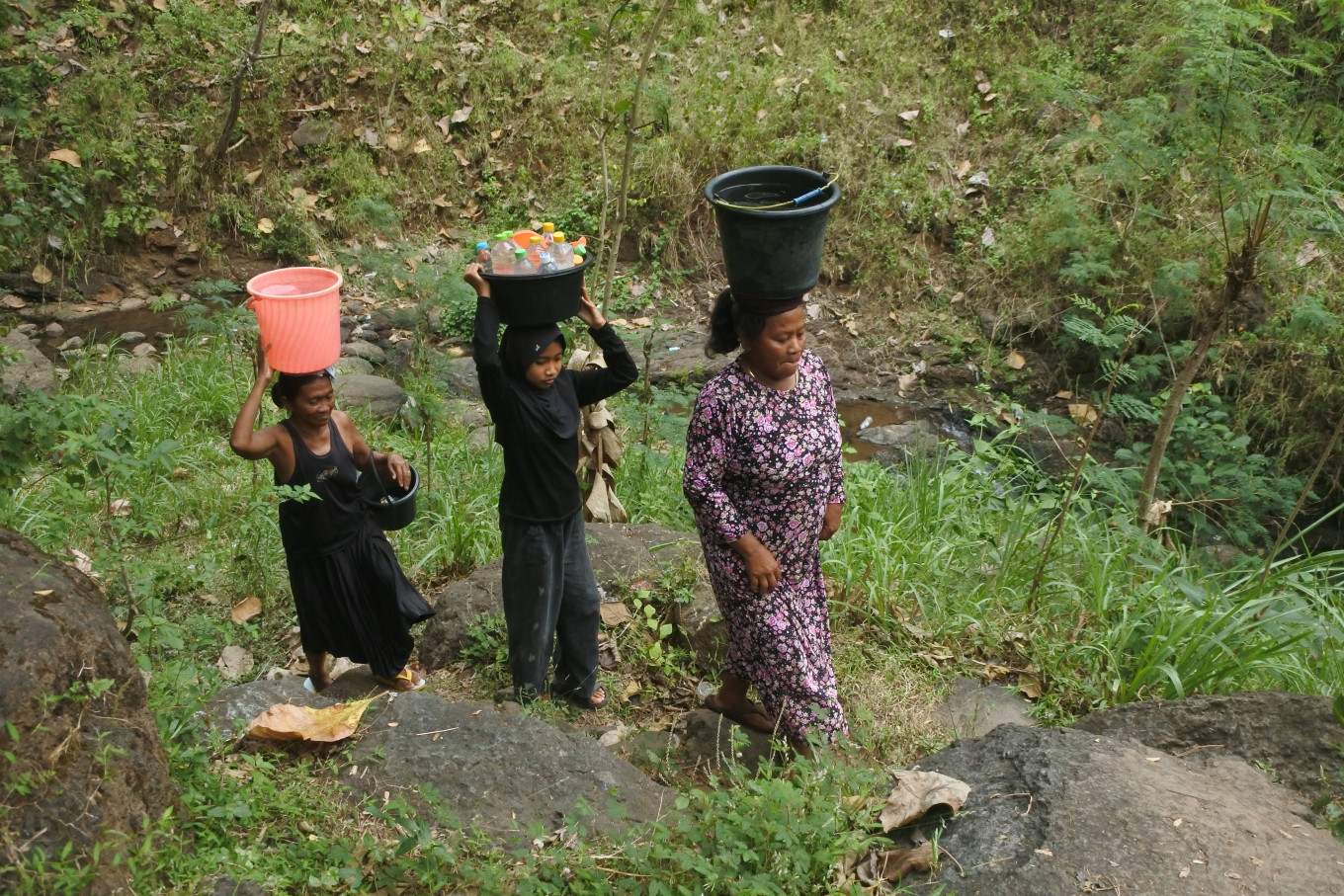 Residents carry buckets of water collected from a natural spring in Gunung Putri village, Situbondo regency, East Java, on June 20, 2026. Villagers say they have struggled to access clean water for drinking and daily needs over the past month, forcing them to walk about one kilometer to the spring. (Antara/Seno)
A
fter a decade of concerted global effort, one message is clear: there has been tangible progress in implementing Sustainable Development Goal 6 (SDG 6), “Ensure availability and sustainable management of water and sanitation for all”. However, this progress remains far too slow. If the world is to meet its targets, implementation must now radically accelerate.
Adopted in 2015, SDG 6 created the first internationally agreed framework covering the entire water cycle, from drinking water, sanitation, and hygiene to wastewater management, water quality, efficiency, transboundary cooperation and the protection of freshwater ecosystems.
Since its inception, 961 million people have gained access to safely managed drinking water services. Approximately 1.2 billion have gained access to safely managed sanitation, while an additional 1.6 billion people now possess basic hygiene services. Furthermore, global water-use efficiency increased by 19.5 percent between 2015 and 2022. By 2023, nearly 60 percent of countries had reached at least a “medium-high” level of integrated water resources management, up from 40 percent in 2017.
These are not merely statistics; they represent healthier children, greater human dignity, more productive economies, and stronger climate resilience. They also demonstrate that progress is entirely possible when political leadership, effective institutions, adequate financing, reliable data, and international cooperation converge.
Despite these gains, the remaining challenges are immense. In 2024, only 56 percent of household wastewater flows were safely treated. The global average level of water stress has remained virtually unchanged at approximately 18 percent, masking far more critical and dangerous conditions in specific regions. Meanwhile, around half of all reporting countries show persistent degradation in at least one type of freshwater ecosystem.
The scale of acceleration required to bridge these gaps is substantial. To achieve universal access by 2030, the current rate of progress must increase eightfold for safely managed drinking water, sixfold for safely managed sanitation, and twofold for basic hygiene.

Together, these figures indicate that the primary challenge is no longer identifying solutions, but implementing them consistently and at a far greater speed and scale.