TheJakartaPost
Please Update your browser
Your browser is out of date, and may not be compatible with our website. A list of the most popular web browsers can be found below.
Just click on the icons to get to the download page.


Popular Reads
Top Results
No results found. Please check your search term and try again
Can't find what you're looking for?
View all search results
Popular Reads
Top Results
No results found. Please check your search term and try again
Can't find what you're looking for?
View all search resultsAnalysis: Papua needs more than calls for peace
Change text size
Gift Premium Articles
to Anyone
Share the best of The Jakarta Post with friends, family, or colleagues. As a subscriber, you can gift 3 to 5 articles each month that anyone can read—no subscription needed!
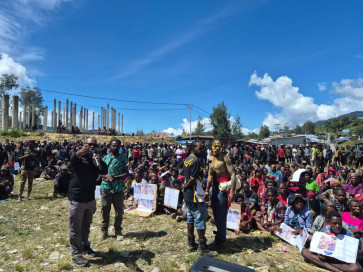
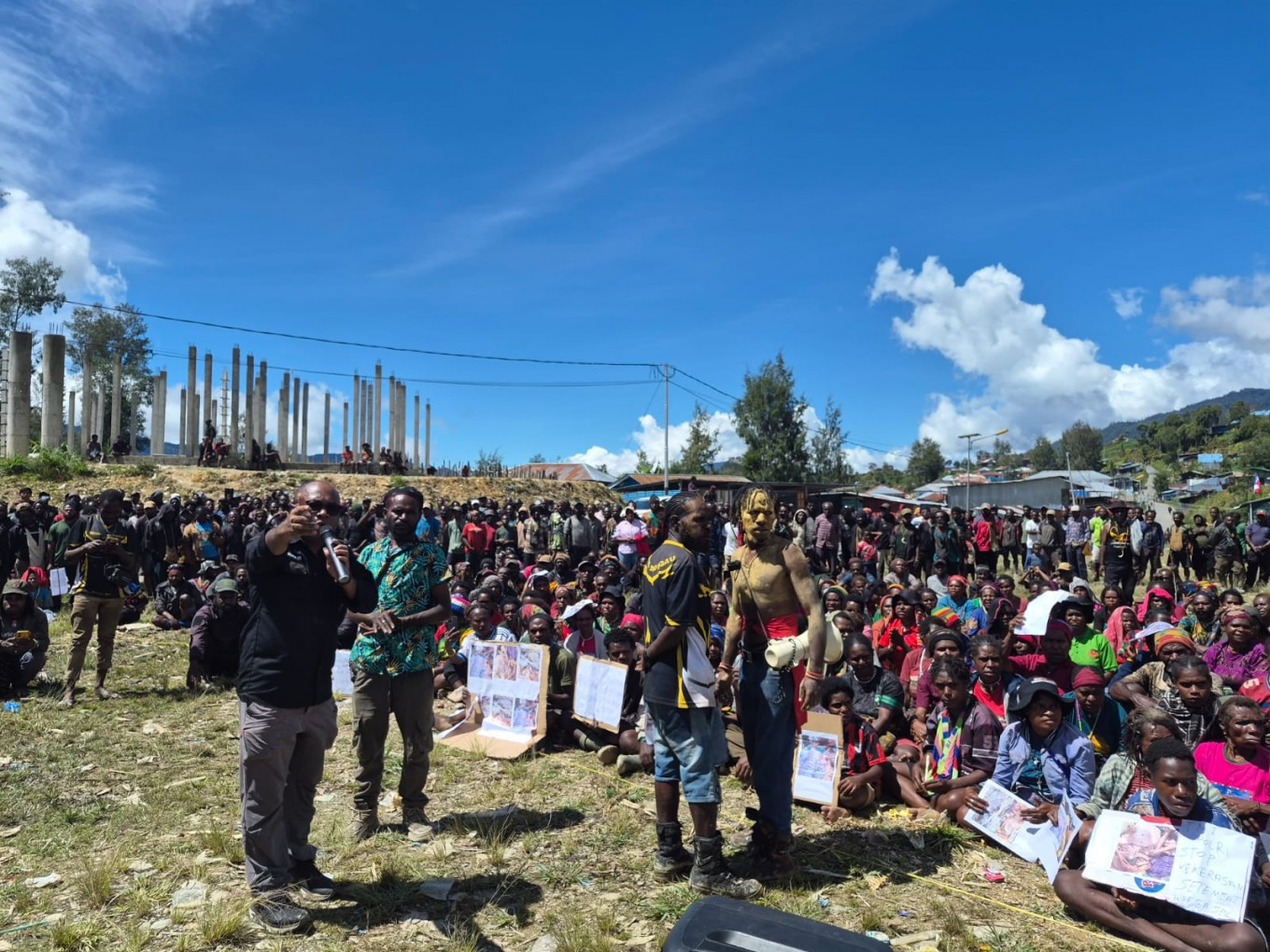 Dozens of Papuans gather on July 4, 2026 at the Sugapa field in Intan Jaya regency, Central Papua to meet with representatives from the National Commission on Human Rights (Komnas HAM) following the deadly clash between the Indonesian Military (TNI) and a separatist group in the district two days earlier. (Courtesy of the National Commissions on Human Rights. ((Komnas HAM) Papua/-)
T
he armed conflict plaguing Papua has intensified sharply over the past two weeks, compounding decades of violence that have long gripped the region. This latest escalation has once again prompted widespread calls for restraint, peaceful dialogue and a nonviolent approach to resolving the protracted crisis.
To date, the ongoing hostilities have claimed thousands of lives and driven the number of internally displaced persons (IDPs) in Papua to an estimated 122,000. While the West Papua National Liberation Army (TPNPB), the armed wing of the Free Papua Movement (OPM), has been blamed for a series of recent attacks, the operations conducted by the Indonesian Military (TNI) have also come under increasing scrutiny.
According to recent monitoring, much of the latest violence has been concentrated in the Sugapa and Agisiga districts of Intan Jaya, a mountainous regency in Central Papua.
The resulting toll highlights a grim pattern that began on June 27, when a soldier was killed and three others wounded. Two days later on June 29, three separate incidents resulted in the deaths of a church worker and a pastor, while two workers building a church in Titigi village were injured in a shooting. The bloodshed continued to July 2, when three other incidents claimed the lives of a pregnant woman, a church worker and a pastor.
A common thread running through these tragedies is the critical need for thorough, impartial investigations as competing narratives frequently obscure the truth. A stark example is the death of Melkiana Duwotau, who was pregnant when a bullet pierced the wall of her honai (traditional house) and struck her in the head, killing her.
The Intan Jaya administration reported that the gunfire was believed to have originated from the direction of a nearby TNI post. The military denied this, however, and the Habema Joint Regional Defense Command (Koops Habema) alleged that the shots were fired by an armed separatist group.

Questions also surround the July 2 death of church worker Okto Tigau, whom the military had identified as a member of an armed separatist group. Local accounts, however, described him as an ordinary civilian. The Papua office of the National Commission on Human Rights (Komnas HAM) said it received reports that Tigau had been missing since June 29. Two days later, his body was discovered with multiple stab wounds. Local sources allege he had been detained by security personnel.