The Jakarta Post
Please Update your browser
Your browser is out of date, and may not be compatible with our website. A list of the most popular web browsers can be found below.
Just click on the icons to get to the download page.


Popular Reads
Top Results
No results found. Please check your search term and try again
Can't find what you're looking for?
View all search results
Popular Reads
Top Results
No results found. Please check your search term and try again
Can't find what you're looking for?
View all search resultsIndia-Indonesia: Glorious past, promising future
With similar developmental challenges, closer cooperation and exchange of expertise can significantly accelerate bilateral progress
Change text size
Gift Premium Articles
to Anyone
Share the best of The Jakarta Post with friends, family, or colleagues. As a subscriber, you can gift 3 to 5 articles each month that anyone can read—no subscription needed!
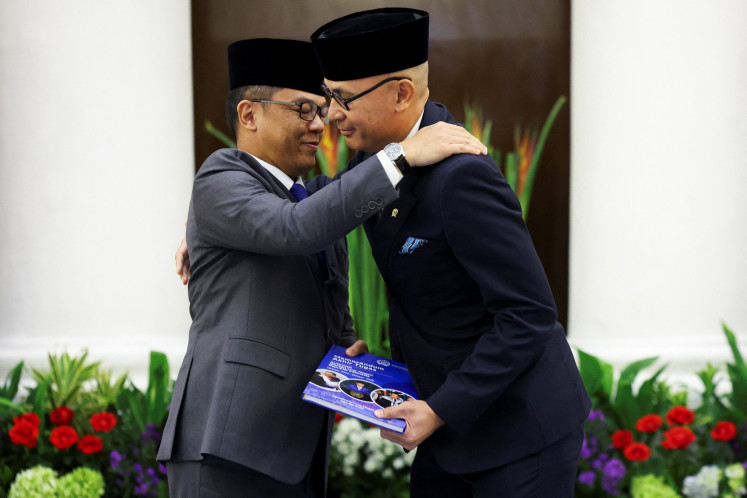
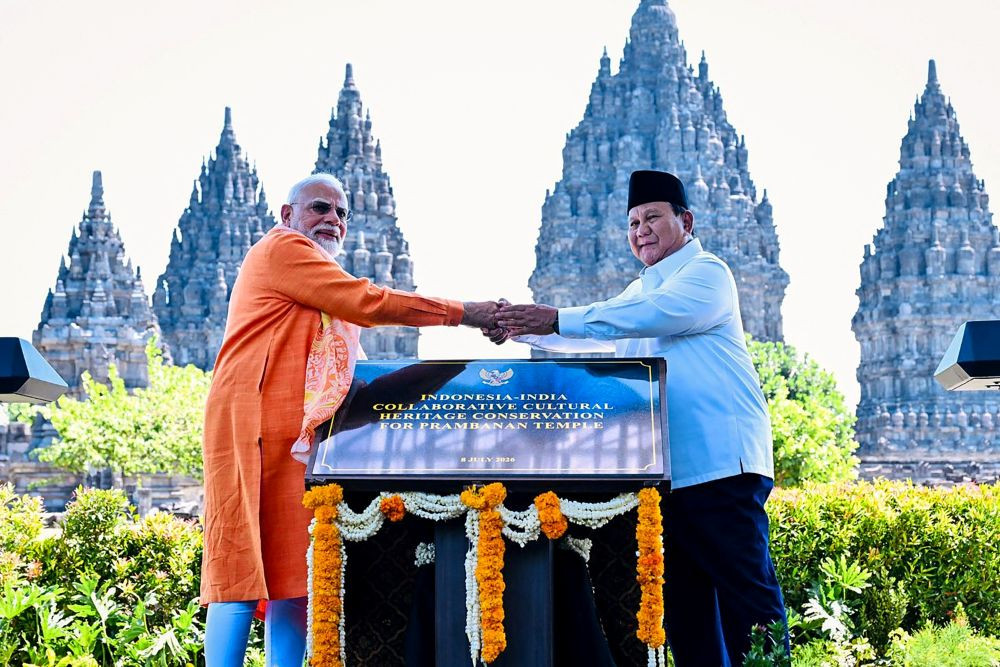 President Prabowo Subianto (right) and Indian Prime Minister Narendra Modi clasp hands on July 8 as they visit the Prambanan Temple Compounds, a UNESCO World Heritage Site in Sleman, Yogyakarta. (AFP/Presidential Secretariat)
I
ndia and Indonesia share a uniquely strategic maritime proximity, separated by barely 150 kilometers, making Jakarta central to New Delhi’s Indo-Pacific engagement.
Positioned between the Indian and Pacific Oceans, Indonesia serves as a critical bridge in the region. Much like India, it is a diverse nation that values strategic autonomy and maintains a fiercely independent foreign policy stance.
As influential voices of the Global South, both countries find common ground in shaping a more balanced global order. Indonesia’s inclusion in BRICS has further expanded avenues for collaboration, offering both nations a stronger platform to advance shared priorities. With similar developmental challenges, closer cooperation and exchange of expertise can significantly accelerate bilateral progress.
The recent outcomes of Prime Minister Narendra Modi’s visit to Jakarta and Yogyakarta reflect a trajectory set in motion during former president Joko Widodo’s tenure and carried forward with renewed vigor under President Prabowo Subianto.
Prabowo, who earlier served as defense minister, has consistently demonstrated a keen interest in deepening ties with India. He has openly acknowledged India’s potential role in addressing several of Indonesia’s strategic and developmental needs. For New Delhi, Indonesia — Southeast Asia’s largest economy and a nation adept at balancing major powers — emerges as a natural and indispensable partner, underpinned by centuries-old cultural linkages.
Prime Minister Modi’s visit marked a significant step forward in strengthening the Comprehensive Strategic Partnership, with both leaders signaling intent to elevate ties to a new level. Key agreements, including those on BrahMos missiles, air-to-air missile cooperation and maritime safety, underscored the expanding defense partnership. The two sides committed to intensifying collaboration across a wide spectrum — ranging from regular defense dialogues and joint exercises to co-development of advanced technologies, capacity building, and enhanced industrial cooperation.

A major thrust of the partnership lies in defense manufacturing and technology collaboration. Both countries agreed to promote joint production, facilitate technology transfers and build capabilities through technical assistance and training. Areas such as shipbuilding, maintenance and overhaul (MRO) facilities for defense platforms and the development of resilient defense supply chains were identified as priority sectors. There is also growing interest in establishing joint research and development frameworks to strengthen long-term strategic capabilities.