The Jakarta Post
Please Update your browser
Your browser is out of date, and may not be compatible with our website. A list of the most popular web browsers can be found below.
Just click on the icons to get to the download page.


Popular Reads
Top Results
No results found. Please check your search term and try again
Can't find what you're looking for?
View all search results
Popular Reads
Top Results
No results found. Please check your search term and try again
Can't find what you're looking for?
View all search resultsSekolah Rakyat needs evidence, not applause
How Indonesia can move from celebrating a flagship anti-poverty program to actually finding out whether it works.
Change text size
Gift Premium Articles
to Anyone
Share the best of The Jakarta Post with friends, family, or colleagues. As a subscriber, you can gift 3 to 5 articles each month that anyone can read—no subscription needed!
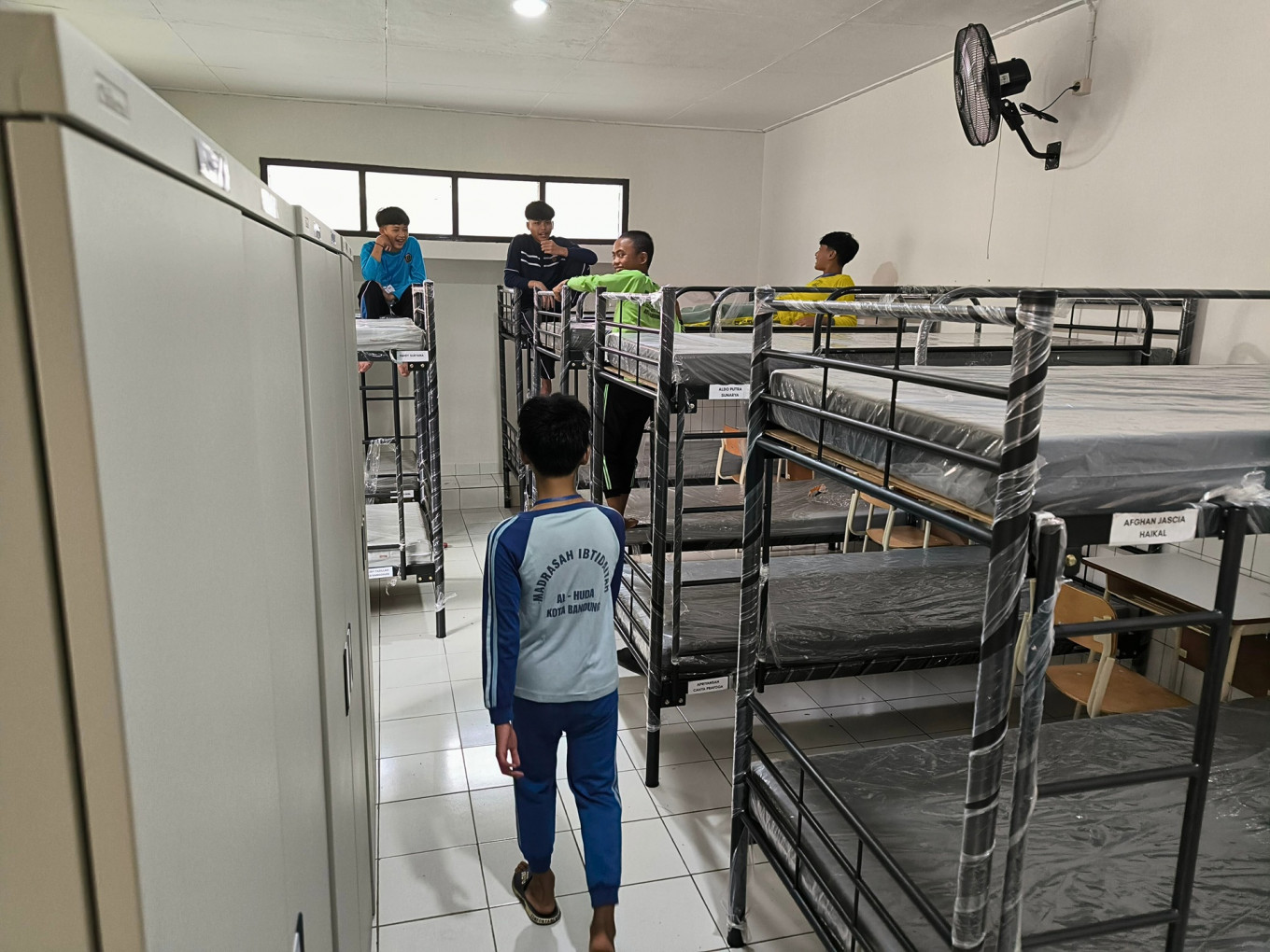 Students of SRMP 9 Sekolah Rakyat junior high school at the Wyata Guna center in Bandung, West Java, try out their bunk beds after attending the opening of Sekolah Rakyat's orientation program on July 14, 2025. (JP/Adi Marsiela)
L
ast month, the Sekolah Rakyat (Community School) program turned a year old, and the government marked it the way it marks most things: with a ceremony. Ministers called it a historic milestone and announced 453 students set to graduate in its first year, without anyone having checked whether the model producing those graduates actually works.
In 2025, the government opened Sekolah Rakyat at 63 locations, offering free, boarding-based education to children from the poorest fifth of Indonesian households. Sekolah Rakyat is meant to reduce the poverty rate, which has stalled at around 8.5 percent, or roughly 24 million people, even as the economy grows. Months in, it remains almost entirely unevaluated.
The only peer-reviewed study of Sekolah Rakyat looked at a single school: SRMA 10 in South Jakarta. It found staff communication functioning reasonably well, but budget autonomy, facilities and coordination across four ministries and the Indonesian Military (TNI) were weak, and more than 140 teachers nationwide resigned in the first month, citing unclear incentives.
One school cannot tell us whether that pattern holds across the other 62 sites, or whether it is linked to worse outcomes for the children the program exists to serve.
Social policy here is too often built on good intentions and run on assumption, a pattern traced through decades of unevenly delivered schooling in the region. Sekolah Rakyat deserves judgment on its own terms, but nobody is checking whether the intention is being delivered.
That instinct was on display on Aug. 22, 2025, when the government gathered Sekolah Rakyat principals and teachers at the Jakarta International Expo for a presidential directive event. Success stories came in abundance, giving the impression that evaluation had been outsourced to applause.

But compelling anecdotes, however sincere, cannot answer the question that matters most: whether the program works beyond the schools selected to tell its story.