TheJakartaPost
Please Update your browser
Your browser is out of date, and may not be compatible with our website. A list of the most popular web browsers can be found below.
Just click on the icons to get to the download page.


Popular Reads
Top Results
No results found. Please check your search term and try again
Can't find what you're looking for?
View all search results
Popular Reads
Top Results
No results found. Please check your search term and try again
Can't find what you're looking for?
View all search resultsAsian bishops assembly: Building bridges of dialogue for humanity, justice
As the Federation of Asian Bishops’ Conferences convenes in Jakarta, the Asian Catholic Church faces a historic opportunity to turn the ideals of interfaith harmony and digital-age human dignity into a concrete regional roadmap for social justice.
Change text size
Gift Premium Articles
to Anyone
Share the best of The Jakarta Post with friends, family, or colleagues. As a subscriber, you can gift 3 to 5 articles each month that anyone can read—no subscription needed!
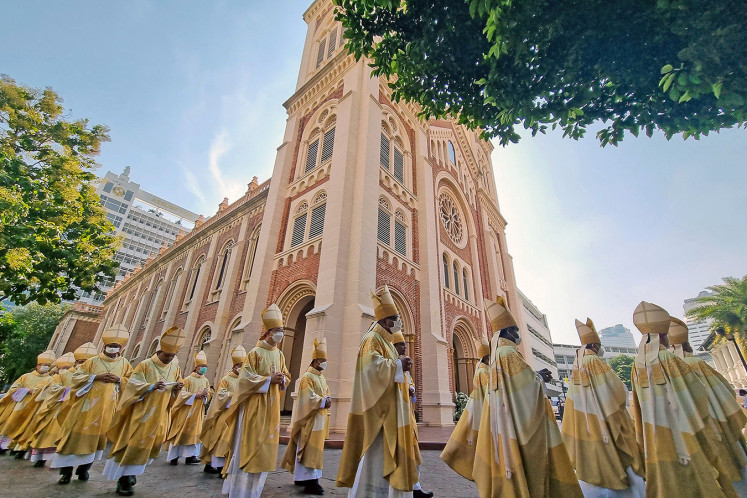
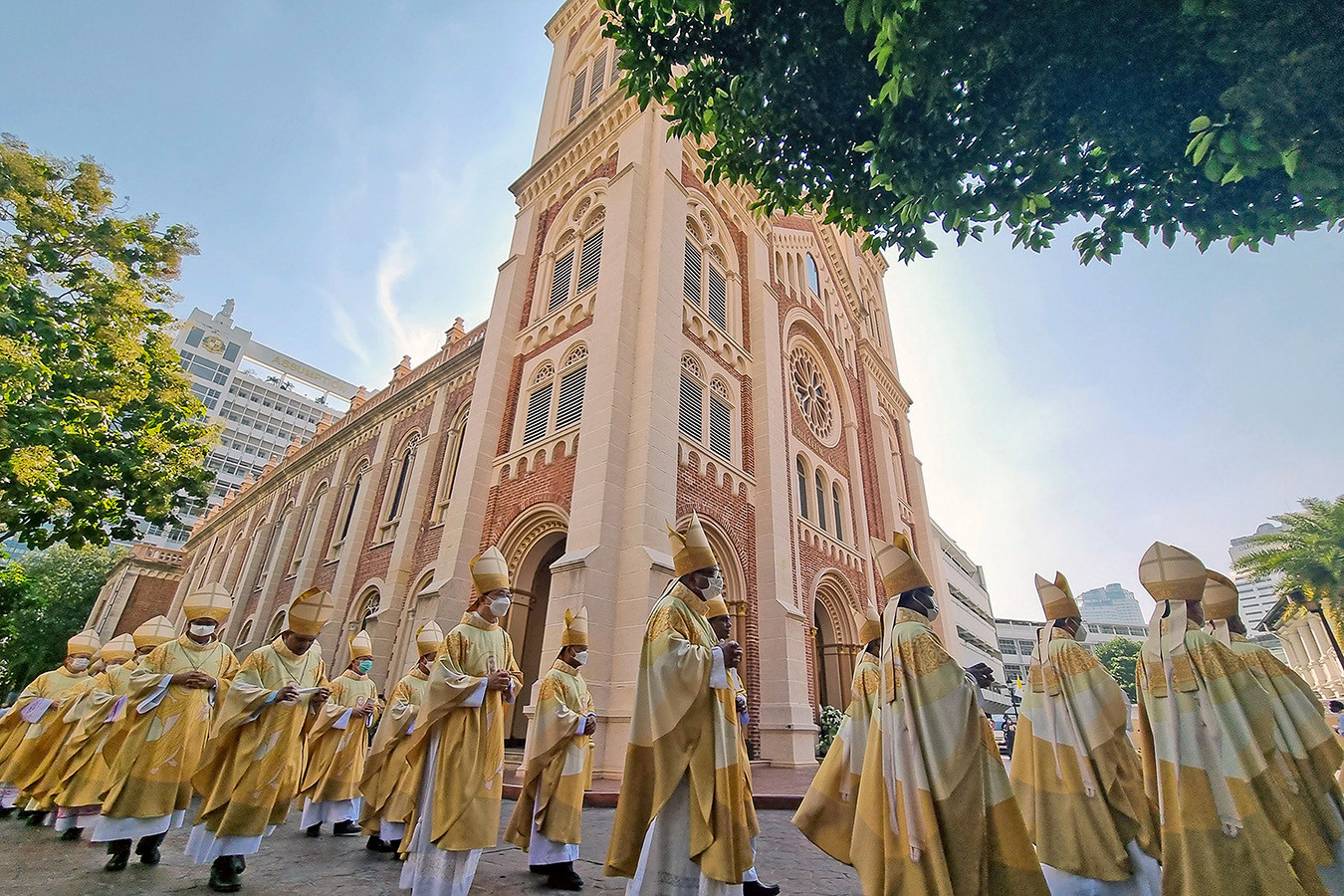 Bishops from across Asia arrive on Oct. 30, 2022, at Bangkok Cathedral for the closing Mass of the Federation of Asian Bishops’ Conferences’ general assembly. (Courtesy of /CBCP News)
J
akarta, and Indonesia at large, is currently witnessing a historic milestone in the Asian Catholic Church’s ongoing efforts to build bridges between faith, culture, and shared humanity. This week, members of the Federation of Asian Bishops’ Conferences (FABC) are convening in the Indonesian capital for their Plenary Assembly.
The high-level gathering brings together bishops from across the continent, representing national and joint prelatures that span vital regions—including Indonesia (KWI), Malaysia-Singapore-Brunei (BCMSB), the Philippines (CBCP), India (CBCI), South Korea, Japan, Vietnam, Thailand, Myanmar, Sri Lanka, Taiwan, Bangladesh, Pakistan, Laos-Cambodia and Central Asia.
The assembly also includes delegates from ecclesiastical jurisdictions operating outside national conferences, such as the Dioceses of Hong Kong and Macau, the Apostolic Vicariate of Nepal, the Apostolic Prefecture of Ulaanbaatar (Mongolia) and several distinct regions within Central Asia.
The choice of Jakarta for the 2026 Plenary Assembly carries structural and symbolic weight. It offers a prime global stage to showcase a living Church thriving amidst pluralism, interfaith brotherhood and acute ecological vulnerability. Indonesia possesses a long, celebrated history of nurturing religious and cultural diversity. Through the FABC framework, these foundational values can be shared as a blueprint for the wider Asian Church, inspiring regional peace, cross-border solidarity and a renewed social mission.
Fundamentally, this Plenary Assembly must serve as a catalyst for genuine solidarity and mutual listening across Asia. As a critical institutional platform, the FABC is uniquely positioned to deepen ties between regional bishops' conferences. The meeting allows prelates to share local pastoral strategies, confront shared structural challenges and renew their commitment to proclaiming hope and dignity amid Asia’s increasingly complex geopolitical and social realities.
To remain relevant, the assembly must directly confront the pressing crises of our time: the rise of religious intolerance, the protection of vulnerable minority communities and the systemic empowerment of Asian youth. Furthermore, widespread economic precarity and the disproportionate impacts of climate change across the continent represent urgent pastoral challenges that demand concrete action rather than mere rhetorical acknowledgment.

The Church must also reckon with the profound societal shifts driven by the digital revolution. As Pope Leo XIV emphasized in his recent social encyclical, Magnifica Humanitas, the unchecked advancement of artificial intelligence (AI) risks exacerbating dehumanization and widening economic disparities, particularly for marginalized populations, if left unaccompanied by robust moral guidelines.