TheJakartaPost
Please Update your browser
Your browser is out of date, and may not be compatible with our website. A list of the most popular web browsers can be found below.
Just click on the icons to get to the download page.


Popular Reads
Top Results
No results found. Please check your search term and try again
Can't find what you're looking for?
View all search results
Popular Reads
Top Results
No results found. Please check your search term and try again
Can't find what you're looking for?
View all search resultsIndonesia as a global financial hub: Fantasy or strategic opportunity?
For Indonesia’s new financial hub to become a global powerhouse rather than an ambitious policy fantasy, the nation must offer investors what matters most: unyielding legal certainty.
Change text size
Gift Premium Articles
to Anyone
Share the best of The Jakarta Post with friends, family, or colleagues. As a subscriber, you can gift 3 to 5 articles each month that anyone can read—no subscription needed!
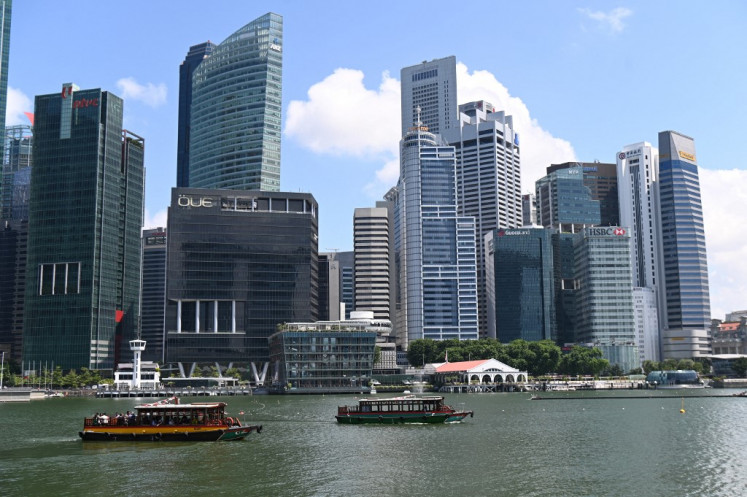
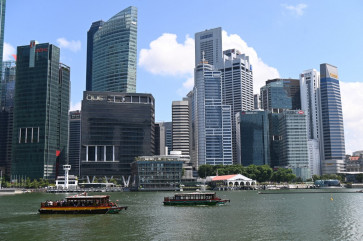
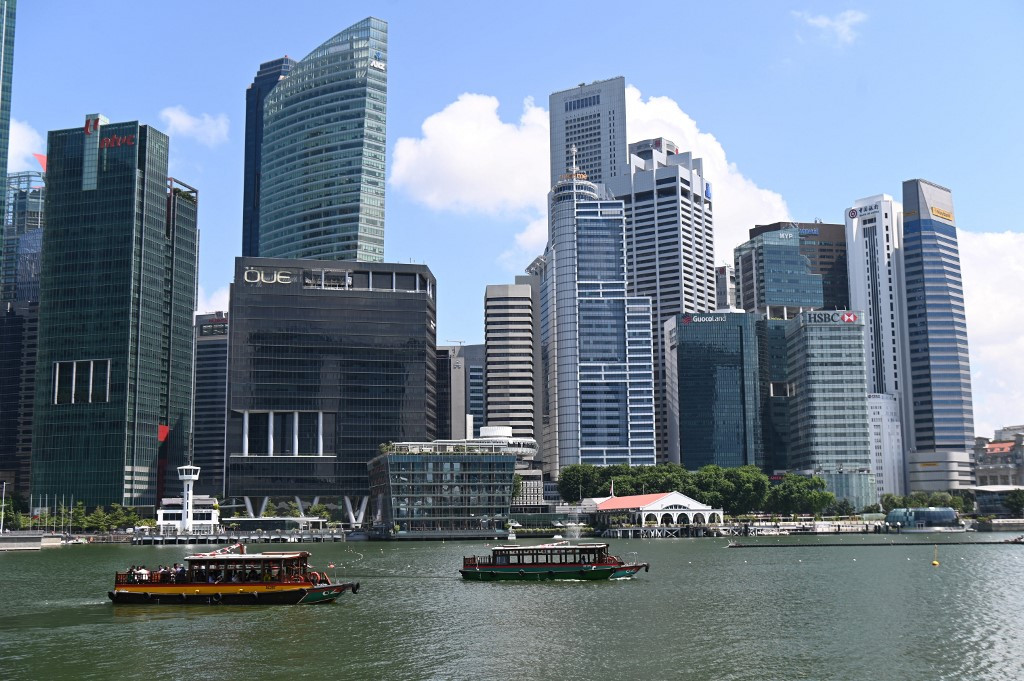 Singapore's financial business district is seen on July 12, 2019, from Marina Bay. (AFP/Roslan Rahman)
I
ndonesia is embarking on a new chapter in its economic trajectory with plans to establish the Indonesian International Financial Center (IFC). As Southeast Asia’s largest economy and a long-standing member of the Group of 20, the country has long been positioned to attract substantial international interest.
However, this initiative poses a crucial question: Will the establishment of an IFC truly elevate the Indonesian economy, or will it prove to be little more than an ambitious policy fantasy?
Currently, the Indonesian IFC is in its institutional building phase—establishing its legal, regulatory and foundational frameworks. This initial stage is the most critical. Drafts of the IFC Law mandate the creation of a dedicated Special Economic Zone (SEZ) for the financial sector, operating with financial, administrative and operational independence. The objective is to concentrate financial services and technology development within an ecosystem anchored by efficiency, transparency and integrity.
While the government has yet to finalize a location, Bali's Kura Kura SEZ on Serangan Island has emerged as a leading candidate. Yet, the central issue is not where the center is located, but why global investors should choose it. What distinct value proposition can Indonesia offer compared to established hubs like Singapore, Dubai or Hong Kong?
Beyond physical infrastructure and competitive tax policies, a successful financial center must function as an economic platform connected to global networks. It requires a self-sustaining ecosystem where international financial institutions and supporting professional services coalesce to create powerful network effects.
The true strength of an international financial center lies not in its real estate, but in the strength of its institutions. It must enjoy genuine operational, administrative and financial autonomy. In shaping this vision, Indonesian policymakers have frequently cited the Dubai International Financial Centre (DIFC) as a blueprint. The DIFC succeeded by guaranteeing foreign institutions world-class legal administration, commercial flexibility and operational independence.

If Indonesia aims to mirror Dubai's success, governance will be paramount. For instance, the IFC’s legal and judicial leadership cannot be subordinate to executive or administrative boards without compromising its credibility in the eyes of investors. Under Article 24, Paragraph (2) of the 1945 Constitution, the Supreme Court (MA) and the Constitutional Court (MK) hold ultimate judicial authority.