The Jakarta Post
Please Update your browser
Your browser is out of date, and may not be compatible with our website. A list of the most popular web browsers can be found below.
Just click on the icons to get to the download page.


Popular Reads
Top Results
No results found. Please check your search term and try again
Can't find what you're looking for?
View all search results
Popular Reads
Top Results
No results found. Please check your search term and try again
Can't find what you're looking for?
View all search resultsPotential risks of B50
As Indonesia leaps blindly into a world-first B50 biodiesel mandate, the Prabowo administration’s high-stakes gamble for energy independence risks triggering domestic supply crunches, market instability and environmental fallout.
Change text size
Gift Premium Articles
to Anyone
Share the best of The Jakarta Post with friends, family, or colleagues. As a subscriber, you can gift 3 to 5 articles each month that anyone can read—no subscription needed!
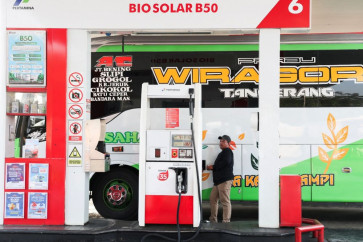
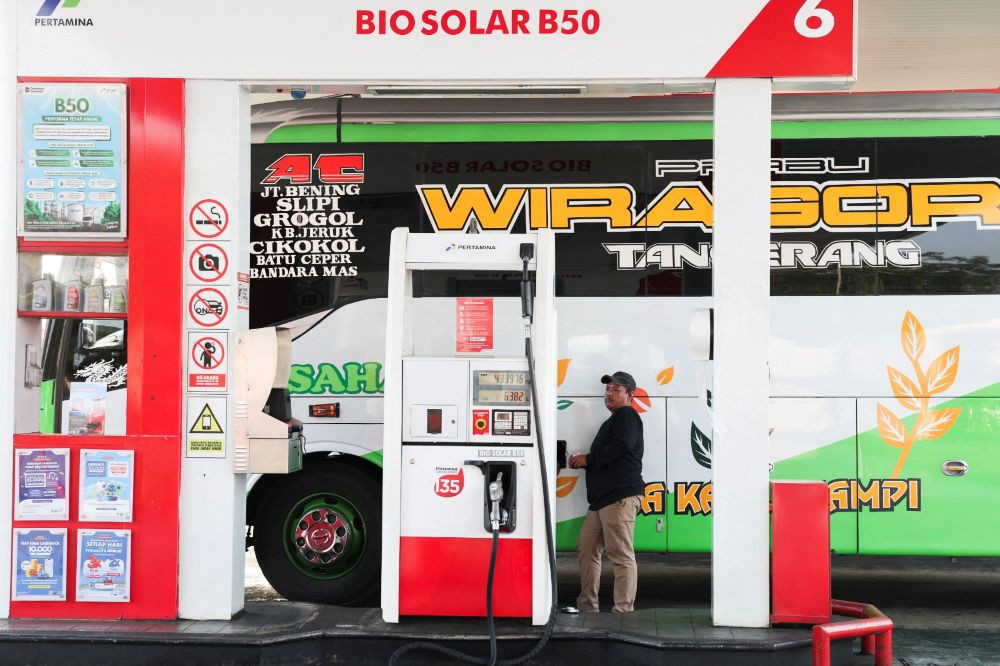 A driver watches a pump while filling his bus with B50 fuel containing 50 percent palm oil biodiesel on July 9, 2026, at a gas station in Karawang, West Java. (Reuters/Ajeng Dinar Ulfiana)
P
resident Prabowo Subianto's decision to increase the national biodiesel mandate from B40 to B50 on July 1 marks an ambitious step toward energy self-sufficiency. Without equally determined measures to safeguard supply, fiscal sustainability and market governance, however, the policy risks upsetting the delicate balance that has long underpinned the country's lucrative palm oil industry.
Over the past 15 years, successive administrations have steadily increased the required share of palm oil-based biodiesel, or fatty acid methyl ester (FAME), in domestic diesel fuel from just 10 percent (B10) under Susilo Bambang Yudhoyono to B35 under Joko "Jokowi" Widodo.
President Prabowo has taken the biggest leap yet, rolling out B40 in early 2025 and then B50 just a year and a half later. Today, the mandate reaches nearly every diesel consumer, from commercial logistics fleets and fishing vessels to private passenger cars running on subsidized fuel.
The rationale for this push is straightforward: the greater the volume of palm oil in domestic fuel blends, the less crude oil imported. According to Prabowo, the B50 rollout will allow for the elimination of diesel imports as early as this year; a milestone that carries heightened strategic weight as geopolitical conflicts keep global energy markets volatile.
Yet this gain comes at a significant trade-off. While Indonesia remains the world's largest palm oil producer, output growth has struggled to keep pace with rapidly rising domestic demand. Consequently, every additional tonne of crude palm oil (CPO) diverted to fuel production is a tonne less for cooking oil or foreign markets.
A tighter domestic market raises the specter of another cooking oil crisis, reminiscent of the severe supply crunch in 2022. At the same time, declining export volumes threaten to shrink government tax revenues and export levies: the very funds used to finance smallholder replanting programs.

Over time, underfunding plantation rejuvenation could further depress yield productivity, spawning a vicious cycle in which stagnant output will make it even harder to satisfy the country's expanding appetite for palm oil.