TheJakartaPost
Please Update your browser
Your browser is out of date, and may not be compatible with our website. A list of the most popular web browsers can be found below.
Just click on the icons to get to the download page.


Popular Reads
Top Results
No results found. Please check your search term and try again
Can't find what you're looking for?
View all search results
Popular Reads
Top Results
No results found. Please check your search term and try again
Can't find what you're looking for?
View all search resultsNudging can strengthen Jakarta’s clean air policy
Addressing environmental challenges like air pollution requires not only regulatory measures but also behavioral intervention if Jakarta is to achieve its ambition of becoming a global city.
Change text size
Gift Premium Articles
to Anyone
Share the best of The Jakarta Post with friends, family, or colleagues. As a subscriber, you can gift 3 to 5 articles each month that anyone can read—no subscription needed!
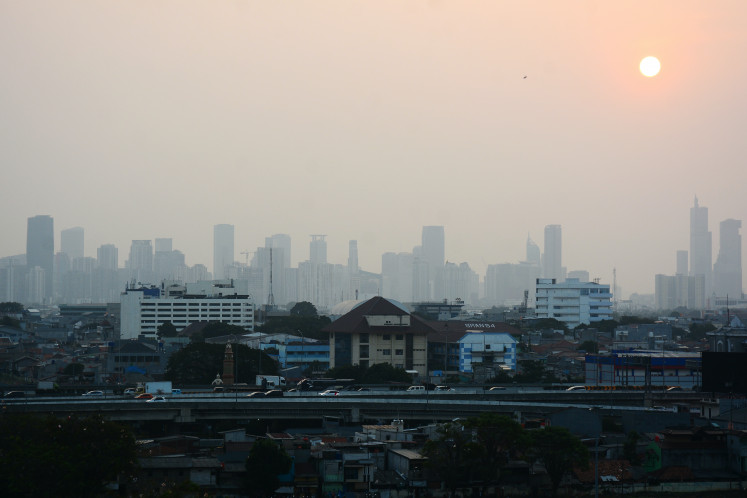
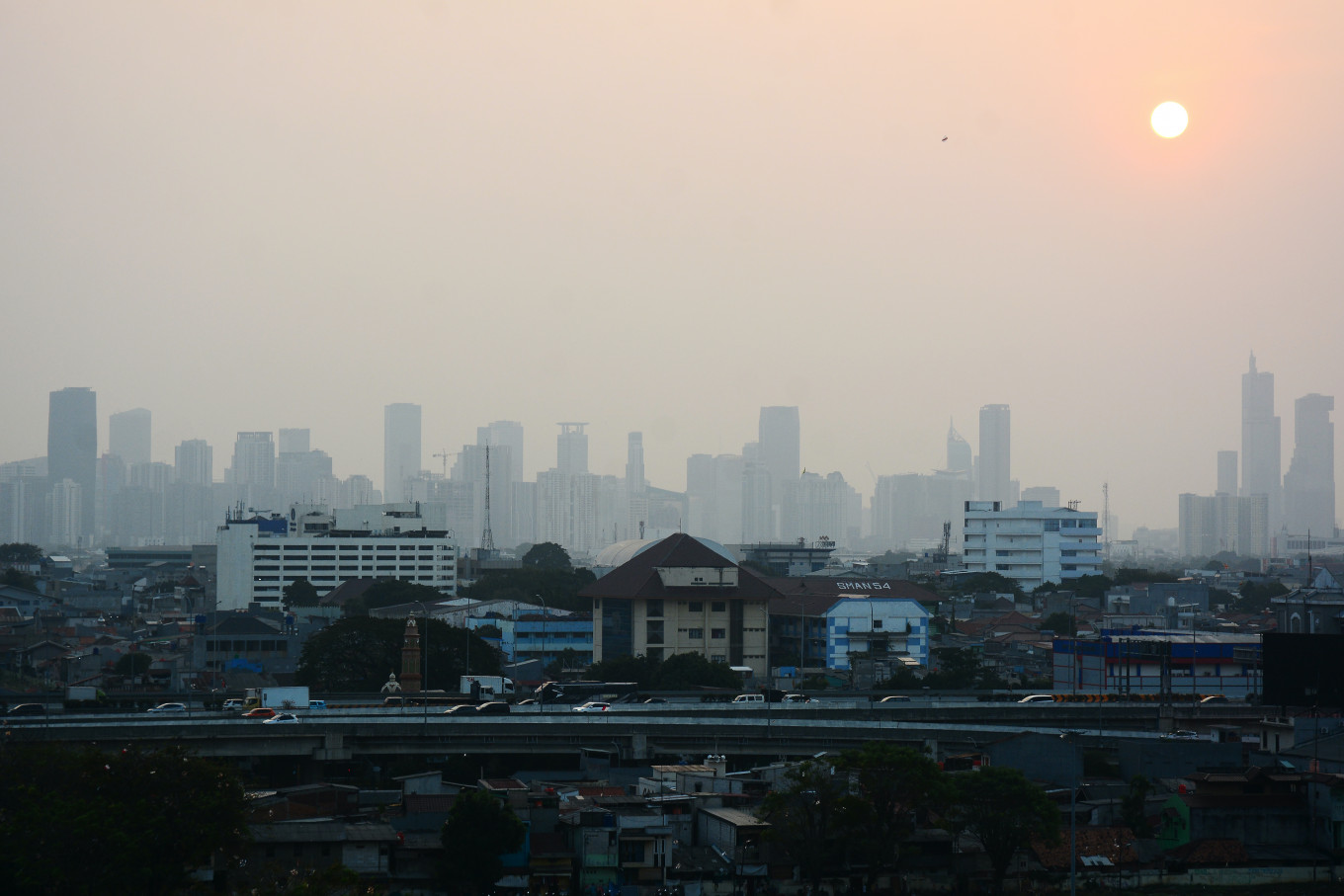 Skyscrapers in Jakarta are shrouded in haze on July 20 in East Jakarta. Jakarta's Air Quality Index (AQI) averaged between 120 and 168 in mid-July 2026, placing the city's air quality in the unhealthy category. Jakarta also hosts the headquarters of the ASEAN Coordinating Center for Transboundary Haze Pollution Control (ACC THPC) in Kebon Nanas, East Jakarta, which facilitates coordination among member states in addressing the impact of regional haze pollution. (JP/Iqro Rinaldi)
T
he Jakarta metropolitan area recently surpassed Tokyo as the world’s most populous megacity, with more than 42 million residents calling "The Big Durian" home. Yet this new milestone brings a critical question back into the public spotlight: How can Jakarta maintain its momentum as a global hub while ensuring a high quality of life for its people?
Central to this challenge is Jakarta's air quality, which consistently ranks among the worst worldwide. Fine particulate matter PM2.5 concentrations frequently reach 67.5 µg/m³—more than 13 times the World Health Organization’s recommended annual limit of 5 µg/m³. Inhaling these fine particles causes severe health complications, with children and the elderly facing the highest risks of respiratory and cardiovascular disease.
The Jakarta provincial government has acknowledged that its mitigation efforts remain sub-optimal. The Jakarta Environmental Agency cites a lack of clear legal frameworks and technical standards as major roadblocks. For instance, a recent initiative to install water mist sprayers on roughly 100 high-rise buildings yielded negligible results because the city lacked standard protocols governing spraying duration, building height requirements and optimal operating hours.
In response, Governor Pramono Anung proposed evaluating Governor Decree No. 576/2023 regarding the city's Air Pollution Control Strategy. The strategy targets primary emission sources—namely motor vehicle emissions, industrial power plants and open waste burning. The administration plans to upgrade the decree to a formal governor regulation while integrating an early warning system for severe pollution episodes.
While stronger enforcement and updated decrees are necessary, policy alone will not suffice. Air pollution cannot be solved by regulatory mandates in a vacuum, nor can it be resolved purely by appealing to personal moral duty. Complex environmental challenges demand a dual approach: robust structural policies complemented by strategic behavioral interventions.
This is where "nudging" becomes an invaluable policy tool.

Nudging refers to design choices that predictably alter human behavior without forbidding options or significantly altering economic incentives. Rather than imposing bans or fines, nudges gently steer individuals toward preferable decisions by placing subtle, intuitive cues within their environment.