The Jakarta Post
Please Update your browser
Your browser is out of date, and may not be compatible with our website. A list of the most popular web browsers can be found below.
Just click on the icons to get to the download page.


Popular Reads
Top Results
No results found. Please check your search term and try again
Can't find what you're looking for?
View all search results
Popular Reads
Top Results
No results found. Please check your search term and try again
Can't find what you're looking for?
View all search resultsOld labels, new targets: The colonial grammar ‘londo ireng’
By reviving colonial-era slurs to target press critics, President Prabowo Subianto imports a dangerous authoritarian logic that trades democratic accountability for loyalty tests.
Change text size
Gift Premium Articles
to Anyone
Share the best of The Jakarta Post with friends, family, or colleagues. As a subscriber, you can gift 3 to 5 articles each month that anyone can read—no subscription needed!
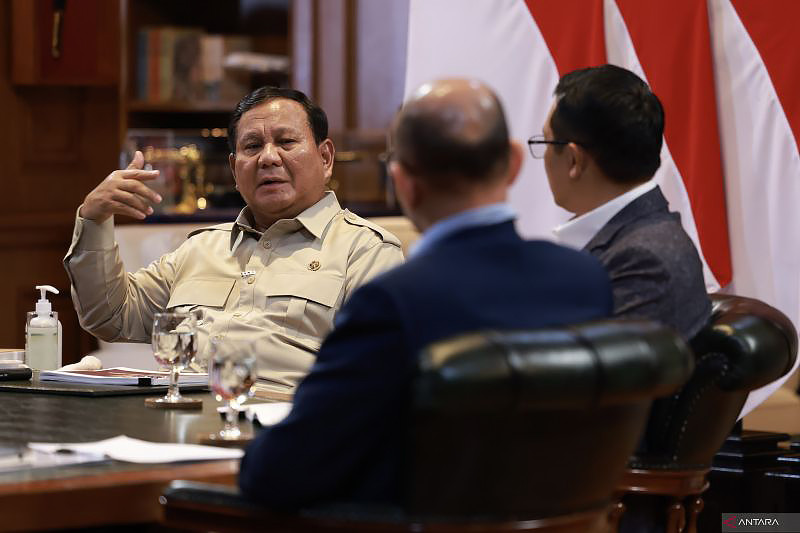 Briefing: Prabowo Subianto (left) speaks with several senior journalists, economists and analysts on March 17, 2026, at his private residence in Hambalang, Bogor regency, West Java. (Antara/Handout/Government Communication Office)
T
he relationship between President Prabowo Subianto and the press has long been fraught. Throughout his political career, Prabowo has repeatedly expressed hostility toward the media, famously branding journalists as antek asing (foreign stooges) and routinely barring reporters from campaign events. During the 2014 presidential election, he went so far as to publicly label the owner of The Jakarta Post as brengsek (jerky or scoundrel).
The President's recent characterization of certain media outlets, analysts and civil society organizations as londo ireng continues this established pattern. Literally translating to “black Dutchman” in Javanese, londo ireng historically referred to native Indonesians who aligned with Dutch colonial authorities against their fellow citizens during the war for independence.
As Benedict Anderson famously posited, such terms were more than mere insults; they actively defined the boundary of the emerging nation's "imagined community", sharply separating those who belonged from those marked as traitors.
Press freedom advocates have condemned the President’s labeling as an attempt to delegitimize critical voices, whereas his loyalists defended it as a warning against foreign influence
While much of the subsequent public debate focused on whether the remark was appropriate, this controversy masks a far more revealing set of questions: Why would a sitting president revive one of the most politically charged labels from Indonesia’s colonial past? And how does the vocabulary of colonialism outlive formal colonial rule to shape the boundaries of modern democratic life?
Although Indonesia’s national revolution dismantled colonial structures, political vocabularies rarely vanish alongside political regimes. Words survive. Categories endure. Detached from their original historical milieu, these terms often acquire potent new political functions. This persistence is precisely what makes the contemporary resurgence of londo ireng so significant.

Today’s investigative journalists, academics and civil society advocates bear no structural resemblance to colonial collaborators. Yet, the label performs an identical ideological function: it places critics within a moral frame where dissent is framed not as legitimate civic disagreement, but as an indicator of divided loyalty.