The Jakarta Post
Please Update your browser
Your browser is out of date, and may not be compatible with our website. A list of the most popular web browsers can be found below.
Just click on the icons to get to the download page.


Popular Reads
Top Results
No results found. Please check your search term and try again
Can't find what you're looking for?
View all search results
Popular Reads
Top Results
No results found. Please check your search term and try again
Can't find what you're looking for?
View all search resultsA stronger macroeconomic framework for a stronger Indonesia
Indonesia now faces an important choice. The current policy mix is costly to maintain while becoming less effective.
Change text size
Gift Premium Articles
to Anyone
Share the best of The Jakarta Post with friends, family, or colleagues. As a subscriber, you can gift 3 to 5 articles each month that anyone can read—no subscription needed!
 Set as preferred source
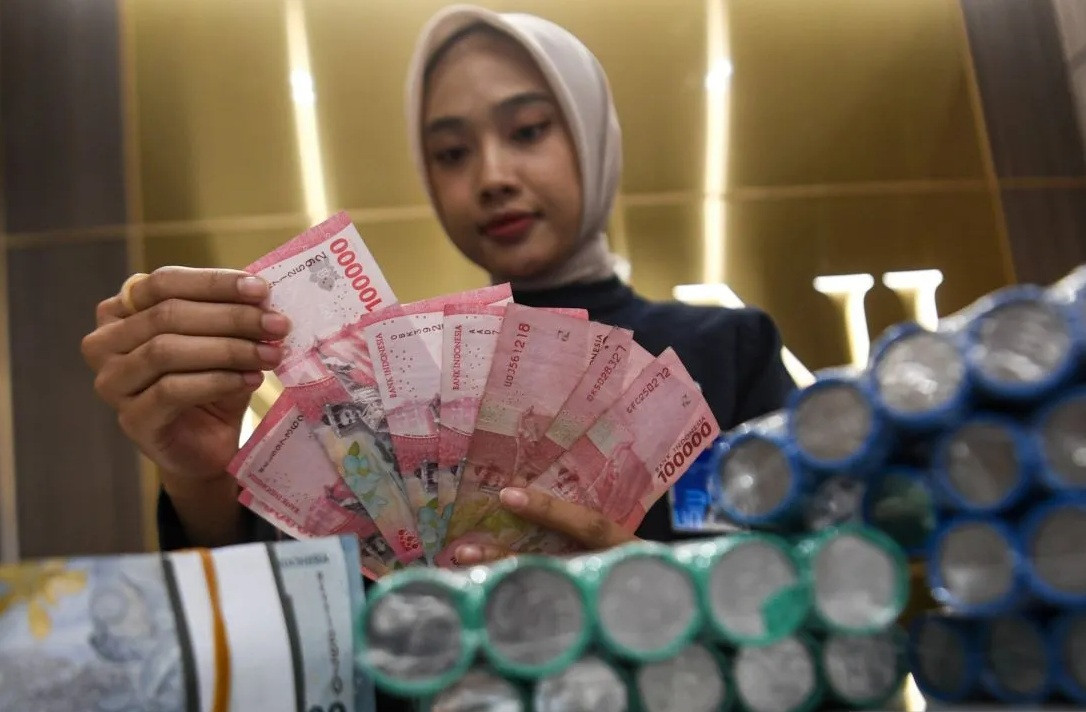 A teller counts rupiah banknotes on Oct. 27, 2025, at the BNI Pasar Baru branch in Jakarta. (Antara/Muhammad Adimaja)
I
ndonesia has weathered a difficult year. The rupiah has come under repeated pressure, Bank Indonesia (BI) has intervened heavily to support financial markets, fiscal space has narrowed and global uncertainty remains high. Yet the recent moderation in oil prices, if sustained, provides an opportunity to strengthen Indonesia's macroeconomic framework before the next external shock arrives.
Indonesia now faces an important choice. The current policy mix is costly to maintain while becoming less effective. Keeping the rupiah stable relies on foreign exchange intervention, regulatory measures and active liquidity management. At the same time, the central bank has become a key source of public sector financing while official intervention has expanded into areas normally performed by markets.
Each of these policy responses was introduced to address challenges as they emerged. Taken together, however, they point to a broader problem. Policy is substituting for markets while intervention is replacing flexibility.
No country can rely indefinitely on declining reserve buffers, expanding central bank balance sheets or replacing markets with official intervention. Ultimately, every macroeconomic framework depends on confidence — the willingness of households, businesses and investors to hold the country's currency and financial assets. The opportunity today is to renew that confidence before markets force the adjustment.
For almost 80 years, the bebas aktif (independent and active) doctrine has guided Indonesia's foreign policy. The same philosophy can guide economic policy. Bebas means designing policy around Indonesia's own economic conditions rather than those of another country. Aktif means ensuring that every policy instrument serves a clear purpose while adapting to changing domestic and global circumstances.
This requires thinking about fiscal policy, monetary policy and financial markets differently. They should no longer be viewed as separate policy domains but as parts of a single macroeconomic system whose purpose is to preserve stability while supporting sustainable growth.

Renewing that system requires three things: restoring coherence by giving every policy instrument a clear purpose; strengthening coordination so policies reinforce rather than offset one another; and improving communication so markets, businesses and households understand the strategy guiding policy decisions. Together these three principles build credibility.